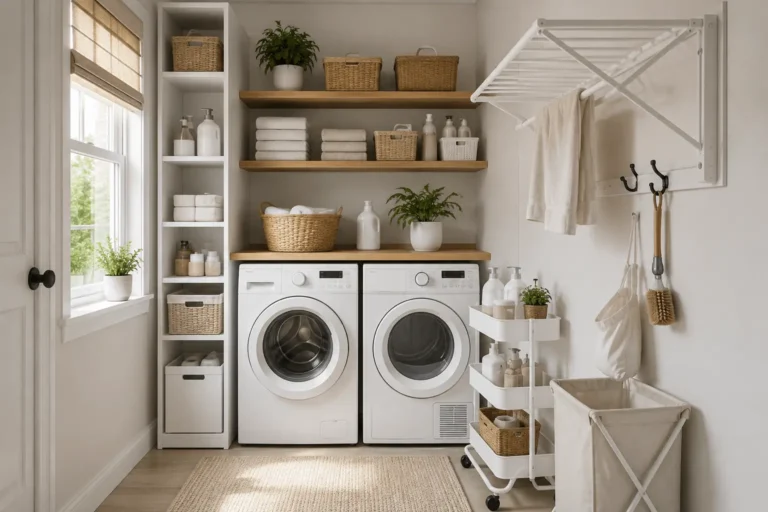
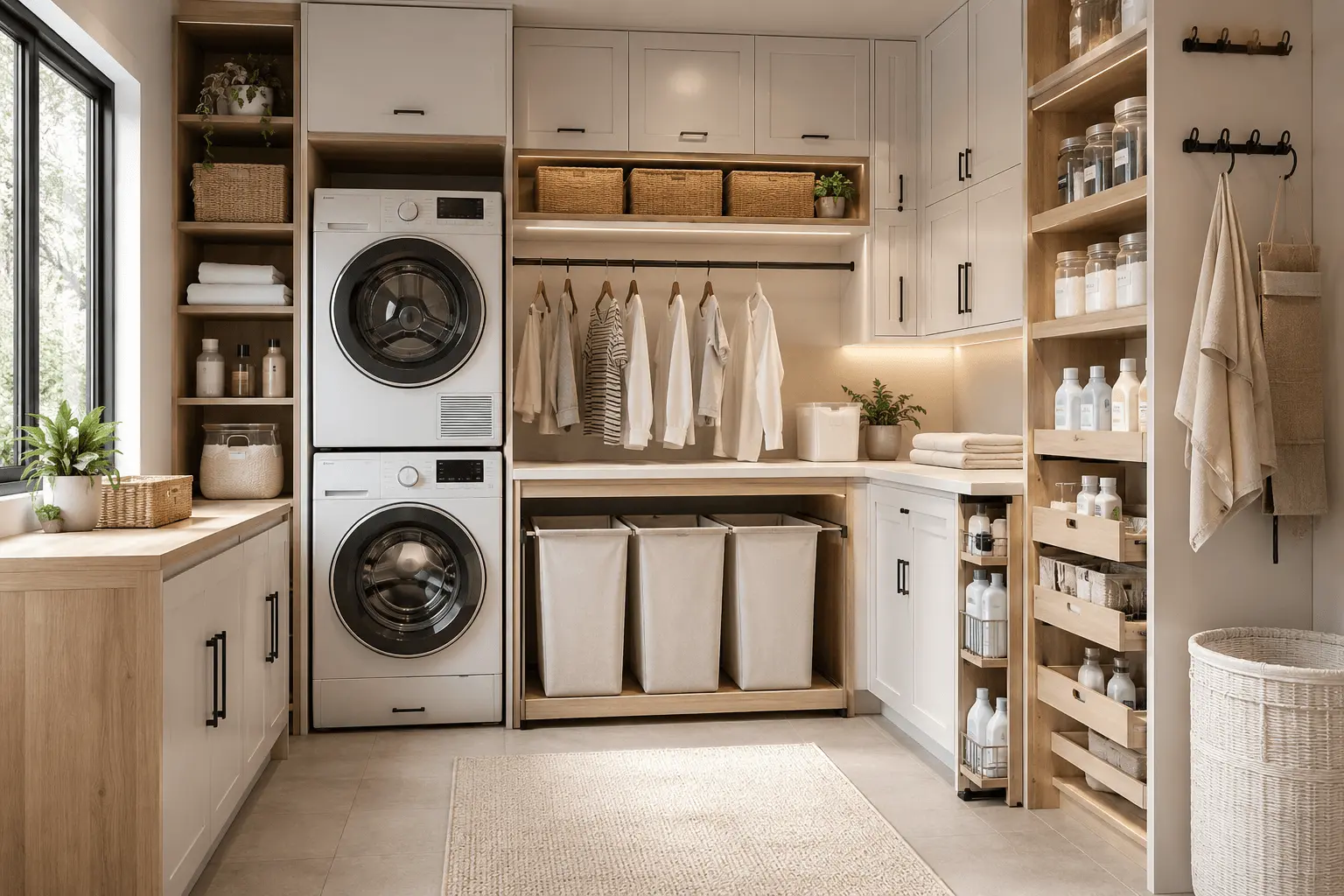
Introduction
Laundry room organization ideas can transform more than just a place to wash clothes into a functional workspace that save time, reduces stress, and makes everyday household chores much easier. Whether you have a spacious utility room or a compact laundry closet, the right organization strategies can transform even the smallest area into an efficient and attractive space.
Many homeowners focus on organizing kitchens, bedrooms, and living rooms while overlooking the laundry room. Yet this space is used several times each week and often becomes a catch-all for cleaning supplies, laundry baskets, detergents, pet items, and miscellaneous household products. Without a proper storage system, clutter quickly accumulates, making laundry day more frustrating than it needs to be.
The good news is that creating an organized laundry room doesn’t require a complete renovation or a large budget. By decluttering, maximizing vertical space, choosing the right storage solutions, and developing simple maintenance habits, you can create a laundry room that works efficiently for your family’s needs.
In this comprehensive guide, you’ll discover practical organization ideas, expert storage tips, and smart design solutions for every type of laundry room—from small apartment laundry closets to large farmhouse-style utility rooms. Whether your goal is to improve functionality, increase storage, or simply make the room look more inviting, these strategies will help you build a laundry space that’s both beautiful and practical.
Quick Answer
The best laundry room organization ideas focus on maximizing storage, reducing clutter, and creating an efficient workflow. Start by decluttering unnecessary items, then use vertical storage such as floating shelves, cabinets, and wall hooks to save floor space. Organize laundry essentials in labeled bins, baskets, or clear containers, and keep frequently used products within easy reach. Add a dedicated folding station, sorting hampers, and a wall-mounted drying rack to make daily laundry tasks faster and more convenient. Whether you have a spacious utility room or a compact laundry closet, smart storage solutions and consistent organization can transform your laundry area into a clean, functional, and visually appealing space that saves time and simplifies your routine.
Key Takeaways
✔ Maximize vertical space with shelves, cabinets, and wall organizers.
✔ Store detergents and supplies in labeled bins or clear containers.
✔ Use separate hampers to sort laundry by color, fabric, or family member.
✔ Create a dedicated folding and ironing station for better workflow.
✔ Keep frequently used items within easy reach and declutter regularly.
✔ Choose space-saving storage solutions for small laundry rooms.
✔ Maintain your organization system with a quick weekly tidy-up.
Table of Contents
Affiliate Disclosure
Some links on this website are affiliate links. If you make a purchase through these links, we may earn a small commission at no additional cost to you. This helps support our work and allows us to continue creating helpful content.
Why Laundry Room Organization Is More Important Than Ever
Today’s homes are expected to do more than ever before. Many families use the laundry room not only for washing clothes but also for storing cleaning products, pet supplies, household essentials, reusable shopping bags, and seasonal items. As a result, the laundry room has evolved into a multifunctional workspace that requires thoughtful organization.
An organized laundry room offers several practical benefits:
It Saves Valuable Time
Searching for detergent, stain removers, dryer sheets, or missing socks wastes valuable time during every laundry cycle. When everything has a designated place, tasks become faster and more efficient.
It Reduces Household Stress
Visual clutter often contributes to mental stress. Walking into a clean, organized laundry room creates a calmer environment and makes routine chores feel less overwhelming.
It Improves Safety
Proper storage helps keep detergents, bleach, and other cleaning chemicals out of reach of children and pets. Secure cabinets, labeled containers, and organized shelves reduce the risk of accidental spills or exposure.
It Maximizes Small Spaces
Even the smallest laundry room can feel larger with smart storage solutions such as floating shelves, wall-mounted drying racks, slim rolling carts, and ceiling-height cabinets.
It Protects Your Investment
Laundry appliances perform better when they are clean and surrounded by organized storage. Regular maintenance and proper airflow can also extend the lifespan of your washer and dryer.
It Enhances Your Home’s Appearance
An attractive laundry room contributes to the overall appeal of your home. Organized storage, coordinated containers, and thoughtful décor create a polished look that can even add value to your property.
Ultimately, laundry room organization is about making everyday life easier. Small improvements can have a significant impact on productivity, cleanliness, and overall household efficiency.
What You’ll Learn in This Complete Guide
This guide is designed to help homeowners, renters, and DIY enthusiasts create a laundry room that combines functionality with style. Whether you’re starting from scratch or updating an existing space, you’ll find practical advice that works for a variety of budgets and room sizes.
Throughout this guide, you’ll learn how to:
- Understand why laundry room organization is essential for an efficient home.
- Assess your current laundry room layout and identify areas for improvement.
- Declutter effectively before purchasing storage products.
- Choose storage solutions that match your available space and budget.
- Maximize vertical storage using shelves, cabinets, and wall-mounted accessories.
- Select the best laundry storage bins, baskets, and hampers.
- Compare cabinet hampers and traditional laundry baskets to determine which option best suits your household.
- Create a practical folding station that simplifies laundry tasks.
- Organize detergents, fabric softeners, and cleaning supplies safely and efficiently.
- Optimize small laundry rooms with creative space-saving ideas.
- Install and use wall-mounted drying racks to save floor space.
- Design farmhouse-inspired and modern laundry rooms that are both stylish and functional.
- Decorate your laundry room without sacrificing organization.
- Maintain a clutter-free laundry room with simple daily, weekly, and seasonal routines.
- Avoid common organization mistakes that can reduce efficiency.
- Build a complete organization system using essential storage products and accessories.
By the end of this guide, you’ll have a clear, step-by-step plan for creating a laundry room that is organized, efficient, safe, and easy to maintain for years to come.
Why Laundry Room Organization Matters
A well-organized laundry room improves efficiency, reduces stress, and keeps essential supplies within easy reach. By organizing your space thoughtfully, you can simplify laundry tasks, maximize storage, and create a safer environment while maintaining a cleaner and more attractive home
It’s an investment in your home’s cleanliness, and functionality. Whether your laundry area is a dedicated room, a utility closet, or part of a mudroom, organizing it properly can make everyday chores quicker and less stressful.
Many homeowners underestimate how much time they spend doing laundry. According to household surveys, the average family completes multiple loads of laundry each week. Without an organized system, even simple tasks like finding detergent, sorting clothes, or folding clean laundry can become unnecessarily frustrating.
By creating designated storage areas, reducing clutter, and improving workflow, you can transform your laundry room into a practical workspace that supports your daily routine. The following sections explain why organization is essential and how it benefits every household.
Benefits of an Organized Laundry Room
An organized laundry room offers both immediate and long-term advantages. It not only improves the appearance of your home but also makes laundry day more manageable.
Improves Efficiency
When every item has a designated place, you spend less time searching for supplies and more time completing your laundry. Detergents, stain removers, dryer sheets, laundry baskets, and cleaning tools remain within easy reach, making each load more efficient.
For example, storing detergent in a labeled container beside the washer and keeping a laundry basket near the dryer creates a smooth workflow that minimizes unnecessary movement.
Reduces Stress
Cluttered spaces often feel overwhelming. A messy laundry room filled with overflowing baskets, scattered supplies, and random household items can make routine chores seem more difficult than they actually are.
A clean and organized environment creates a sense of order, helping you approach laundry with less frustration and greater confidence.
Increases Safety
Laundry rooms often contain potentially hazardous items such as bleach, detergents, stain removers, and disinfectants. Proper organization reduces the risk of accidents by ensuring these products are stored securely and clearly labeled.
Safety improvements include:
- Lockable cabinets for households with children
- High shelves for chemical storage
- Clearly labeled containers
- Separate storage for incompatible cleaning products
- Proper ventilation around appliances
Maximizes Storage Space
Even a compact laundry room can provide surprising amounts of storage when organized effectively.
Popular storage solutions include:
- Floating shelves
- Wall-mounted cabinets
- Stackable storage bins
- Rolling utility carts
- Hanging organizers
- Over-the-door storage racks
- Foldable drying racks
Using vertical space keeps frequently used items accessible while freeing valuable floor space.
Makes Cleaning Easier
A clutter-free laundry room is much easier to clean. Dust, lint, and dirt are less likely to accumulate when floors remain clear and supplies are stored neatly.
Regular cleaning also helps maintain washer and dryer performance by preventing lint buildup around appliances.
Creates a More Attractive Space
Organization and design work together. Coordinated storage bins, matching baskets, attractive shelving, and decorative labels create a laundry room that feels welcoming instead of purely functional.
Simple design choices such as neutral colors, woven baskets, and wooden shelves can significantly enhance the room’s appearance without requiring a major renovation.
How Organization Saves Time, Money, and Energy
Many people think of laundry room organization as a cosmetic improvement, but it also provides measurable practical benefits. A well-planned laundry room can reduce wasted time, lower household expenses, and make routine chores less physically demanding.
Saves Time Every Week
One of the greatest advantages of an organized laundry room is improved efficiency.
Instead of searching through cabinets for detergent or moving piles of clothes to access the washer, everything is arranged logically according to how you use the space.
An efficient laundry workflow typically follows this sequence:
- Sort dirty clothes.
- Load the washer.
- Add detergent.
- Transfer clothes to the dryer.
- Fold laundry.
- Return clothes to storage.
Organizing supplies in the same order as this workflow minimizes unnecessary movement and speeds up the entire process.
Reduces Duplicate Purchases
Disorganized storage often leads homeowners to buy products they already own simply because they cannot find them.
Examples include:
- Extra detergent bottles
- Duplicate stain removers
- Additional dryer sheets
- Unnecessary cleaning sprays
Keeping products visible and grouped together helps prevent unnecessary spending.
Extends Appliance Lifespan
Proper organization also supports appliance maintenance.
Keeping the area around your washer and dryer clean allows for better airflow and makes routine maintenance easier.
Benefits include:
- Reduced lint accumulation
- Improved dryer efficiency
- Better ventilation
- Easier access for repairs
- Lower risk of overheating
These small maintenance habits can help your appliances operate more efficiently over time.
Saves Energy
An organized laundry room encourages better laundry habits, such as:
- Washing full loads instead of partial loads
- Air-drying delicate garments
- Cleaning dryer vents regularly
- Using efficient storage to reduce unnecessary appliance use
These practices can contribute to lower energy consumption and reduced utility bills.
Makes Household Tasks Easier
When family members know where supplies belong, everyone can participate in laundry routines more effectively.
Clearly labeled shelves and baskets make it easy for children and other household members to help with sorting, folding, or putting away laundry.
Common Problems Caused by Cluttered Laundry Rooms
A cluttered laundry room affects more than just appearance. It can reduce efficiency, create safety hazards, and make one of the most common household chores unnecessarily difficult.
Understanding these problems is the first step toward creating a better organization system.
Limited Workspace
When countertops are covered with laundry products, baskets, or miscellaneous items, there is little room left for folding clothes.
As a result:
- Clean clothes pile up.
- Folding becomes inconvenient.
- Wrinkles increase.
- Laundry takes longer to complete.
Lost or Misplaced Supplies
Without designated storage areas, essential items often disappear among clutter.
Commonly misplaced items include:
- Stain removers
- Dryer balls
- Measuring scoops
- Laundry bags
- Clothespins
- Fabric softener
Searching for these items wastes valuable time during every laundry session.
Overflowing Laundry Baskets
Many households struggle with baskets overflowing onto the floor.
This creates:
- Visual clutter
- Difficult sorting
- Increased wrinkles
- Trip hazards
- Delayed laundry routines
Using multiple labeled hampers for whites, darks, colors, and delicates helps streamline the sorting process.
Poor Cleaning Supply Storage
Improperly stored chemicals pose several risks:
- Accidental spills
- Product contamination
- Child safety concerns
- Damaged shelving
- Strong chemical odors
Keeping cleaning products upright in secure containers inside cabinets minimizes these risks.
Underutilized Vertical Space
Many laundry rooms rely only on floor storage while leaving walls completely unused.
Unused vertical space represents lost storage opportunities that could accommodate:
- Shelves
- Hanging rods
- Drying racks
- Cabinets
- Hooks
- Pegboards
Making use of wall space keeps the room organized without increasing its footprint.
Appliance Access Problems
Stacks of baskets, boxes, and supplies often block washer and dryer doors or make routine maintenance difficult.
Adequate clearance around appliances improves accessibility and supports proper ventilation.
Increased Dust and Lint
Laundry rooms naturally collect lint from clothing and dryer vents. When clutter accumulates, lint becomes trapped behind containers, baskets, and piles of clothing.
Regular organization makes it easier to vacuum and wipe down surfaces, improving both cleanliness and indoor air quality.
Reduced Motivation
Perhaps the most overlooked consequence of a cluttered laundry room is psychological.
People are more likely to postpone laundry when the room feels chaotic or difficult to use. An organized, inviting space encourages consistency and helps prevent laundry from piling up.
Before and After Laundry Room Organization
Introduction
Seeing the difference between a cluttered and an organized laundry room can make the value of smart organization much easier to understand. With the right storage solutions and a thoughtful layout, even a small or busy laundry area can become cleaner, more functional, and easier to use. The before-and-after transformation below highlights how simple changes can make a significant difference in the way your laundry room looks and works.
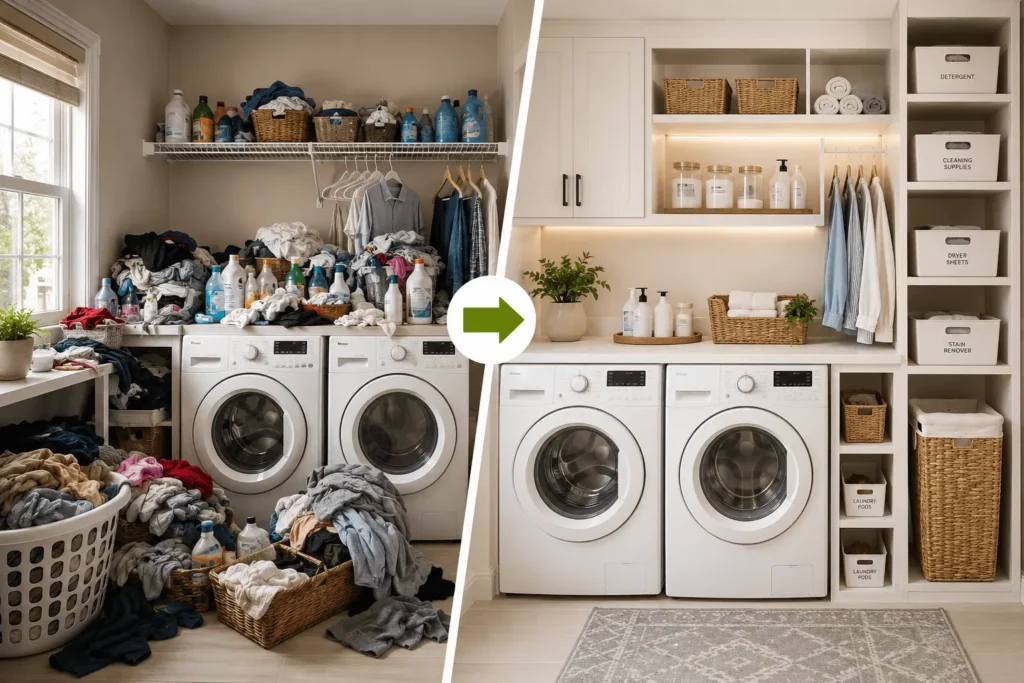
Description
The transformation shows how decluttering, maximizing vertical space, and giving every laundry essential a designated place can completely change the feel of a room. Open shelves, cabinets, baskets, labeled containers, and practical organizers help reduce visual clutter while keeping frequently used items within easy reach. You don’t need a large laundry room to achieve better organization—smart use of the space you already have can make your daily laundry routine more efficient and enjoyable.
Planning Before You Organize
Successful laundry room organization starts with careful planning. Evaluating your current layout, identifying storage challenges, and setting realistic goals helps you choose solutions that fit your available space, budget, and daily routine instead of making unnecessary purchases.
Before purchasing shelves, storage bins, or decorative baskets, it’s important to create a clear organization plan. Many homeowners make the mistake of buying storage products first, only to discover later that they don’t fit the space or solve the real problem.
A thoughtful plan helps you maximize every inch of your laundry room, avoid unnecessary expenses, and create a storage system that supports your daily routine. Whether you have a compact laundry closet or a spacious utility room, taking time to assess your needs will lead to better long-term results.
In this section, you’ll learn how to evaluate your current layout, identify storage challenges, and set realistic organization goals that fit your space, lifestyle, and budget.
Assess Your Current Laundry Room Layout
The first step in organizing your laundry room is understanding how the space is currently being used. Every laundry room is different, so the best organization system is one that complements your room’s size, layout, and workflow.
Measure Your Available Space
Start by measuring the room carefully. Record the dimensions of:
- Room width and length
- Ceiling height
- Doorways
- Windows
- Washer and dryer
- Existing cabinets
- Countertops
- Open wall space
Accurate measurements ensure that any shelves, cabinets, or storage units you purchase will fit properly without blocking doors or appliances.
Identify Your Laundry Room Type
Different layouts require different organization strategies. Determine which category best matches your home:
Dedicated Laundry Room
A separate laundry room typically offers the most flexibility for adding cabinets, shelving, folding stations, and utility sinks.
Laundry Closet
A laundry closet has limited floor space but can benefit from vertical storage, over-the-door organizers, and stackable solutions.
Mudroom Laundry Combination
These multi-purpose spaces require storage for laundry supplies alongside shoes, coats, backpacks, and pet accessories. Clearly defined storage zones help keep everything organized.
Basement Laundry Area
Basement laundry rooms often have more available space but may require additional shelving, moisture-resistant storage, and improved lighting.
Garage Laundry Room
Garage laundry areas should prioritize enclosed cabinets and dust-resistant storage to protect supplies from dirt and temperature fluctuations.
Observe Your Laundry Workflow
Think about how you move through the laundry process.
Ask yourself:
- Where do dirty clothes enter the room?
- Where do you sort laundry?
- Where do you store detergent?
- Where do clean clothes get folded?
- Where do finished clothes go?
Ideally, your organization system should follow this natural sequence:
- Collect dirty laundry
- Sort clothing
- Wash
- Dry
- Fold
- Store or transport clean clothes
Arranging storage around this workflow reduces unnecessary movement and improves efficiency.
Evaluate Existing Storage
Take inventory of what you already have.
Ask yourself:
- Are cabinets fully utilized?
- Are shelves too crowded?
- Is there unused wall space?
- Are countertops cluttered?
- Can any furniture serve multiple purposes?
Often, simply reorganizing existing storage can create significant improvements without purchasing new products.
Check Lighting and Accessibility
Good lighting makes it easier to read detergent labels, remove stains, and fold clothing accurately.
Consider upgrading with:
- Bright LED ceiling lights
- Under-cabinet lighting
- Motion-sensor lights
- Task lighting above folding areas
Also ensure that frequently used supplies are easy to reach without excessive bending or stretching.
Identify Storage Challenges
Once you’ve evaluated your layout, identify the specific problems preventing your laundry room from functioning efficiently.
Understanding these challenges allows you to choose storage solutions that address your actual needs rather than simply adding more containers.
Cluttered Countertops
Countertops often become catch-all surfaces for detergent bottles, fabric softener, stain removers, laundry baskets, and miscellaneous household items.
Solution:
- Store frequently used products on nearby shelves.
- Use trays to group similar items.
- Keep folding surfaces clear whenever possible.
Limited Cabinet Space
Many laundry rooms have only one or two cabinets, making it difficult to store supplies neatly.
Possible solutions include:
- Floating shelves
- Wall-mounted cabinets
- Rolling storage carts
- Over-the-door organizers
- Stackable bins
Lack of Vertical Storage
Walls are one of the most underutilized areas in many laundry rooms.
Look for opportunities to install:
- Floating shelves
- Pegboards
- Hanging baskets
- Wall hooks
- Drying racks
- Ceiling-height cabinets
Vertical storage increases capacity without taking up valuable floor space.
Overflowing Laundry Baskets
Multiple baskets scattered across the floor create clutter and reduce available walking space.
Instead, consider:
- Built-in cabinet hampers
- Stackable laundry sorters
- Rolling laundry carts
- Divided hampers for lights, darks, and delicates
Poor Organization of Cleaning Supplies
Cleaning products stored randomly throughout the room are difficult to locate and may pose safety risks.
Create designated zones for:
- Laundry detergents
- Fabric softeners
- Stain removers
- Surface cleaners
- Disinfectants
- Cleaning tools
- Replacement supplies
Grouping similar items together makes inventory management much easier.
Insufficient Folding Space
Without a dedicated folding station, clean clothes often end up on beds, couches, or dining tables.
Solutions include:
- Countertops over front-loading machines
- Fold-down wall tables
- Portable folding tables
- Custom-built worktops
Underused Corners
Corners often become dead space.
Maximize these areas with:
- Corner shelves
- Rotating storage units
- Narrow cabinets
- Slim rolling carts
Seasonal Storage Problems
Bulky seasonal items such as blankets, comforters, or specialty detergents can overwhelm small laundry rooms.
Store infrequently used items in:
- Upper cabinets
- Ceiling-mounted shelving
- Labeled storage bins
- Nearby closets
Set Organization Goals Based on Your Space
Once you’ve identified the challenges, establish clear goals before purchasing storage products.
Having specific objectives helps you stay focused and prevents impulse purchases.
Goal 1: Improve Functionality
Your primary objective should always be creating a laundry room that’s easier to use.
Examples include:
- Faster laundry routines
- Easier access to supplies
- Better workflow
- Less bending and reaching
Every storage decision should support these functional improvements.
Goal 2: Maximize Storage
Focus on using every available inch efficiently.
Look for opportunities to:
- Build upward with shelves
- Utilize cabinet doors
- Install hanging organizers
- Add stackable containers
- Incorporate hidden storage
Goal 3: Reduce Visual Clutter
A tidy space feels larger and more inviting.
Achieve a clean look by:
- Using matching storage bins
- Choosing coordinated baskets
- Labeling containers consistently
- Keeping countertops mostly clear
- Storing infrequently used items out of sight
Goal 4: Stay Within Budget
Organization doesn’t have to be expensive.
Set a realistic budget and prioritize purchases based on your greatest needs.
For example:
- Budget-friendly ($50–$150): Labels, storage bins, hooks, shelf risers.
- Mid-range ($150–$500): Floating shelves, rolling carts, wall cabinets.
- Premium ($500+): Custom cabinetry, built-in hampers, quartz countertops, integrated folding stations.
Start with the essentials and expand your storage system over time.
Goal 5: Make Maintenance Easy
The best organization system is one you can maintain consistently.
Choose solutions that are:
- Easy to clean
- Durable
- Accessible
- Clearly labeled
- Flexible enough to adapt as your needs change
Simple habits, such as returning items to their designated spots after each laundry session, will help keep your space organized for years.
Create a Laundry Room Organization Checklist
Before moving on to the next phase, make sure you can answer “yes” to the following questions:
- Have I measured my laundry room accurately?
- Do I understand my current workflow?
- Have I identified my biggest storage challenges?
- Do I know which items I use daily versus occasionally?
- Have I set a realistic budget?
- Do I have clear organization goals?
- Have I planned how to maintain the new system?
Completing this checklist ensures you’re ready to move on to decluttering and selecting the right storage solutions.
Expert Tip
Planning is the foundation of a successful laundry room organization project. By assessing your layout, identifying storage challenges, and setting realistic goals, you’ll create a personalized system that improves efficiency, reduces clutter, and makes laundry day far more enjoyable.
How to Declutter Your Laundry Room
Decluttering is the foundation of every organized laundry room. Removing unnecessary items, disposing of expired cleaning products, and organizing only what you truly use creates more storage space and makes future organization much easier to maintain.
Buying storage solutions without first decluttering often leads to wasted money, overcrowded cabinets, and an organization system that doesn’t address your actual needs.
Think of decluttering as a fresh start. It helps you identify what you truly use, frees up valuable storage space, and makes it easier to plan an efficient layout. Whether your laundry room is large or small, taking the time to declutter will make every future organization decision more effective.
In this section, you’ll learn a simple step-by-step method for sorting your belongings, safely disposing of expired cleaning products, and preparing your laundry room for new storage solutions.
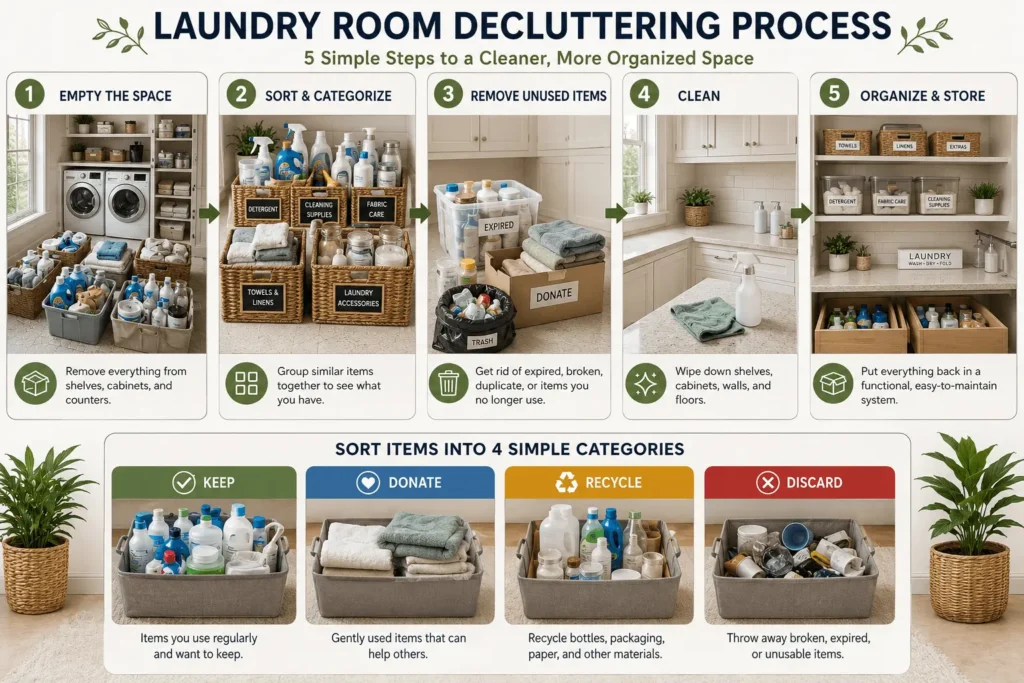
Sort Items into Keep, Donate, Recycle, and Discard
One of the easiest and most effective ways to declutter is by using the Four-Category Method. Instead of making decisions one item at a time, sort everything into four clear groups: Keep, Donate, Recycle, and Discard.
This method helps you stay focused, prevents second-guessing, and ensures that only useful items remain in your laundry room.
Step 1: Empty the Space
Start by removing everything from shelves, cabinets, drawers, and countertops. This includes:
- Laundry detergents
- Fabric softeners
- Stain removers
- Dryer sheets
- Cleaning sprays
- Laundry baskets
- Storage bins
- Ironing supplies
- Cleaning cloths
- Miscellaneous household items
Seeing everything together makes it much easier to identify duplicates, expired products, and items that don’t belong in the laundry room.
Step 2: Create Four Sorting Categories
Keep
Place items in the Keep pile if they are:
- Used regularly
- In good condition
- Safe to use
- Necessary for your laundry routine
Examples include:
- Everyday laundry detergent
- Fabric softener
- Dryer balls
- Laundry hampers
- Iron and ironing board
- Cleaning cloths
- Frequently used stain removers
Donate
If an item is in good condition but no longer serves your needs, consider donating it.
Examples include:
- Extra laundry baskets
- Unused shelving units
- Duplicate storage bins
- Small appliances in working condition
- Organization products you no longer need
Donating reusable items helps reduce waste while benefiting others.
Recycle
Many laundry-related items can be recycled instead of thrown away.
Common recyclable items include:
- Plastic detergent bottles
- Cardboard packaging
- Empty spray bottles
- Paper product containers
- Metal shelving components
Check your local recycling guidelines to ensure proper disposal.
Discard
Dispose of items that are:
- Broken
- Damaged
- Moldy
- Expired
- Unsafe to use
Examples include:
- Cracked storage containers
- Broken baskets
- Rusted shelving
- Expired stain removers
- Empty product containers
- Worn-out cleaning brushes
Removing these items immediately creates more usable storage space.
Step 3: Group Similar Items Together
After sorting, organize the items you’re keeping into categories.
For example:
Laundry Products
- Detergent
- Fabric softener
- Bleach
- Stain remover
- Dryer sheets
Cleaning Supplies
- Disinfectant sprays
- Glass cleaner
- Surface cleaner
- Sponges
- Microfiber cloths
Laundry Accessories
- Dryer balls
- Clothespins
- Mesh laundry bags
- Lint rollers
- Measuring scoops
Grouping similar items makes storage planning much easier and helps prevent future clutter.
Remove Expired or Unused Cleaning Products
Cleaning supplies don’t last forever. Over time, some products lose effectiveness, separate, leak, or become unsafe to use. Decluttering is the perfect opportunity to inspect every bottle, container, and package in your laundry room.
Check Expiration Dates
Many cleaning products have recommended shelf lives. Look for expiration dates or manufacturing information on:
- Laundry detergents
- Bleach
- Stain removers
- Disinfectants
- Mold removers
- Specialty fabric treatments
If a product has expired or changed in appearance, it’s usually best to replace it.
Inspect Product Condition
Even if a product hasn’t expired, examine it carefully for signs of deterioration.
Watch for:
- Leaking bottles
- Cracked containers
- Dried or hardened detergents
- Unusual odors
- Product separation
- Mold growth around caps
Damaged products should be safely disposed of according to local waste disposal guidelines.
Eliminate Duplicate Products
Many households accumulate multiple versions of the same cleaning product.
For example, you may find:
- Three bottles of stain remover
- Several nearly empty detergent containers
- Multiple fabric softeners
- Duplicate disinfectant sprays
Combine partially used products only if the manufacturer specifically states it is safe to do so. Otherwise, use one product completely before opening another.
Keep Only What You Actually Use
Ask yourself these questions for every product:
- Have I used this in the last six months?
- Does it still work well?
- Would I buy it again today?
- Is there another product that performs the same job?
If the answer is no, it’s probably time to let it go.
Dispose of Chemicals Safely
Never pour cleaning chemicals down household drains unless the product label specifically allows it. Follow your local regulations for disposing of hazardous household waste.
Proper disposal protects both your plumbing system and the environment.
Clean the Room Before Installing Storage Solutions
With the clutter removed, it’s time to give your laundry room a deep clean. Installing new shelves or storage bins in a dusty or dirty space only hides existing problems.
A clean foundation also helps your new organization system stay neat for longer.
Dust Every Surface
Begin from the top of the room and work downward.
Dust:
- Shelves
- Cabinets
- Light fixtures
- Window sills
- Baseboards
- Vent covers
- Door frames
This prevents dust from settling onto freshly cleaned floors.
Vacuum Thoroughly
Laundry rooms collect significant amounts of lint and dust.
Pay special attention to:
- Behind the washer and dryer
- Under appliances
- Cabinet corners
- Air vents
- Baseboards
Removing lint not only improves cleanliness but also reduces fire hazards.
Mop the Floor
Use a suitable floor cleaner for your flooring type.
Cleaning the floor before installing storage units makes it easier to maintain a hygienic environment and prevents dirt from becoming trapped underneath cabinets or shelving.
Clean the Washer and Dryer
Take advantage of the empty room to maintain your appliances.
Washer Maintenance
- Run a cleaning cycle.
- Wipe the door seal.
- Clean the detergent dispenser.
- Remove any detergent buildup.
- Leave the door open to dry.
Dryer Maintenance
- Clean the lint filter.
- Vacuum behind the dryer.
- Inspect the exhaust hose.
- Check the dryer vent for blockages.
Well-maintained appliances operate more efficiently and last longer.
Wipe Cabinets and Shelves
Before returning items to storage, clean every cabinet and shelf.
Use a mild cleaner to remove:
- Dust
- Sticky residue
- Detergent spills
- Water stains
Allow surfaces to dry completely before placing products back inside.
Inspect for Repairs
While the room is empty, look for issues that should be addressed before organizing.
Check for:
- Loose shelves
- Water leaks
- Peeling paint
- Damaged cabinets
- Rusted hardware
- Mold or mildew
- Cracked caulk around sinks
Fixing these problems now prevents larger repairs later.
Plan Your Storage Zones
Before putting anything back, decide where each category of items belongs.
For example:
- Upper shelves: Extra supplies and seasonal items
- Eye-level shelves: Daily-use detergents and fabric care products
- Lower cabinets: Laundry baskets and bulk purchases
- Countertop: Minimal items, leaving space for folding
- Wall hooks: Cleaning tools and reusable laundry bags
Creating designated zones helps maintain organization over the long term.
Pro Tip
To prevent clutter from returning, adopt a simple habit: whenever you bring a new laundry product or storage container into the room, remove or use up an old one.
This keeps supplies manageable, prevents overcrowding, and encourages regular maintenance without requiring major decluttering sessions.
Key Takeaway
Decluttering is the most important first step in creating an organized laundry room. By sorting your belongings into clear categories, safely removing expired products, and thoroughly cleaning the space, you build a solid foundation for every storage solution that follows. Taking the time to declutter before buying organizers ensures that your investment is practical, your storage system is efficient, and your laundry room remains easy to maintain.
Choosing the Right Storage Solutions
The best laundry room storage solutions combine functionality, accessibility, and efficient use of space. Selecting the right mix of cabinets, shelves, storage bins, and organizers helps keep supplies organized while improving your daily laundry workflow.
Choosing the right organizers isn’t just about making the room look neat—it’s about creating a system that makes laundry easier, faster, and more enjoyable.
The ideal storage solution should provide easy access to frequently used items, maximize available space, and adapt to your family’s changing needs. Whether you’re working with a compact laundry closet or a spacious utility room, the right combination of shelves, cabinets, baskets, and organizers can dramatically improve both functionality and appearance.
Before making any purchases, consider the following questions:
- How much storage do you actually need?
- Which items do you use every day?
- How much wall and vertical space is available?
- Do you prefer visible or hidden storage?
- What is your organization budget?
- Will your storage needs change in the future?
Answering these questions will help you invest in storage solutions that offer lasting value rather than temporary fixes.
Best Laundry Room Storage Solutions Compared
| Storage Solution | Best For | Storage Capacity | Space Saving | Budget | Ease of Installation | Recommended For |
| Floating Shelves | Vertical storage | High | ⭐⭐⭐⭐⭐ | $ | Easy | Small laundry rooms and apartments |
| Wall Cabinets | Hidden storage | Very High | ⭐⭐⭐⭐☆ | $$$ | Moderate | Families needing extra enclosed storage |
| Open Shelving | Everyday essentials | Medium | ⭐⭐⭐⭐☆ | $$ | Easy | Frequently used laundry supplies |
| Storage Bins & Baskets | Organizing detergents and accessories | Medium | ⭐⭐⭐⭐☆ | $ | Very Easy | All laundry room sizes |
| Pull-Out Laundry Hampers | Sorting dirty clothes | High | ⭐⭐⭐⭐☆ | $$$ | Moderate | Busy households and large families |
| Rolling Storage Cart | Narrow spaces | Medium | ⭐⭐⭐⭐⭐ | $$ | Very Easy | Tight gaps between washer and dryer |
| Over-the-Door Organizer | Utilizing unused door space | Medium | ⭐⭐⭐⭐⭐ | $ | Very Easy | Small laundry rooms and rental homes |
| Wall-Mounted Drying Rack | Air-drying clothes | Medium | ⭐⭐⭐⭐⭐ | $$ | Easy | Compact laundry rooms with limited floor space |
| Pegboard Wall Organizer | Tools and cleaning supplies | Medium | ⭐⭐⭐⭐☆ | $$ | Easy | DIY enthusiasts and multifunction laundry rooms |
| Laundry Detergent Organizer Tray | Keeping supplies neat | Low | ⭐⭐⭐☆☆ | $ | No Installation | Countertop organization and daily convenience |
Budget Guide
$ = budget-friendly, $$ = mid-range, and $$$ = premium or higher-cost options.
Actual prices may vary depending on the product, brand, size, and materials.
Open Shelving vs. Closed Cabinets
One of the biggest decisions you’ll make is whether to install open shelving, closed cabinets, or a combination of both. Each option has its own advantages, and the best choice depends on your available space, organizational habits, and personal style.
Open Shelving
Open shelving has become increasingly popular because it combines functionality with modern design. It keeps everyday essentials visible and easily accessible while creating a more open and spacious feel.
Advantages of Open Shelving
Easy Access
Items like detergent, dryer sheets, stain removers, and laundry baskets are always within reach, reducing the time spent searching for supplies.
Makes Small Rooms Feel Larger
Unlike bulky cabinets, open shelves create visual openness, making compact laundry rooms appear brighter and less cramped.
Budget-Friendly
Installing floating shelves or simple wall-mounted shelving is often much less expensive than custom cabinetry.
Easy to Customize
Open shelves can be rearranged or decorated with storage bins, woven baskets, plants, or decorative containers to match your home’s style.
Drawbacks of Open Shelving
Despite its benefits, open shelving requires regular maintenance.
Common challenges include:
- Dust accumulation
- Visible clutter if not organized
- Exposure to moisture in humid laundry rooms
- Need for matching containers to maintain a tidy appearance
Best Uses
Open shelving works best for:
- Daily-use laundry supplies
- Decorative storage baskets
- Folded towels
- Small plants
- Labeled storage bins
- Frequently accessed cleaning products
Closed Cabinets
Closed cabinets offer concealed storage, making them ideal for homeowners who prefer a clean, streamlined appearance.
Advantages of Closed Cabinets
Hides Visual Clutter
Cleaning products, bulk detergent containers, and miscellaneous supplies remain out of sight, creating a more polished look.
Protects Supplies
Cabinets help protect products from dust, moisture, and direct sunlight, extending the life of certain cleaning supplies.
Improves Safety
Cabinets—especially those with child-proof locks—provide safer storage for hazardous chemicals and detergents.
Adds Home Value
Well-designed cabinetry often enhances the appearance and functionality of a laundry room, making it more attractive to potential buyers.
Drawbacks of Closed Cabinets
Cabinets may require a larger budget and can make very small laundry rooms feel more enclosed if not planned carefully.
Other considerations include:
- Higher installation costs
- Less flexibility after installation
- More difficult to reorganize
- Limited visibility of stored items
Best Uses
Closed cabinets are ideal for storing:
- Bleach
- Cleaning chemicals
- Bulk laundry products
- Spare paper towels
- Pet supplies
- Seasonal household items
- Extra linens
Which Option Should You Choose?
For most homes, a combination of open shelving and closed cabinets provides the best balance.
For example:
- Use open shelves for everyday items you reach for frequently.
- Use closed cabinets for chemicals, bulk purchases, and supplies you don’t need daily.
This hybrid approach keeps the room functional while maintaining a clean and organized appearance.
Modular Storage Systems
If flexibility is important, modular storage systems are one of the smartest investments you can make. These systems consist of interchangeable components that can be rearranged or expanded as your storage needs evolve.
Whether you’re a homeowner planning for the future or a renter looking for non-permanent solutions, modular storage offers excellent versatility.
Why Choose Modular Storage?
Unlike fixed cabinets, modular systems can adapt to changing needs.
Benefits include:
- Easy to reconfigure
- Expandable over time
- Suitable for different room sizes
- Available in various styles and price ranges
- Easy to replace individual components
Popular Modular Storage Options
Cube Storage Units
Cube organizers can hold baskets, folded towels, detergents, and decorative bins. They work well beneath countertops or against unused walls.
Stackable Storage Bins
Stackable containers maximize vertical space while keeping similar items grouped together.
Ideal for storing:
- Laundry pods
- Dryer sheets
- Cleaning cloths
- Spare supplies
- Light bulbs
- Replacement filters
Rolling Utility Carts
Slim rolling carts fit neatly between appliances or beside cabinets.
These are perfect for:
- Fabric softener
- Stain removers
- Spray bottles
- Ironing supplies
- Frequently used cleaning products
Their mobility makes them especially useful in narrow laundry rooms.
Pegboard Systems
A wall-mounted pegboard offers customizable storage for lightweight tools and accessories.
Hang items such as:
- Lint rollers
- Dustpans
- Small baskets
- Brushes
- Reusable shopping bags
- Laundry bags
Because hooks can be moved easily, pegboards adapt as your storage needs change.
Adjustable Shelving Systems
Adjustable shelves allow you to modify shelf height as your storage requirements evolve.
For example, taller detergent bottles can be accommodated without replacing the entire shelving unit.
Best Practices for Modular Storage
To get the most from modular systems:
- Keep similar items together.
- Label every storage container.
- Store heavy items on lower shelves.
- Place frequently used products at eye level.
- Leave room for future expansion.
Budget-Friendly vs. Premium Storage Options
One of the biggest misconceptions about laundry room organization is that it requires an expensive renovation. In reality, you can create a highly functional laundry room at almost any budget.
The key is choosing storage solutions that provide the greatest value for your needs.
Budget-Friendly Storage Solutions
If you’re organizing on a limited budget, focus on simple products that deliver maximum functionality.
Examples include:
- Plastic storage bins
- Fabric baskets
- Floating shelves
- Over-the-door organizers
- Adhesive wall hooks
- Wire shelving
- Rolling utility carts
- Shelf risers
- Drawer dividers
- Clear storage containers
These affordable items can dramatically improve organization without major renovations.
Mid-Range Storage Upgrades
Homeowners with a moderate budget may consider:
- Wall-mounted cabinets
- Wooden floating shelves
- Pull-out laundry hampers
- Countertops over front-loading machines
- Decorative storage baskets
- Adjustable shelving systems
- Custom closet organizers
These upgrades offer greater durability while enhancing the room’s overall appearance.
Premium Storage Solutions
If you’re planning a complete laundry room renovation, premium storage options provide long-term convenience and a custom look.
Examples include:
- Built-in cabinetry
- Quartz or butcher block countertops
- Custom shelving systems
- Integrated laundry hampers
- Ceiling-height cabinets
- Pull-out storage drawers
- Hidden ironing boards
- Soft-close cabinet hardware
- Designer lighting
- Smart storage accessories
Although these upgrades require a larger investment, they often improve both functionality and home value.
How to Prioritize Your Budget
If funds are limited, purchase storage in this order:
- Storage bins and baskets
- Floating shelves
- Laundry hampers
- Wall hooks
- Rolling storage cart
- Folding countertop
- Cabinets
- Decorative accessories
This approach ensures you invest in practical improvements before focusing on aesthetics.
Key Takeaway
Choosing the right storage solutions is about balancing functionality, aesthetics, and budget. Open shelving offers convenience and accessibility, while closed cabinets conceal clutter and improve safety. Modular storage systems provide flexibility for changing needs, and both budget-friendly and premium options can create an organized, efficient laundry room when selected thoughtfully. By prioritizing practical storage over decorative purchases, you’ll build a system that supports your daily routine and remains effective for years to come.
Maximize Vertical Space with Smart Shelving
Using vertical storage is one of the most effective ways to organize any laundry room. Installing shelves, wall-mounted organizers, and overhead cabinets allows you to store more items without taking up valuable floor space, especially in smaller laundry areas.
One of the biggest challenges in any laundry room—especially small or narrow spaces—is limited storage. While many homeowners focus on cabinets and floor organizers, they often overlook one of the most valuable assets in the room: vertical wall space.
Making use of your walls can dramatically increase storage capacity without taking up additional floor space. From floating shelves and adjustable wall systems to over-the-washer storage and ceiling-height cabinets, vertical storage solutions help keep laundry essentials organized, accessible, and off the floor.
Whether you’re working with a compact laundry closet or a spacious utility room, smart shelving allows you to create designated storage zones, improve workflow, and maintain a clutter-free environment. The right shelving system not only enhances functionality but also adds visual appeal, making your laundry room feel larger, brighter, and more organized.
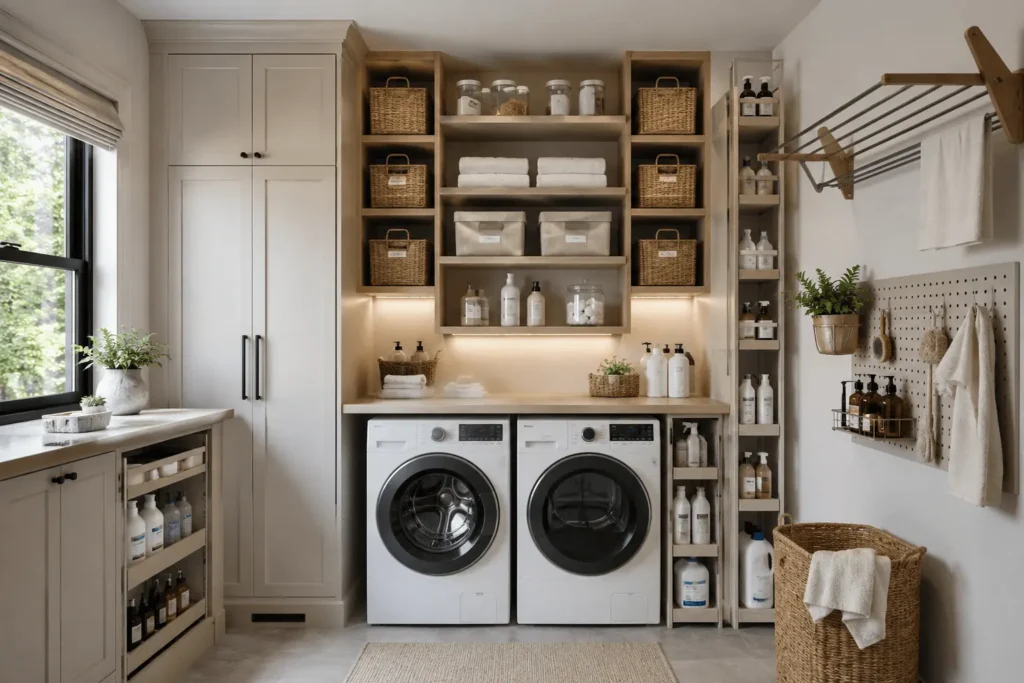
In this section, we’ll explore the most effective vertical storage ideas, their advantages, installation tips, and best practices to help you maximize every inch of available space.
Floating Shelves
Floating shelves are one of the simplest and most versatile ways to add storage to a laundry room. Unlike traditional shelving with visible brackets, floating shelves are mounted using concealed hardware, creating a clean, modern appearance that complements almost any design style.
They are ideal for homeowners looking to increase storage without making the room feel crowded.
Why Choose Floating Shelves?
Floating shelves provide several practical benefits:
- Utilize unused wall space
- Keep frequently used items within easy reach
- Free up valuable countertop and floor space
- Create a more open and spacious look
- Blend seamlessly with modern, farmhouse, or traditional décor
- Cost-effective compared to custom cabinetry
Because they don’t extend to the floor, floating shelves also make it easier to clean beneath them and maintain an uncluttered appearance.
Best Locations for Floating Shelves
To maximize their usefulness, install floating shelves in strategic areas such as:
- Above the washer and dryer
- Above a folding station
- Beside cabinets
- Over a utility sink
- On empty side walls
- In unused corners
Always ensure there is enough clearance above appliances to prevent interference with lids, doors, or ventilation.
What to Store on Floating Shelves
Floating shelves work best for lightweight to moderately heavy items that you use regularly.
Examples include:
- Laundry detergent
- Fabric softener
- Dryer sheets
- Stain removers
- Decorative storage baskets
- Folded towels
- Glass jars for clothespins
- Small indoor plants
- Labeled storage containers
- Ironing supplies
Using matching baskets or clear containers helps maintain a tidy, cohesive look while reducing visual clutter.
Material Options
Choose shelf materials that suit both your style and the room’s conditions:
- Solid Wood: Warm, durable, and perfect for farmhouse or rustic designs.
- Engineered Wood: Budget-friendly with a variety of finishes.
- Metal: Strong and ideal for industrial or modern laundry rooms.
- Glass: Stylish but best reserved for decorative items due to lower weight capacity.
If your laundry room experiences high humidity, consider moisture-resistant materials to prevent warping over time.
Installation Tips
Before installing floating shelves:
- Locate wall studs for maximum support.
- Use heavy-duty wall anchors if studs aren’t available.
- Ensure shelves are level.
- Leave enough vertical spacing between shelves for taller containers.
- Follow the manufacturer’s weight limits.
Proper installation helps prevent sagging and ensures long-term durability.
Pro Tip
Place your most frequently used items on the lowest shelf for easy access. Reserve higher shelves for seasonal supplies or bulk purchases.
Adjustable Wall Shelves
If your storage needs change over time, adjustable wall shelving is an excellent solution. Unlike fixed shelves, adjustable systems allow you to reposition shelves as needed, making them highly flexible for growing families or changing storage requirements.
Benefits of Adjustable Shelving
Adjustable shelves offer several advantages:
- Adapt to different container sizes
- Easily reconfigure as storage needs evolve
- Maximize vertical wall space
- Suitable for both large and small laundry rooms
- Often expandable with additional components
This flexibility makes them ideal for homeowners who want a storage system that can grow with their household.
Best Uses
Adjustable shelves are particularly useful for storing:
- Bulk detergent bottles
- Cleaning sprays
- Replacement supplies
- Laundry baskets
- Folded linens
- Paper products
- Seasonal items
Because shelf heights can be changed, you can easily accommodate taller or bulkier products without replacing the entire system.
Organization Tips
To keep adjustable shelves neat and functional:
- Group similar products together.
- Use labeled bins to contain smaller items.
- Store heavier products on lower shelves.
- Place everyday essentials at eye level.
- Reserve the highest shelves for infrequently used supplies.
A consistent organization system makes it easier to find items quickly and maintain order.
Over-the-Washer Storage
The space above your washer and dryer is often underutilized, yet it offers some of the most convenient storage in the laundry room.
Installing shelves or cabinets above your appliances keeps frequently used products within easy reach while preserving valuable floor space.
Advantages of Over-the-Washer Storage
This storage solution offers several key benefits:
- Makes use of otherwise unused space
- Keeps detergents close to the washer
- Reduces clutter on countertops
- Improves workflow
- Creates a clean, organized appearance
For households with front-loading machines, adding a countertop above the appliances can create a seamless folding station while still allowing room for overhead storage.
Storage Ideas
The area above the washer is ideal for:
- Laundry detergent
- Fabric softener
- Dryer sheets
- Laundry pods
- Stain removers
- Small storage baskets
- Cleaning cloths
- Decorative containers
To maintain a tidy look, transfer products into matching labeled containers whenever possible.
Safety Considerations
When installing storage above appliances:
- Leave adequate clearance for appliance lids or doors.
- Ensure shelves are securely anchored.
- Avoid overloading shelves with heavy items.
- Keep hazardous chemicals out of reach of children.
Proper installation protects both your storage system and your appliances.
Ceiling-Height Cabinets
If you need maximum storage capacity, ceiling-height cabinets are one of the most effective solutions. By extending cabinets all the way to the ceiling, you eliminate wasted space above standard cabinets and gain additional storage for items that aren’t used every day.
Why Install Ceiling-Height Cabinets?
These cabinets offer several advantages:
- Maximize every inch of available wall space
- Reduce dust accumulation on cabinet tops
- Create a built-in, custom appearance
- Increase storage without expanding the room
- Improve the overall value of your home
Although they require a larger investment than open shelving, ceiling-height cabinets provide exceptional long-term functionality.
What to Store in Upper Cabinets
Reserve the highest cabinets for items used less frequently, such as:
- Seasonal blankets
- Holiday table linens
- Bulk detergent purchases
- Extra paper towels
- Replacement cleaning products
- Spare laundry baskets
- Specialty stain removers
Keeping seldom-used items overhead leaves prime storage space available for everyday essentials.
Lower Cabinet Organization
Cabinets at eye level should contain products you reach for regularly, including:
- Laundry detergent
- Fabric softener
- Dryer sheets
- Mesh laundry bags
- Cleaning cloths
- Ironing supplies
Adding pull-out shelves or drawer organizers can make these cabinets even more accessible.
Design Tips
To maintain a cohesive look:
- Match cabinet finishes to your overall décor.
- Install soft-close hinges for quiet operation.
- Use consistent hardware throughout the room.
- Consider integrated lighting beneath upper cabinets to illuminate countertops and folding stations.
These thoughtful details enhance both functionality and aesthetics.
Expert Tips for Maximizing Vertical Storage
To get the most from your shelving system:
- Install shelves before purchasing storage bins so you know the available dimensions.
- Keep heavier items on lower shelves to reduce strain and improve safety.
- Use clear or labeled containers to identify contents quickly.
- Leave a small amount of empty space on each shelf to prevent a cluttered appearance.
- Combine open shelving with closed cabinets to balance accessibility and visual cleanliness.
- Reassess your shelving layout every few months as your storage needs change.
Common Mistakes to Avoid
Even the best shelving system can become ineffective if not planned properly.
Avoid these common mistakes:
- Installing shelves too high to reach comfortably.
- Blocking appliance doors or ventilation.
- Overloading shelves beyond their weight capacity.
- Storing hazardous chemicals on open shelves within children’s reach.
- Ignoring wall studs during installation.
- Filling every shelf completely, leaving no room for future needs.
Planning ahead helps ensure your shelving remains practical, safe, and easy to maintain.
Pro Tips
Many homeowners are tempted to buy attractive baskets and organizers before evaluating what they actually need. Instead, complete these steps first:
1. Declutter the room.
2. Measure your space accurately.
3. Group similar items together.
4. Identify storage zones.
5. Then purchase organizers that fit your specific needs.
Following this order helps prevent wasted money and ensures every storage solution has a clear purpose.
Key Takeaway
Vertical storage is one of the most effective ways to increase organization without sacrificing floor space. Floating shelves, adjustable wall systems, over-the-washer storage, and ceiling–height cabinets each offer unique advantages that can be tailored to your room’s size and style. By combining these solutions with thoughtful organization habits, you can create a laundry room that is efficient, visually appealing, and easy to maintain for years to come.
Best Laundry Room Storage Bins
Storage bins help categorize laundry supplies, reduce clutter, and make frequently used items easier to find. Choosing durable, properly sized, and clearly labeled bins creates a cleaner, more organized laundry room while maximizing available storage space.
Choosing the right storage bins is one of the easiest ways to create a tidy, efficient, and functional laundry room. While shelves and cabinets provide the structure for your storage system, bins and baskets keep smaller items organized, prevent clutter, and make it easier to find what you need.
The best storage bins don’t just hold your belongings—they simplify your daily routine. Whether you’re storing laundry detergent, dryer sheets, stain removers, cleaning cloths, or extra household supplies, selecting the right type of container helps maximize space while maintaining a clean and organized appearance.
Before purchasing storage bins, consider the following factors:
- The size of your available storage space
- The weight of the items you’ll be storing
- Whether the bins will be displayed on open shelves or hidden inside cabinets
- The level of durability you need
- Your preferred design style
- Ease of cleaning and maintenance
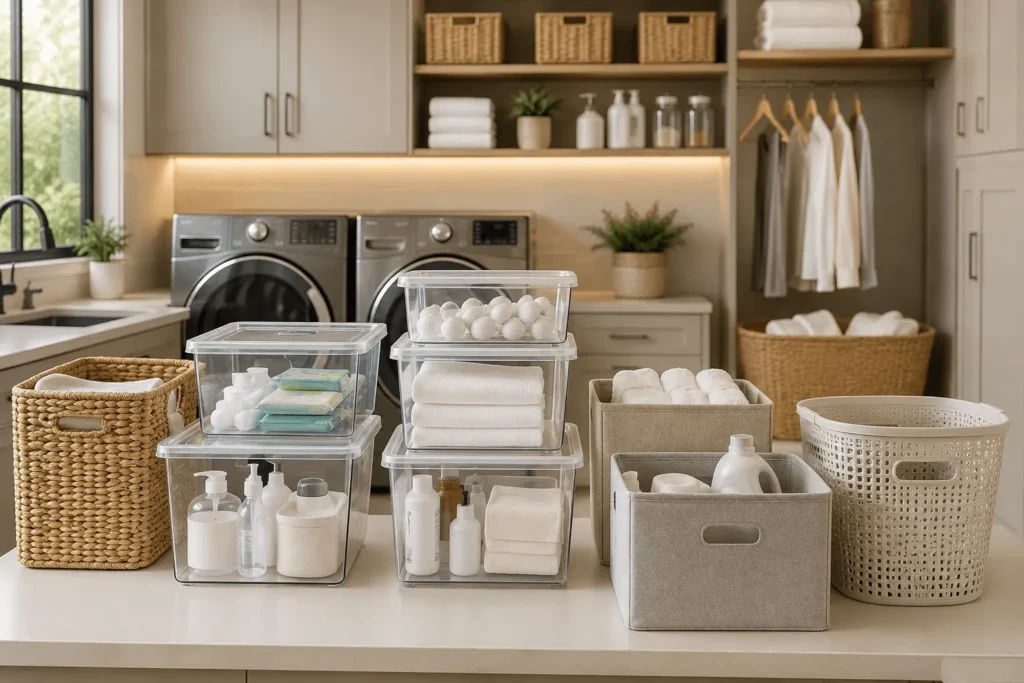
Choosing storage containers that suit your needs will help create an organization system that’s both practical and visually appealing.
Plastic Storage Bins
Plastic storage bins are among the most popular organization solutions because they’re affordable, durable, and available in a wide variety of sizes and styles.
They work well in almost every laundry room, from small apartment closets to large utility rooms.
Benefits of Plastic Storage Bins
Plastic bins offer several advantages:
- Water-resistant
- Easy to clean
- Durable enough for heavy items
- Available in clear or opaque designs
- Stackable for vertical storage
- Affordable for most budgets
Unlike fabric baskets, plastic bins won’t absorb moisture, making them ideal for humid laundry environments.
Best Items to Store
Plastic bins are perfect for organizing:
- Laundry detergent
- Fabric softener
- Dryer sheets
- Laundry pods
- Stain removers
- Cleaning sprays
- Disinfecting wipes
- Microfiber cloths
- Replacement sponges
- Bulk cleaning supplies
Because many plastic containers include lids, they also help keep products free from dust and moisture.
Clear vs. Opaque Plastic Bins
Both options have their advantages.
Clear Plastic Bins
Advantages include:
- Easy visibility
- Faster product identification
- No need to open every container
- Ideal for frequently used supplies
Opaque Plastic Bins
Benefits include:
- Cleaner visual appearance
- Hidden clutter
- Better protection from sunlight
- More decorative look
Many homeowners combine both styles by using clear bins inside cabinets and decorative containers on open shelves.
Cleaning Tips
Plastic bins require very little maintenance.
Simply:
- Wipe with warm soapy water
- Dry thoroughly before refilling
- Inspect periodically for cracks
- Replace damaged containers as needed
Fabric Storage Baskets
Fabric baskets combine functionality with style. They soften the appearance of a laundry room while providing lightweight storage for everyday essentials.
Available in canvas, cotton, felt, polyester, and woven fabrics, these baskets fit beautifully into modern, farmhouse, Scandinavian, and minimalist interiors.
Advantages of Fabric Baskets
Fabric storage baskets offer several benefits:
- Lightweight
- Easy to carry
- Foldable when not in use
- Available in many colors and textures
- Gentle on delicate fabrics
- Attractive enough for open shelving
Many feature reinforced handles, making them easy to remove from shelves and transport around the home.
Best Uses
Fabric baskets work well for storing:
- Clean towels
- Washcloths
- Reusable dryer balls
- Mesh laundry bags
- Delicate garments
- Extra pillowcases
- Ironing accessories
- Clothespins
They’re best suited for lightweight items rather than heavy detergent bottles.
Choosing the Right Fabric
Consider the material carefully.
Canvas
- Durable
- Easy to clean
- Holds its shape well
Cotton
- Soft
- Washable
- Great for decorative storage
Felt
- Modern appearance
- Lightweight
- Best for dry items
Polyester
- Moisture-resistant
- Budget-friendly
- Easy to wipe clean
Care Tips
To extend the life of fabric baskets:
- Vacuum occasionally to remove lint.
- Spot-clean stains promptly.
- Avoid storing damp items.
- Wash removable liners when needed.
Wicker and Decorative Bins
If you want your laundry room to feel warm and inviting, wicker baskets are an excellent choice. They combine practical storage with timeless style, making them a favorite for farmhouse, cottage, and traditional laundry rooms.
Why Choose Wicker?
Wicker baskets provide:
- Natural texture
- Decorative appeal
- Excellent airflow
- Lightweight construction
- Versatile storage
They instantly make a functional space feel more comfortable and welcoming.
Best Storage Uses
Wicker bins are ideal for:
- Rolled towels
- Decorative blankets
- Extra linens
- Toilet paper
- Laundry baskets
- Dryer balls
- Reusable shopping bags
Many homeowners use matching wicker baskets to create a coordinated look throughout the room.
Decorative Storage Options
Beyond wicker, consider:
- Rope baskets
- Wire baskets
- Bamboo containers
- Wooden crates
- Decorative metal bins
Each material offers a different design style while serving the same organizational purpose.
Keep Decorative Bins Organized
To avoid clutter:
- Use matching basket sizes.
- Label every container.
- Avoid overfilling.
- Store similar items together.
Consistency creates a polished appearance.
Stackable Storage Containers
When floor space is limited, stackable storage containers are one of the smartest investments you can make.
Instead of spreading supplies across multiple shelves, stackable bins allow you to build upward, making excellent use of vertical storage.
Benefits of Stackable Containers
These containers help:
- Save floor space
- Maximize shelving capacity
- Keep products grouped together
- Reduce countertop clutter
- Improve accessibility
Many modern designs feature front-opening lids, allowing easy access without unstacking every container.
Ideal Items to Store
Stackable containers are excellent for:
- Extra detergent
- Bulk cleaning products
- Replacement supplies
- Laundry pods
- Dryer sheets
- Air fresheners
- Seasonal laundry items
- Specialty fabric treatments
Choosing the Right Size
Before purchasing, measure:
- Shelf depth
- Shelf height
- Cabinet width
Selecting containers that fit your available space prevents wasted storage capacity.
Safety Tips
Always:
● Place heavier containers on the bottom.
● Secure tall stacks.
● Avoid stacking beyond the manufacturer’s recommendations.
● Leave enough room for ventilation around appliances.
Labeling Systems for Easy Organization
Even the best storage bins become ineffective if nobody knows what’s inside them. A consistent labeling system helps every member of the household quickly locate and return items.
Labels also make inventory management easier, reducing duplicate purchases and preventing unnecessary clutter.
Benefits of Labels
Clear labels help:
- Save time
- Maintain organization
- Encourage family participation
- Reduce misplaced items
- Improve visual consistency
Popular Label Types
Choose labels that suit your style.
Adhesive Labels
Ideal for:
- Plastic bins
- Glass jars
- Storage containers
Chalkboard Labels
Perfect if you regularly change contents.
Simply erase and rewrite as needed.
Printed Vinyl Labels
Offer:
- Professional appearance
- Water resistance
- Long-lasting durability
Hanging Tags
Great for:
- Fabric baskets
- Wicker bins
- Wire baskets
What Should You Label?
Examples include:
- Detergent
- Fabric Softener
- Dryer Sheets
- Stain Removers
- Cleaning Cloths
- Laundry Bags
- Pet Laundry
- Towels
- Delicates
- Seasonal Items
- Extra Supplies
Organization Tip
Use one consistent font, color, and label style throughout the room to create a cohesive, high-end appearance.
Expert Tips for Choosing Storage Bins
When selecting storage containers, keep these professional recommendations in mind:
- Buy bins after measuring your shelves.
- Choose durable materials that match your environment.
- Select containers that are easy to clean.
- Standardize sizes whenever possible.
- Store frequently used items in the most accessible bins.
- Reserve decorative baskets for open shelving.
- Keep hazardous products in secure, closed containers.
These small decisions contribute to a storage system that’s both functional and attractive.
Common Mistakes to Avoid
Avoid these common storage bin mistakes:
- Buying bins before measuring available space.
- Mixing too many different styles and colors.
- Overloading containers until they’re difficult to lift.
- Forgetting to label bins.
- Using decorative baskets for heavy products.
- Storing damp items in fabric containers.
- Filling every shelf without leaving room for future needs.
A little planning goes a long way toward maintaining an organized laundry room.
Key Takeaway
Storage bins are the foundation of an efficient laundry room organization system. Plastic bins offer durability and moisture resistance, fabric baskets add softness and style, wicker containers bring warmth and character, while stack-able bins maximize vertical storage. Pairing these containers with a clear labeling system makes it easier to maintain organization, save time, and keep your laundry room clutter-free.
Cabinet Hampers vs. Laundry Baskets: Which Is Better?
Both cabinet hampers and traditional laundry baskets offer practical ways to collect dirty clothes, but each serves different needs. Comparing their storage capacity, convenience, durability, and space requirements helps you choose the best option for your household.
One of the most important decisions when organizing a laundry room is choosing the right system for collecting dirty clothes. While this may seem like a small detail, the choice between a cabinet hamper and a traditional laundry basket can significantly impact your laundry routine, storage efficiency, and the overall appearance of your laundry room.
Cabinet hampers provide a built-in, concealed solution that creates a clean and streamlined look, while traditional laundry baskets offer flexibility, portability, and affordability.
The best option depends on several factors, including the size of your laundry room, your household’s laundry habits, your budget, and your preferred design style. In this section, we’ll compare cabinet hampers and laundry baskets in detail so you can choose the solution that best fits your home.
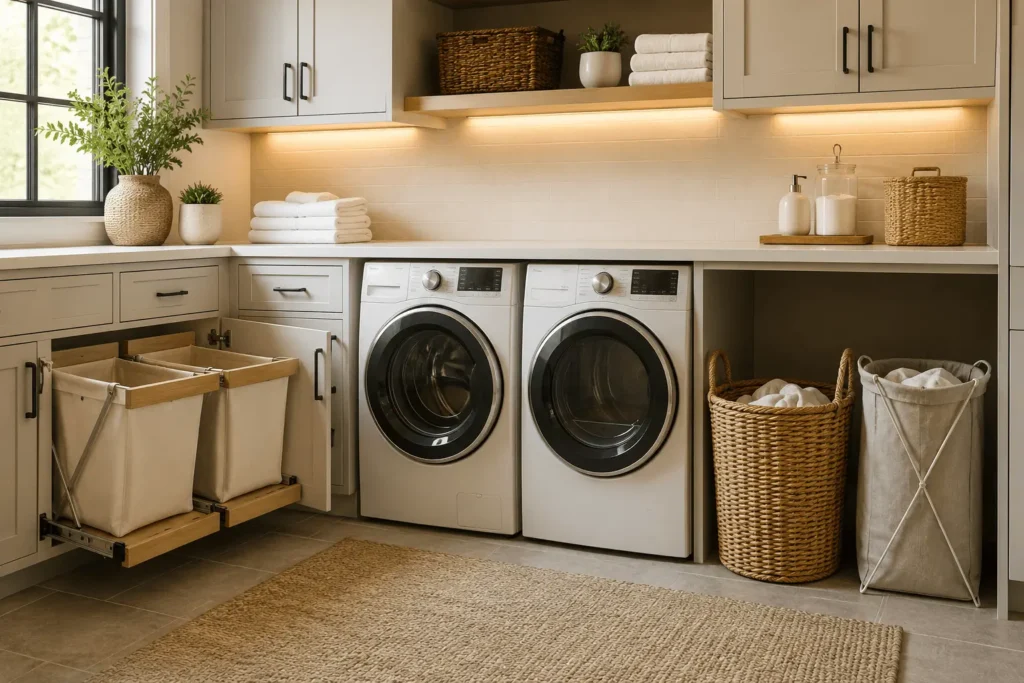
Advantages of Cabinet Hampers
Cabinet hampers are built into cabinetry or hidden behind cabinet doors, making them an excellent choice for homeowners who want a clean, organized, and clutter-free laundry room.
Unlike freestanding baskets, cabinet hampers keep dirty clothes out of sight while maximizing available floor space.
Clean and Clutter-Free Appearance
One of the biggest advantages of cabinet hampers is their ability to hide dirty laundry from view. Since clothing is stored behind closed doors, the laundry room instantly looks neater and more organized.
This is especially beneficial in:
- Open-concept homes
- Laundry rooms connected to kitchens
- Mudrooms
- Hallway laundry closets
- Homes where the laundry area is visible to guests
A concealed hamper contributes to a polished and professional appearance.
Maximizes Floor Space
Cabinet hampers are integrated into existing cabinetry, allowing you to use floor space more efficiently.
This is particularly helpful in:
- Small laundry rooms
- Narrow laundry closets
- Apartment laundry spaces
- Compact utility rooms
Because the hamper doesn’t occupy open floor space, the room feels larger and easier to navigate.
Improves Laundry Organization
Many cabinet hamper systems include two or three separate compartments.
This allows you to pre-sort laundry into categories such as:
- Whites
- Dark colors
- Bright colors
- Delicates
- Towels
- Children’s clothing
Pre-sorting saves time on laundry day and reduces the risk of color transfer.
Enhances Safety
Keeping dirty laundry inside cabinets reduces potential tripping hazards caused by baskets left on the floor.
Cabinet doors also help prevent children and pets from accessing laundry contents.
Complements Custom Laundry Room Designs
Built-in hampers integrate seamlessly with surrounding cabinets and countertops.
They work particularly well in:
- Modern laundry rooms
- Farmhouse laundry rooms
- Luxury utility rooms
- Custom cabinetry designs
The result is a cohesive, high-end appearance that can enhance your home’s overall value.
Drawbacks of Cabinet Hampers
Despite their many advantages, cabinet hampers also have some limitations.
These include:
- Higher installation costs
- Less flexibility once installed
- Limited portability
- May require custom cabinetry
- Smaller capacity in some designs
For homeowners planning a complete renovation, however, these drawbacks are often outweighed by the long-term benefits.
Benefits of Traditional Laundry Baskets
Traditional laundry baskets remain one of the most popular laundry storage solutions because they’re affordable, versatile, and easy to use.
Available in a wide range of materials, sizes, and styles, laundry baskets work well in nearly every type of home.
Affordable Organization
Laundry baskets are generally much less expensive than built-in cabinet hampers.
Budget-friendly options include:
- Plastic baskets
- Fabric hampers
- Mesh laundry bags
- Rope baskets
- Wicker hampers
This makes them ideal for renters, first-time homeowners, and families working with a limited budget.
Easy to Move
Unlike cabinet hampers, traditional baskets can be carried directly from the bedroom to the laundry room and back again.
This portability simplifies the entire laundry process.
Many baskets include:
- Comfortable handles
- Lightweight construction
- Wheels
- Foldable designs
Rolling laundry carts are particularly useful for transporting heavy loads.
Flexible Placement
Laundry baskets can be placed almost anywhere.
Common locations include:
- Bedrooms
- Bathrooms
- Closets
- Laundry rooms
- Dorm rooms
- Apartments
Because they aren’t permanently installed, they’re easy to reposition whenever needed.
Variety of Styles
Today’s laundry baskets are available in countless designs to match virtually any décor.
Popular materials include:
- Plastic
- Wicker
- Canvas
- Cotton rope
- Bamboo
- Wire
- Fabric
Decorative baskets can serve both functional and aesthetic purposes when displayed on open shelving.
Ideal for Large Families
Households with multiple family members often benefit from having several portable baskets.
Separate baskets can be assigned to:
- Parents
- Children
- Sports uniforms
- Delicate clothing
- Towels
- Bedding
This simplifies sorting and reduces confusion.
Drawbacks of Laundry Baskets
Traditional baskets also have disadvantages.
Potential drawbacks include:
- Visible clutter
- Floor space consumption
- Can become trip hazards
- Often overflow with clothing
- Less integrated appearance
Without designated storage areas, multiple baskets can quickly make a laundry room feel crowded.
Space Requirements
Available space is one of the most important factors when deciding between cabinet hampers and laundry baskets.
Cabinet Hampers
Best suited for:
- Built-in cabinetry
- Medium to large laundry rooms
- Renovation projects
- Homes with custom storage
Although they require cabinet space, they free up valuable floor area.
Laundry Baskets
Better suited for:
- Apartments
- Rental homes
- Small budgets
- Flexible layouts
- Multi-room laundry collection
However, baskets require dedicated floor or shelf space when not in use.
Which Saves More Space?
If your goal is maximizing floor space, cabinet hampers are generally the better choice because they utilize otherwise unused cabinet interiors.
If portability is your priority, traditional baskets remain the most practical option.
Durability and Maintenance
Both storage options can last for many years when properly maintained, but they differ in terms of durability and upkeep.
Cabinet Hampers
Typically constructed from:
- Hardwood
- Plywood
- MDF
- Metal frames
- Heavy-duty pull-out slides
Maintenance involves:
- Cleaning cabinet interiors
- Wiping pull-out mechanisms
- Tightening hardware
- Replacing removable liners when necessary
High-quality cabinet hampers can easily last for decades.
Laundry Baskets
Durability depends on the material.
Plastic
- Extremely durable
- Water-resistant
- Easy to clean
Canvas
- Lightweight
- Washable
- May wear over time
Wicker
- Attractive
- Strong
- Can crack if exposed to excessive moisture
Wire
- Durable
- Excellent airflow
- May scratch delicate flooring
Choosing quality materials extends the lifespan of any laundry basket.
Which Option Is Best for Your Household?
There isn’t a one-size-fits-all answer. The best choice depends on your household size, available space, and lifestyle.
Choose Cabinet Hampers If You:
- Prefer a clean, built-in appearance
- Are renovating your laundry room
- Have custom cabinetry
- Want hidden laundry storage
- Need better organization
- Value long-term durability
Choose Traditional Laundry Baskets If You:
- Rent your home
- Need portable laundry storage
- Have multiple laundry collection points
- Want an affordable solution
- Frequently carry laundry between rooms
- Prefer flexible organization
Consider a Combination Approach
Many homeowners find that using both solutions provides the best of both worlds.
For example:
- Install a built-in cabinet hamper in the laundry room for daily sorting.
- Keep lightweight laundry baskets in bedrooms for collecting clothes.
- Use portable baskets to transport laundry to and from the laundry room.
This hybrid system combines convenience, organization, and flexibility.
Cabinet Hampers vs. Laundry Baskets: Quick Comparison
| Feature | Cabinet Hampers | Traditional Laundry Baskets |
| Appearance | Hidden, streamlined | Visible unless stored |
| Portability | Low | Excellent |
| Installation | Permanent | No installation required |
| Cost | Higher | Lower |
| Space Efficiency | Excellent | Moderate |
| Flexibility | Limited | High |
| Maintenance | Low | Low to Moderate |
| Best For | Custom laundry rooms | Apartments, families, renters |
Expert Tips for Choosing the Right Option
To make the best decision:
- Measure your available space before purchasing.
- Consider how much laundry your household generates each week.
- Think about whether portability or appearance is more important.
- Choose durable, easy-to-clean materials.
- If possible, combine built-in hampers with portable baskets for maximum flexibility.
- Select styles that complement your laundry room’s overall design.
Common Mistakes
Avoid these common errors when selecting laundry collection solutions:
● Buying oversized baskets that block walkways.
● Choosing decorative hampers with poor ventilation.
● Installing cabinet hampers without enough clearance for pull-out drawers.
● Ignoring weight capacity when selecting baskets.
● Keeping only one hamper for a large family.
● Failing to sort laundry as it’s collected.
Key Takeaway
Both cabinet hampers and traditional laundry baskets offer unique advantages. Cabinet hampers create a clean, built-in look and maximize floor space, making them ideal for custom laundry rooms and homeowners seeking a polished design. Traditional laundry baskets provide unmatched portability, affordability, and flexibility, making them perfect for renters, growing families, and multi-room laundry collection. For many households, a combination of both solutions delivers the greatest convenience and efficiency.
Creating the Perfect Laundry Folding Station
A dedicated folding station makes laundry more efficient by providing a convenient workspace for folding clothes immediately after drying. Whether you choose a permanent countertop or a space-saving folding solution, a dedicated folding station keeps your laundry room organized, minimizes clutter, and streamlines daily chores.
A dedicated folding area allows you to complete the entire laundry process in one convenient location. This not only saves time but also keeps clothes neat, reduces wrinkles, and helps maintain an organized home.
Whether your laundry room is spacious or compact, incorporating a functional folding station can significantly improve your workflow. It provides a designated workspace for sorting, folding, pairing socks, organizing garments, and preparing clothes for storage or ironing.
The best folding stations combine practicality, comfort, and smart storage. They are designed to fit your available space while keeping laundry essentials within easy reach. In this section, you’ll learn how to choose the ideal folding surface, maximize space with creative folding station ideas, integrate multi-purpose countertops, and select useful accessories that make laundry day more efficient.
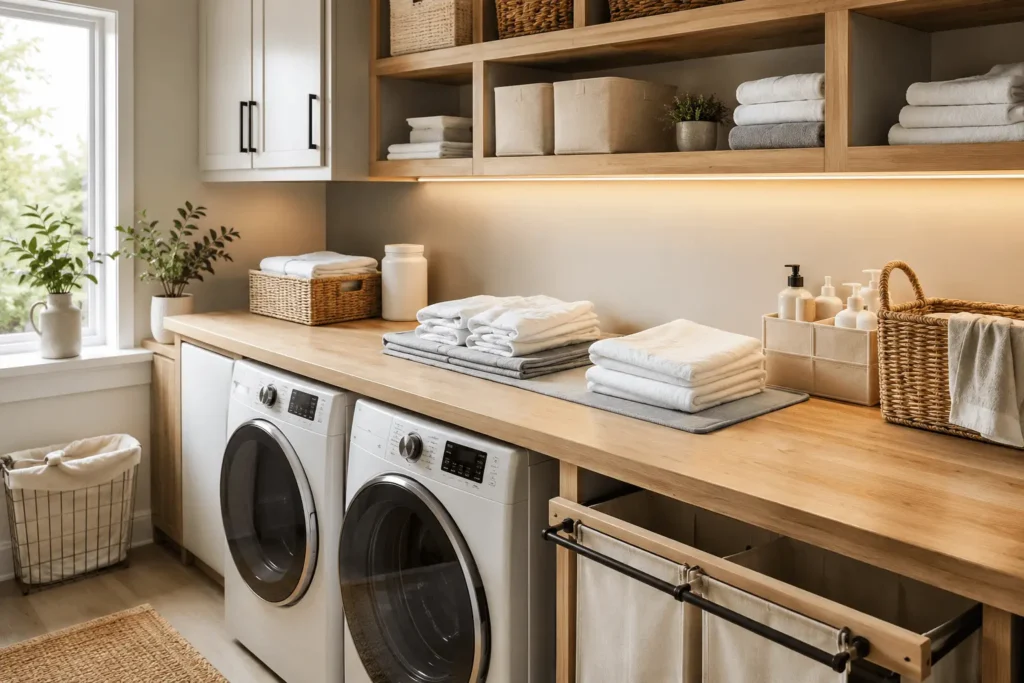
Choosing the Ideal Folding Surface
The folding surface is the centerpiece of any laundry folding station. It should be sturdy, spacious, and positioned at a comfortable height to make folding clothes easier and reduce strain on your back and shoulders.
Determine the Right Size
The size of your folding station depends on your available space and laundry habits.
Consider the following:
- Small laundry closets may only have room for a narrow countertop.
- Medium-sized laundry rooms can accommodate a standard work surface above front-loading appliances.
- Large utility rooms may include an island or a full-size countertop dedicated to folding.
Aim for a surface large enough to fold bath towels, bed sheets, and bulky clothing without items hanging over the edge.
Select Durable Materials
Your folding surface should withstand daily use, moisture, and occasional spills.
Popular countertop materials include:
Laminate
- Budget-friendly
- Easy to clean
- Available in many colors and patterns
- Suitable for most households
Butcher Block
- Warm, natural appearance
- Strong and durable
- Ideal for farmhouse-style laundry rooms
- Requires occasional sealing to protect against moisture
Quartz
- Highly durable
- Scratch-resistant
- Stain-resistant
- Low maintenance
- Excellent for busy households
Solid Surface Materials
- Seamless appearance
- Easy to repair
- Resistant to mold and mildew
- Available in modern finishes
Choose a material that complements your laundry room’s design while meeting your maintenance preferences.
Ergonomic Height Matters
An improperly positioned folding station can cause discomfort during repetitive tasks.
For most adults, a countertop height of 36 to 39 inches (91–99 cm) provides a comfortable working position. If multiple family members use the laundry room, consider the average height of the primary users when planning your station.
Ensure Adequate Lighting
Good lighting is essential for spotting stains, matching socks, and folding clothes neatly.
Consider adding:
- LED ceiling lights
- Under-cabinet lighting
- Adjustable task lighting
- Natural light where possible
A bright workspace makes laundry tasks easier and more enjoyable.
Space-Saving Folding Station Ideas
Even if your laundry room is small, you can still create an efficient folding station by using space-saving designs.
Countertop Over Front-Loading Appliances
One of the most popular solutions is installing a countertop directly above front-loading washers and dryers.
Benefits include:
- Maximizes unused space
- Creates a continuous work surface
- Hides appliance gaps
- Improves the room’s overall appearance
This design is ideal for both small and medium-sized laundry rooms.
Fold-Down Wall Table
A fold-down table is perfect for compact laundry areas.
When needed, simply lower the table to create a folding surface. After use, fold it back against the wall to free up floor space.
This solution works especially well in:
- Apartments
- Laundry closets
- Tiny homes
- Multifunctional utility rooms
Pull-Out Folding Shelf
Some cabinets include pull-out shelves that extend when needed.
Advantages include:
- Hidden when not in use
- Saves floor space
- Provides additional work area
- Keeps the room uncluttered
Mobile Folding Cart
A rolling utility cart with a flat top can serve as both storage and a temporary folding station.
Choose a cart with:
- Locking wheels
- Multiple storage shelves
- Durable work surface
- Compact footprint
This flexible option is ideal for renters or homeowners who prefer portable furniture.
Laundry Room Island
If you have a large laundry room, consider adding a central island.
An island provides:
- Ample folding space
- Additional storage
- Seating options
- Decorative appeal
Many custom islands include built-in drawers, cabinets, or pull-out hampers for even greater functionality.
Multi-Purpose Countertops
A folding station doesn’t have to serve only one purpose. Multi-purpose countertops make the most of your available space by combining several functions into one work area.
Folding and Sorting
Use your countertop to:
- Fold clean laundry
- Sort clothes by family member
- Pair socks
- Stack folded garments
- Organize delicates
Having a dedicated sorting area keeps clothes off the floor and reduces clutter.
Ironing Preparation
While a countertop isn’t a replacement for an ironing board, it provides an excellent surface for:
- Preparing garments
- Spraying wrinkle remover
- Organizing clothes before ironing
- Folding freshly ironed items
Storage Integration
Install cabinets or shelves beneath the countertop to store:
- Laundry baskets
- Cleaning supplies
- Extra detergent
- Ironing equipment
- Replacement products
This keeps essential items close at hand while maintaining a clean workspace.
Workspace for Household Tasks
Many homeowners also use their laundry room countertops for:
- Wrapping gifts
- Craft projects
- Pet care
- Folding reusable shopping bags
- Organizing household supplies
A versatile countertop increases the overall functionality of your laundry room.
Folding Station Accessories
The right accessories can make your folding station even more efficient.
Laundry Sorters
Built-in or rolling sorters help separate:
- Whites
- Darks
- Colors
- Delicates
Sorting clothes before washing saves time on laundry day.
Storage Baskets
Keep small items organized using labeled baskets for:
- Socks
- Dryer sheets
- Mesh laundry bags
- Clothespins
- Lint rollers
Hanging Rod
Install a hanging rod above or beside the folding station to:
- Hang freshly ironed clothes
- Air-dry delicate garments
- Prevent wrinkles
- Organize outfits
Pull-Out Drying Rack
A retractable drying rack provides additional space for garments that shouldn’t be machine dried while remaining hidden when not in use.
Drawer Organizers
Keep drawers tidy with dividers for:
- Sewing kits
- Stain remover pens
- Measuring scoops
- Laundry pods
- Spare buttons
Well-organized drawers make supplies easy to locate.
Small Waste Bin
A compact trash bin near the folding station is useful for:
- Dryer lint
- Clothing tags
- Empty packaging
- Loose threads
This helps maintain a clean workspace throughout the laundry process.
Expert Tips
Create a more efficient folding area by following these professional recommendations:
● Position the folding station close to the dryer to minimize carrying clothes.
● Leave enough space around the station for easy movement.
● Store frequently used supplies within arm’s reach.
● Use durable, easy-to-clean surfaces.
● Add comfortable anti-fatigue floor mats if you spend extended periods standing.
● Keep the countertop mostly clear to maximize workspace.
● Incorporate closed storage to reduce visual clutter.
Common Mistakes to Avoid
Avoid these common design mistakes:
- Choosing a countertop that’s too small for folding large items.
- Installing the surface at an uncomfortable height.
- Cluttering the folding station with unnecessary decorations.
- Ignoring lighting requirements.
- Using materials that are difficult to clean.
- Forgetting to include nearby storage.
- Blocking appliance doors or walkways.
Thoughtful planning helps create a folding station that remains functional and comfortable for years.
DIY Folding Station Ideas
If you’re working with a limited budget, consider these do-it-yourself solutions:
- Install a simple butcher block countertop above front-loading appliances.
- Repurpose a sturdy desk or table as a folding station.
- Build floating shelves with a wide lower shelf for folding.
- Use a fold-down wall-mounted table.
- Convert an old dresser into a combination folding station and storage cabinet.
DIY projects can significantly improve functionality while keeping renovation costs manageable.
Key Takeaway
A dedicated laundry folding station streamlines your entire laundry routine by providing a convenient workspace for folding, sorting, and organizing clean clothes. Whether you choose a countertop above your appliances, a fold-down table, or a custom island, the key is selecting a solution that fits your space, supports your workflow, and keeps essential supplies within easy reach. With the right design and accessories, your folding station can become one of the most valuable features in your laundry room.
Organizing Laundry Detergent and Cleaning Supplies
Keeping laundry detergent, stain removers, fabric softeners, and cleaning products properly organized improves safety and convenience. Smart storage solutions help prevent spills, maximize cabinet space, and ensure that everyday essentials remain easy to access.
An organized laundry room isn’t just about neatly folded towels and labeled baskets—it also depends on how well you store and manage your laundry detergents, fabric care products, and cleaning supplies. Laundry essentials are used every day, so keeping them organized is essential. Without an efficient storage system, they can quickly create clutter, slow down your routine, waste valuable time, and increase the risk of spills or other safety hazards.
Whether you have a large utility room with custom cabinets or a compact laundry closet with limited storage, organizing your cleaning supplies helps streamline your laundry routine and keeps your workspace safe and efficient. The goal is to create a system where every product has a designated place, frequently used items are easy to reach, and hazardous chemicals are stored securely.
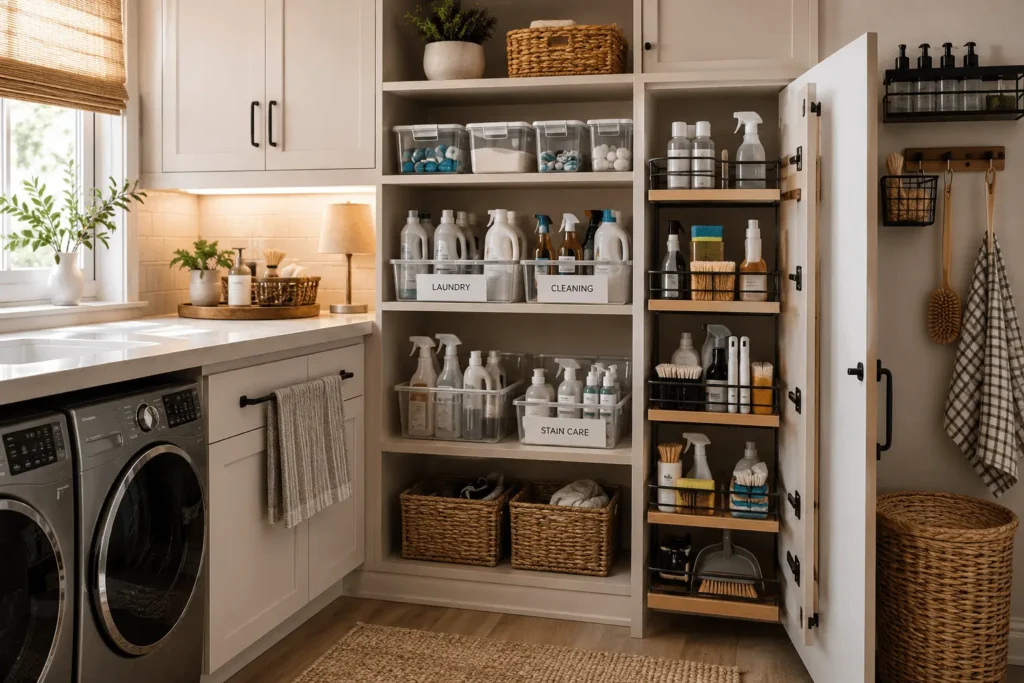
In this section, you’ll learn practical strategies for organizing everyday laundry essentials, choosing the right containers, using drawer organizers effectively, and creating a labeling system that keeps everything easy to find.
Everyday Essentials Organization
Before choosing storage containers or organizers, it’s important to identify which products you use most often. Keeping these everyday essentials together and within easy reach reduces unnecessary movement and makes laundry tasks more efficient.
Identify Your Daily Laundry Products
Start by gathering the products you use on a regular basis. For most households, these include:
- Laundry detergent
- Fabric softener
- Dryer sheets
- Laundry pods
- Stain remover
- Oxygen bleach
- Wool dryer balls
- Mesh laundry bags
- Lint roller
- Measuring scoop or detergent cup
These items should be stored close to your washer or folding station for quick access.
Group Similar Products Together
One of the simplest organization techniques is grouping related items. Instead of placing products wherever there’s available space, create categories based on their function.
For example:
Laundry Products
- Liquid detergent
- Powder detergent
- Laundry pods
- Fabric softener
- Scent boosters
Stain Treatment Supplies
- Stain removers
- Fabric-safe bleach
- Spot cleaning pens
- Oxygen cleaners
Drying Accessories
- Dryer sheets
- Wool dryer balls
- Mesh drying bags
- Clothespins
Cleaning Supplies
- Multi-surface cleaner
- Glass cleaner
- Disinfectant spray
- Microfiber cloths
- Sponges
Keeping similar products together makes them easier to locate and simplifies restocking.
Store Frequently Used Items at Eye Level
A good organization system follows the principle of accessibility.
Arrange products based on how often you use them:
- Eye-level shelves: Everyday laundry products
- Lower shelves: Heavy detergent bottles and bulk purchases
- Upper shelves: Seasonal or rarely used supplies
This layout minimizes bending, stretching, and unnecessary movement during laundry tasks.
Create Dedicated Storage Zones
Dividing your laundry room into functional zones improves workflow and keeps supplies organized.
Recommended zones include:
- Washing Zone
- Drying Zone
- Folding Zone
- Cleaning Supply Zone
- Storage Zone
For example, detergents and stain removers belong in the washing zone, while dryer sheets and dryer balls should be stored near the dryer.
Detergent Dispensers and Containers
Original manufacturer bottles are practical, but they often create visual clutter and take up more space than necessary. Transferring products into well-designed dispensers and containers can improve both functionality and appearance.
Benefits of Using Detergent Dispensers
Using dedicated dispensers offers several advantages:
- Creates a cleaner, more cohesive look
- Makes measuring detergent easier
- Reduces spills and drips
- Frees up shelf space
- Keeps products organized
Matching dispensers also enhance the overall aesthetic of your laundry room.
Types of Containers
Different laundry products require different storage solutions.
Glass Dispensers
Glass containers provide a premium look and are ideal for:
- Powder detergent
- Laundry pods
- Scent boosters
- Dryer balls
Choose thick, durable glass with airtight lids to protect contents from moisture.
Plastic Containers
High-quality plastic containers are:
- Lightweight
- Shatter-resistant
- Easy to clean
- Suitable for families with children
They’re especially useful for liquid detergents and fabric softeners.
Airtight Storage Jars
Laundry pods, scent beads, and powdered products stay fresh longer when stored in airtight containers.
Look for containers with secure lids to prevent moisture from affecting the contents.
Keep Original Labels or Create New Ones
If transferring products into new containers, clearly label each one.
Never rely on memory alone, especially when storing products that could be mistaken for one another.
Include labels such as:
- Laundry Detergent
- Fabric Softener
- Oxygen Bleach
- Laundry Pods
- Dryer Balls
- Scent Boosters
Clear labeling helps every family member use products correctly.
Drawer Organizers
Drawers are often overlooked in laundry rooms, but they provide excellent storage for smaller items that might otherwise clutter countertops.
Why Use Drawer Organizers?
Drawer dividers help:
- Prevent clutter
- Separate small accessories
- Make items easier to locate
- Improve overall organization
Instead of tossing everything into one drawer, create dedicated compartments.
Organize Small Laundry Accessories
Store smaller items in separate sections, including:
- Clothespins
- Measuring scoops
- Spare buttons
- Sewing kit
- Lint rollers
- Safety pins
- Stain removal pens
- Replacement labels
Using dividers prevents items from shifting and becoming tangled.
Store Frequently Used Tools Together
Create one drawer specifically for tools you use during every laundry session.
For example:
- Fabric shaver
- Lint brush
- Small scissors
- Measuring tape
- Laundry instruction labels
- Permanent marker
Having these tools in one place saves time and reduces frustration.
Keep Children’s Items Separate
If you regularly wash baby clothes or children’s garments, dedicate a drawer to:
- Delicate laundry bags
- Baby-safe detergent
- Bib clips
- Small socks
- Garment clips
This makes specialized laundry routines much easier to manage.
Labeling Products for Convenience
A clear labeling system is one of the simplest ways to maintain long-term organization. Labels eliminate guesswork, encourage family members to return items to the correct place, and create a more polished appearance.
Benefits of Labeling
Consistent labels help you:
- Find products faster
- Prevent misplaced items
- Reduce duplicate purchases
- Keep shelves looking organized
- Simplify inventory management
They also make it easier for guests or other family members to assist with laundry.
Choose a Consistent Label Style
Whether you prefer modern, farmhouse, or minimalist décor, consistency is key.
Popular options include:
- Waterproof vinyl labels
- Chalkboard labels
- Printed adhesive labels
- Hanging wooden tags
- Clear acrylic labels
Using the same font, color, and design throughout the room creates a cohesive look.
Label Shelves as Well as Containers
Many people label containers but forget the shelves.
Shelf labels help everyone return items to their proper location.
Examples include:
- Daily Laundry Supplies
- Stain Treatments
- Cleaning Products
- Extra Supplies
- Delicates
- Ironing Accessories
This simple step makes maintaining organization much easier.
Expert Tips for Organizing Laundry Supplies
Professional organizers recommend these best practices:
- Keep only one open bottle of each product whenever possible.
- Store refill containers separately from everyday supplies.
- Use lazy Susans in deep cabinets for easy access.
- Place heavy detergent bottles on lower shelves to reduce lifting.
- Keep cleaning cloths in washable baskets.
- Rotate products so older items are used first.
- Review your supplies every few months and remove expired or unused products.
These habits prevent clutter from building up over time.
Common Mistakes
Even well-designed laundry rooms can become disorganized if simple mistakes are overlooked.
Avoid these common issues:
● Keeping too many duplicate products.
● Leaving supplies on countertops instead of storing them after use.
● Mixing unrelated cleaning products together.
● Using unlabeled containers.
● Storing heavy bottles on high shelves.
● Forgetting to clean storage containers regularly.
● Buying organizers before measuring available space.
Addressing these habits helps maintain a tidy and efficient laundry room.
Key Takeaway
Organizing laundry detergent and cleaning supplies is essential for creating a functional, efficient, and safe laundry room. By grouping similar products, using appropriate containers, organizing drawers, and implementing a clear labeling system, you can streamline your laundry routine and reduce everyday clutter. A thoughtful storage system not only saves time but also enhances safety, improves accessibility, and makes your laundry room more enjoyable to use.
Safe Cleaning Supply Storage
A clean and organized laundry room should also be a safe one. While detergents, bleach, stain removers, fabric softeners, and disinfectants help keep your clothes and home fresh, they often contain chemicals that require proper handling and storage. Improperly stored cleaning products can create risks such as accidental poisoning, chemical reactions, spills, leaks, or reduced product effectiveness.
Whether you have young children, pets, or simply want a safer home environment, implementing smart cleaning supply storage practices is essential. The goal is to keep products secure, easy to access for adults, and protected from heat, moisture, and accidental misuse.
In this section, you’ll learn how to safely organize laundry detergents and cleaning products, choose the right storage solutions, and create a laundry room that prioritizes both convenience and safety.
Child-Proof Storage Solutions
If you have children or grandchildren visiting your home, keeping cleaning products out of reach should be one of your highest priorities. Many detergents and household cleaners come in brightly colored containers that can attract children’s attention, especially laundry detergent pods, which may resemble candy.
Install Lockable Cabinets
One of the safest ways to store hazardous products is inside lockable cabinets.
Benefits include:
- Prevents unauthorized access
- Keeps chemicals hidden from view
- Reduces the risk of accidental poisoning
- Creates a cleaner and more organized appearance
If installing new cabinetry, consider child-safety locks or magnetic cabinet locks for added protection.
Store Hazardous Products on High Shelves
When lockable cabinets aren’t available, place hazardous products on the highest shelves in the laundry room.
Examples include:
- Bleach
- Ammonia-based cleaners
- Mold removers
- Concentrated detergents
- Stain removers
- Disinfectants
Avoid placing these products on lower shelves where children or pets can easily reach them.
Keep Products in Their Original Containers
Manufacturers design original containers with important safety information, including:
- Usage instructions
- Hazard warnings
- First-aid guidance
- Expiration dates
- Ingredient lists
Never transfer hazardous chemicals into beverage bottles or food containers, as this increases the risk of accidental ingestion.
Secure Laundry Pods
Laundry detergent pods require special attention because of their appearance.
Always:
- Keep pods in their original child-resistant packaging.
- Close the container immediately after each use.
- Store them inside a locked cabinet.
- Never leave pods on countertops or washing machines.
Proper Chemical Storage Practices
Not all cleaning products can be stored together. Some chemicals may react dangerously if mixed, while others lose effectiveness when exposed to unsuitable conditions.
Separate Incompatible Chemicals
Store different types of cleaners separately to reduce the risk of accidental mixing.
For example:
- Keep bleach away from ammonia-based products.
- Store acids separately from alkaline cleaners.
- Avoid placing oxidizers next to flammable products.
Although these products are generally safe when used correctly, accidental leaks or spills can create hazardous situations if incompatible chemicals come into contact.
Avoid Extreme Temperatures
Most laundry and cleaning products perform best when stored at moderate indoor temperatures.
Avoid placing supplies:
- Near heating vents
- Beside water heaters
- In direct sunlight
- Next to dryers with poor ventilation
- In unheated outdoor storage areas
Extreme temperatures can reduce product effectiveness and damage packaging.
Protect Products from Moisture
Excess humidity may affect:
- Powder detergents
- Oxygen bleach
- Laundry scent boosters
- Dryer sheets
Store moisture-sensitive products in airtight containers whenever possible.
Organize by Frequency of Use
Arrange products according to how often you use them.
Everyday Products
Store within easy reach:
- Laundry detergent
- Fabric softener
- Dryer sheets
- Stain remover
Occasional Products
Store on higher shelves:
- Upholstery cleaner
- Specialty fabric treatments
- Seasonal cleaning products
- Carpet spot removers
This organization method improves efficiency while reducing unnecessary handling of hazardous products.
Moisture and Ventilation Considerations
Laundry rooms naturally experience higher humidity levels than many other areas of the home. Without proper ventilation, excess moisture can affect both cleaning supplies and storage furniture.
Improve Air Circulation
Good ventilation helps:
- Reduce humidity
- Prevent mold growth
- Protect cabinetry
- Extend the lifespan of cleaning products
- Improve indoor air quality
If possible, install:
- Exhaust fans
- Ceiling vents
- Operable windows
- Dehumidifiers in damp environments
Choose Moisture-Resistant Storage Materials
Some storage materials perform better than others in humid laundry rooms.
Recommended options include:
- Powder-coated metal shelving
- Plastic storage bins
- Moisture-resistant laminate cabinets
- PVC shelving
- Stainless steel hardware
Avoid untreated wood in consistently damp environments unless it has been properly sealed.
Keep Containers Dry
Before returning products to cabinets:
- Wipe away spills.
- Dry bottle bottoms.
- Clean shelves regularly.
This prevents sticky residue from building up and discourages mold growth.
Emergency Safety Tips
Even with proper organization, accidents can happen. Preparing for emergencies helps protect your family and minimizes potential risks.
Clean Spills Immediately
If detergent or cleaning chemicals spill:
- Wear protective gloves if necessary.
- Follow the product’s cleanup instructions.
- Dispose of contaminated materials properly.
- Wash the affected area thoroughly.
- Dry surfaces completely before returning products.
Leaving spills unattended can damage shelves and create slipping hazards.
Know Basic First Aid
Every household should be familiar with the first-aid instructions listed on cleaning product labels.
If accidental exposure occurs:
- Follow the manufacturer’s guidance.
- Rinse affected skin or eyes as directed.
- Seek medical assistance if symptoms persist.
- Never induce vomiting unless specifically instructed by medical professionals or the product label.
Reading labels before emergencies occur helps you respond more quickly.
Keep Emergency Contacts Accessible
Store important emergency numbers in an easily accessible location.
Consider posting contact information:
- Inside a cabinet door
- Near the laundry room entrance
- On a family emergency information board
Quick access to emergency information can save valuable time.
Best Storage Cabinets for Cleaning Supplies
Selecting the right storage cabinet is just as important as organizing the products inside.
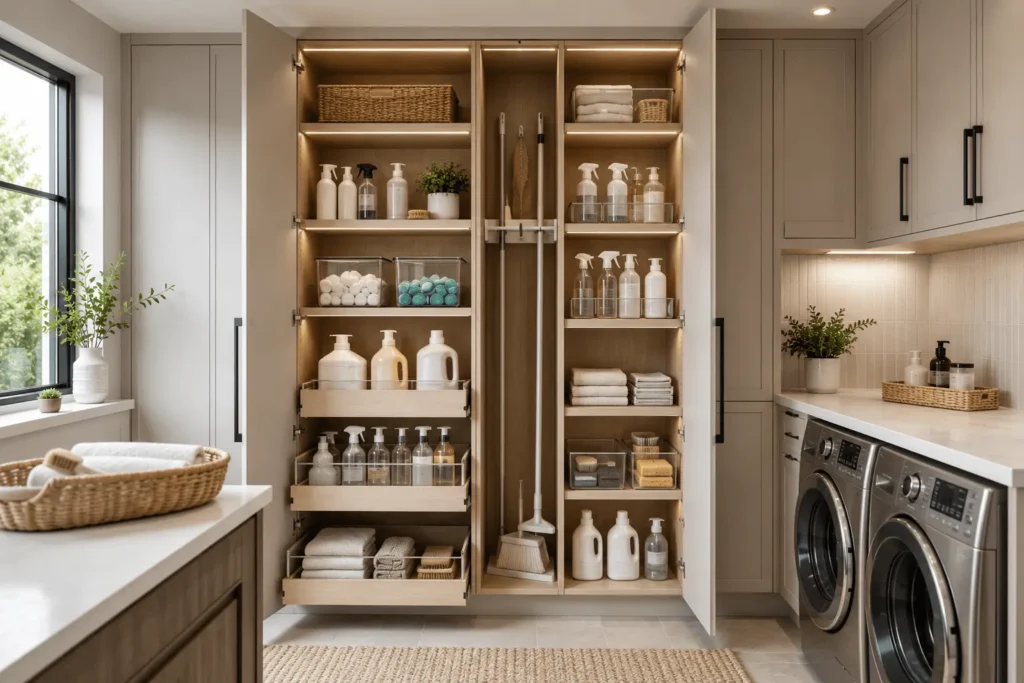
Wall Cabinets
Wall-mounted cabinets keep hazardous products elevated and away from children and pets.
They’re ideal for storing:
- Detergents
- Fabric softeners
- Bleach
- Cleaning sprays
Base Cabinets
Lower cabinets work well for heavier items such as:
- Bulk detergent
- Large refill containers
- Paper towels
- Cleaning buckets
If children are present, install safety locks on all lower cabinets containing chemicals.
Pull-Out Cabinets
Pull-out storage systems improve visibility and reduce the need to reach deep into cabinets.
Benefits include:
- Better organization
- Easier access
- Improved safety
- Efficient use of narrow spaces
Safe Disposal of Cleaning Products
Over time, you may accumulate expired or unwanted cleaning supplies.
When disposing of products:
- Read disposal instructions on the product label.
- Never pour chemicals into storm drains unless specifically permitted.
- Dispose of empty containers according to local recycling guidelines.
- Keep different chemicals separate during disposal.
Regularly reviewing and removing unused products helps reduce clutter and improves safety.
Expert Tips for Long-Term Safety
Professional organizers recommend the following habits:
- Review your cleaning supplies every three to six months.
- Wipe shelves during each deep cleaning session.
- Replace damaged containers immediately.
- Store only the amount of product you realistically use.
- Keep product labels facing outward for easy identification.
- Use clear storage zones for different product categories.
- Teach all family members where hazardous products are stored.
These simple habits help maintain a safer and more organized laundry room over time.
Common Safety Mistakes to Avoid
Avoid these common mistakes that can compromise safety:
- Mixing different cleaning products together.
- Storing chemicals in unmarked containers.
- Leaving detergent bottles open.
- Placing heavy chemical containers on unstable shelves.
- Keeping hazardous products within children’s reach.
- Ignoring damaged or leaking containers.
- Storing products near heat sources.
- Allowing expired products to accumulate.
Being aware of these mistakes helps reduce risks and extends the life of your cleaning supplies.
Key Takeaway
Safe cleaning supply storage is an essential part of an organized laundry room. By using lockable cabinets, storing chemicals correctly, improving ventilation, and following proper safety practices, you can create a space that is both efficient and secure. A well-planned storage system protects your family, preserves your cleaning products, and makes everyday laundry tasks safer and more convenient.
Laundry Room Organization for Small Spaces
A small laundry room doesn’t have to feel cramped, cluttered, or inefficient. In fact, with thoughtful planning and smart storage solutions, even the most compact laundry area can become highly functional and visually appealing. Whether your laundry setup is tucked inside a hallway closet, apartment nook, mudroom, or a small corner of the garage, maximizing every inch of available space is the key to staying organized.
The secret to organizing a small laundry room isn’t adding more furniture—it’s making better use of the space you already have. Vertical storage, multi-functional furniture, hidden compartments, and slim organizers can dramatically increase storage capacity while maintaining a clean and open feel.
In this section, you’ll discover practical, space-saving organization ideas that help transform even the smallest laundry room into an efficient workspace.
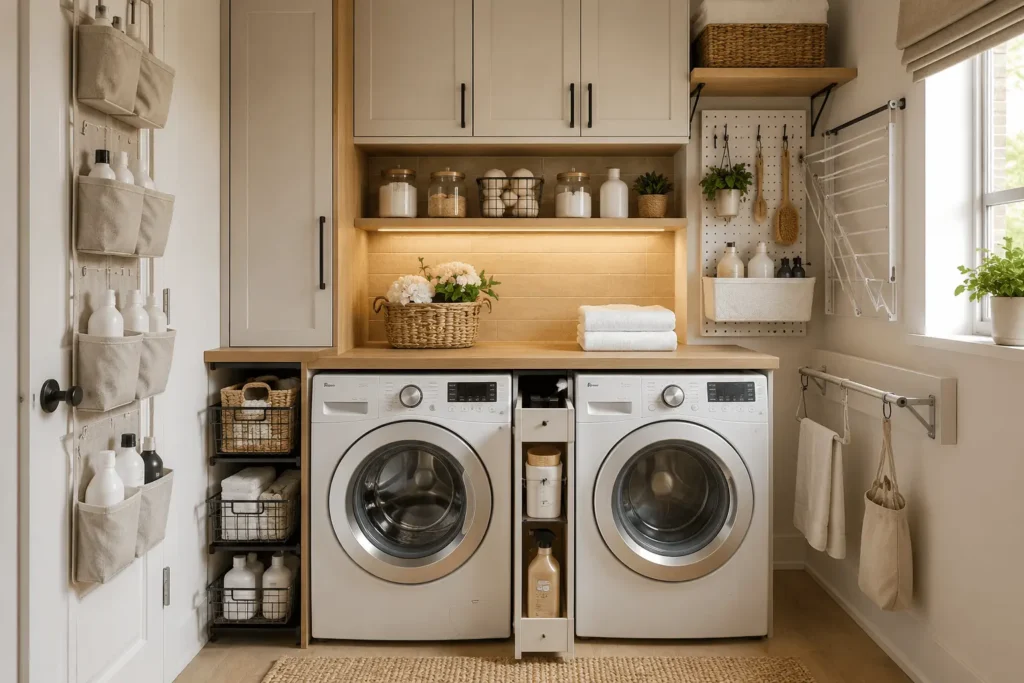
Vertical Storage Hacks
When floor space is limited, the walls become your greatest storage asset. Vertical storage allows you to take advantage of unused wall space while keeping essential items within easy reach.
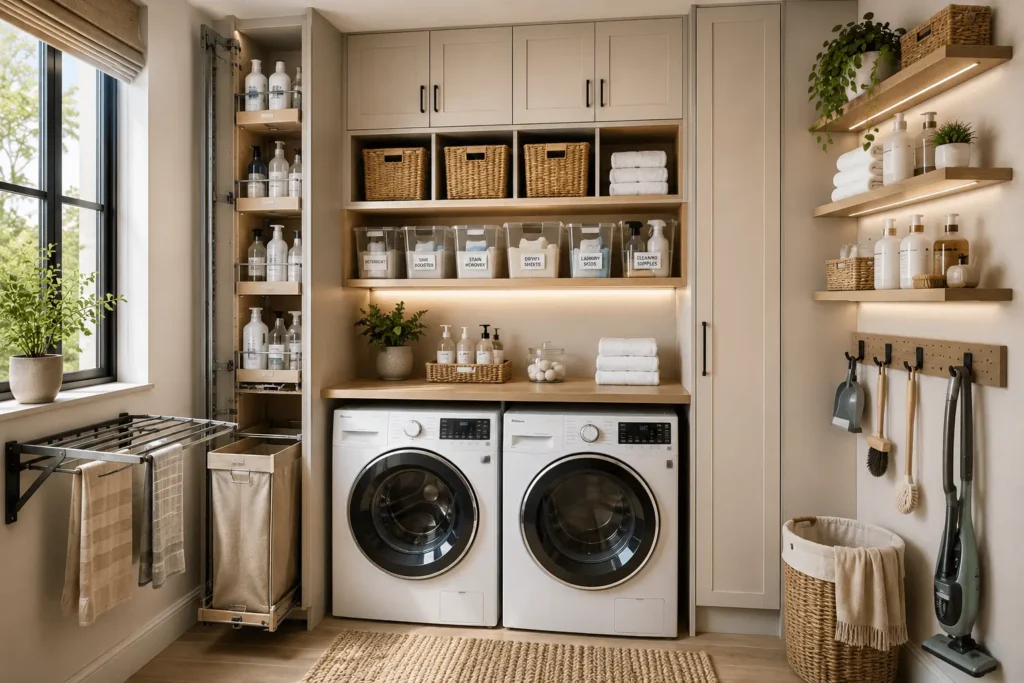
Install Floating Shelves
Floating shelves provide extra storage without making a small room feel crowded.
They’re perfect for storing:
- Laundry detergent
- Fabric softener
- Dryer sheets
- Decorative storage baskets
- Folded towels
- Small plants
- Cleaning cloths
For the best results:
- Install shelves above the washer and dryer.
- Use matching storage bins for a tidy appearance.
- Keep heavier items on the lowest shelf.
Add Wall-Mounted Cabinets
Wall cabinets provide concealed storage while keeping cleaning supplies safely out of reach of children and pets.
Store items such as:
- Bulk detergent
- Bleach
- Extra paper towels
- Cleaning sprays
- Seasonal supplies
Choosing cabinets that extend close to the ceiling helps maximize storage capacity.
Use Pegboards
Pegboards are one of the most flexible storage solutions for compact laundry rooms.
Hang frequently used items including:
- Lint rollers
- Brushes
- Scissors
- Measuring scoops
- Reusable shopping bags
- Spray bottles
- Small storage baskets
Because hooks can be repositioned, pegboards can easily adapt as your storage needs change.
Install Wall Hooks
Simple hooks can free up valuable shelf space by holding:
- Ironing boards
- Brooms
- Mops
- Laundry bags
- Step stools
- Reusable drying racks
Grouping hooks together creates an organized utility wall that’s both practical and attractive.
Slim Cabinets and Rolling Carts
Narrow spaces often contain unused gaps that can become valuable storage areas.
Rolling Storage Carts
A slim rolling cart fits perfectly between the washer and dryer or beside cabinetry.
Use it to store:
- Laundry detergent
- Fabric softener
- Stain removers
- Dryer sheets
- Cleaning cloths
- Spray bottles
Choose a cart with multiple shelves and locking wheels for stability and convenience.
Tall Slim Cabinets
A narrow cabinet occupying just a few inches of floor space can hold a surprising amount of supplies.
Ideal items include:
- Extra detergent
- Cleaning products
- Ironing accessories
- Vacuum attachments
- Paper towels
Adjustable shelves allow you to customize storage for containers of different heights.
Pull-Out Pantry Cabinets
If you’re renovating, consider installing a pull-out pantry-style cabinet.
These cabinets provide:
- Easy access
- Excellent organization
- Full use of narrow spaces
- Hidden storage
They’re particularly effective beside stacked washer-dryer units.
Wall-Mounted Accessories
Wall-mounted accessories eliminate countertop clutter while keeping essential tools within reach.
Hanging Rods
Install a rod for:
- Air-drying garments
- Hanging freshly ironed clothes
- Organizing outfits
- Preventing wrinkles
Position the rod near your folding station for maximum convenience.
Foldable Drying Rack
A wall-mounted drying rack folds flat when not in use, making it ideal for small laundry rooms.
It’s perfect for:
- Sweaters
- Delicate fabrics
- Athletic wear
- Hand-washed clothing
Magnetic Storage
If your washer or dryer has a metal exterior, magnetic organizers provide additional storage without drilling into walls.
Use magnetic holders for:
- Dryer sheets
- Measuring scoops
- Lint bins
- Small cleaning tools
Dispenser Holders
Wall-mounted dispensers keep:
- Liquid detergent
- Fabric softener
- Hand soap
organized while reducing countertop clutter.
Fold-Away Furniture
Furniture that folds away after use is an excellent solution for compact spaces.
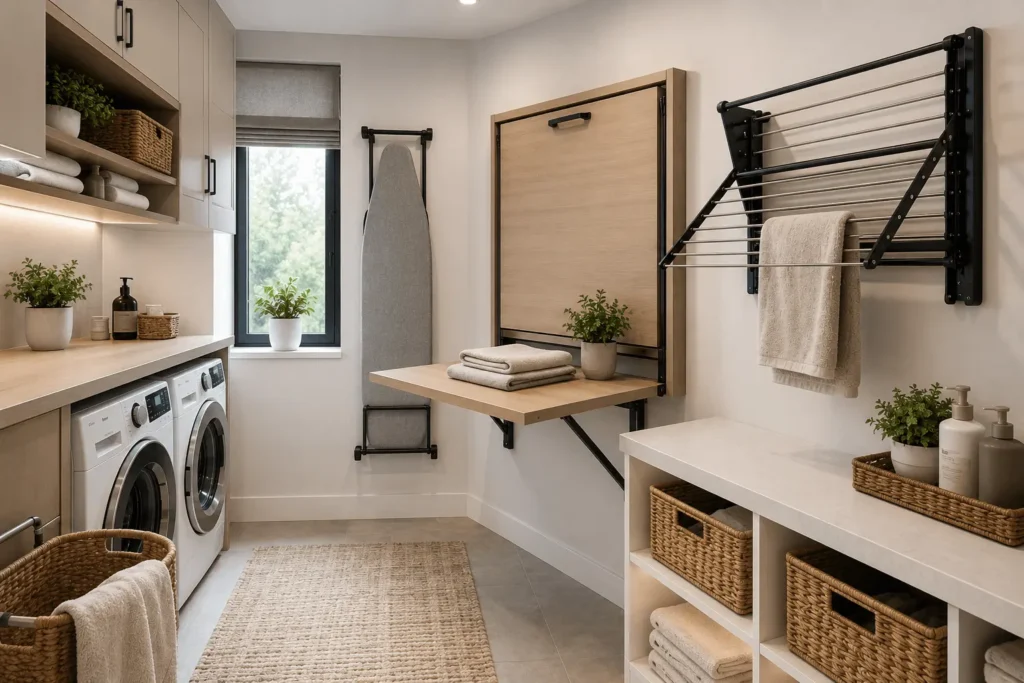
Fold-Down Folding Table
A wall-mounted fold-down table creates a temporary folding station when needed.
Benefits include:
- Saves floor space
- Easy to install
- Affordable
- Ideal for apartments and laundry closets
When folded up, it occupies very little wall space.
Retractable Ironing Board
Instead of a freestanding ironing board, install one that folds into a cabinet or drawer.
Advantages include:
- Hidden storage
- Easy access
- Space efficiency
- Cleaner appearance
Folding Laundry Hamper
Collapsible hampers provide convenient laundry collection while remaining easy to store when not in use.
They’re especially useful for:
- Apartments
- Dorm rooms
- Small households
Hidden Storage Ideas
One of the best ways to organize a small laundry room is by making use of hidden storage opportunities.
Cabinets Above Appliances
The area above your washer and dryer is ideal for storing:
- Extra detergent
- Replacement supplies
- Seasonal products
- Cleaning cloths
Using decorative baskets inside cabinets keeps everything neatly contained.
Under-Counter Storage
If you have a countertop above front-loading machines, use the space underneath for:
- Laundry baskets
- Rolling hampers
- Storage bins
- Cleaning buckets
Behind-the-Door Storage
The back of the laundry room door often goes unused.
Install an over-the-door organizer for:
- Spray bottles
- Brushes
- Dryer sheets
- Stain removers
- Gloves
This instantly adds storage without taking up additional floor space.
Toe-Kick Drawers
If you’re remodeling, consider adding drawers beneath lower cabinets.
These hidden compartments are perfect for:
- Cleaning cloths
- Replacement sponges
- Trash bags
- Small tools
Multifunctional Furniture
Every piece of furniture should serve more than one purpose in a compact laundry room.
Storage Bench
A bench with built-in storage provides:
- Seating
- Laundry basket storage
- Shoe organization
- Blanket storage
It’s particularly useful in combined mudroom-laundry spaces.
Countertop Over Appliances
Installing a countertop above front-loading machines creates:
- Folding space
- Sorting area
- Decorative display surface
without increasing the room’s footprint.
Cabinet with Pull-Out Hamper
A pull-out hamper combines hidden laundry collection with cabinet storage, reducing visible clutter.
Budget-Friendly Small Space Solutions
You don’t need a large budget to improve organization.
Affordable upgrades include:
- Floating shelves
- Adhesive wall hooks
- Wire shelving
- Clear plastic bins
- Label makers
- Stackable baskets
- Rolling utility carts
- Tension rods
- Over-the-door organizers
Small investments often produce significant improvements.
Expert Tips
Professional organizers recommend:
● Use light wall colors to make the room feel larger.
● Choose clear containers to see contents quickly.
● Keep countertops as clutter-free as possible.
● Utilize ceiling-height storage.
● Label everything consistently.
● Purge unused products every few months.
● Invest in furniture that serves multiple functions.
These strategies improve both organization and visual appeal.
Common Mistakes to Avoid
Avoid these common small-space organization mistakes:
- Overfilling shelves.
- Blocking appliance doors.
- Ignoring vertical wall space.
- Buying oversized storage bins.
- Leaving supplies on countertops.
- Installing shelves without measuring.
- Choosing decorative items that reduce storage capacity.
A simple, organized layout is far more effective than overcrowding a small room.
Key Takeaway
Organizing a small laundry room is all about maximizing available space through smart design choices. Vertical shelving, slim cabinets, wall-mounted accessories, fold-away furniture, and hidden storage solutions allow you to create a highly functional laundry area without sacrificing style. By selecting multi-purpose furniture, keeping surfaces clear, and using every available inch wisely, even the smallest laundry room can become an efficient and enjoyable space to work in.
Why Every Laundry Room Needs a Wall-Mounted Drying Rack
A wall-mounted drying rack provides an efficient way to air-dry delicate clothing without sacrificing valuable floor space. Foldable and space-saving designs improve laundry room functionality while helping protect garments that should not be machine dried.
A wall-mounted drying rack solves these problems by providing a dedicated space for air-drying clothes while keeping your laundry room organized. Unlike traditional floor-standing drying racks, wall-mounted models make use of vertical wall space, leaving valuable floor space free for walking, folding clothes, or storing laundry baskets.
A wall-mounted drying rack is one of the most practical and space-saving additions you can make to any laundry room. While clothes dryers are convenient, not every garment should be machine dried. Delicate fabrics, wool sweaters, athletic wear, lingerie, and certain household linens often last longer when air-dried. Without a designated drying area, many homeowners resort to hanging clothes over chairs, shower rods, or door frames—creating unnecessary clutter and reducing airflow.
Whether you have a spacious utility room or a compact laundry closet, installing a wall-mounted drying rack can improve efficiency, protect your clothing, and create a cleaner, more organized laundry area.
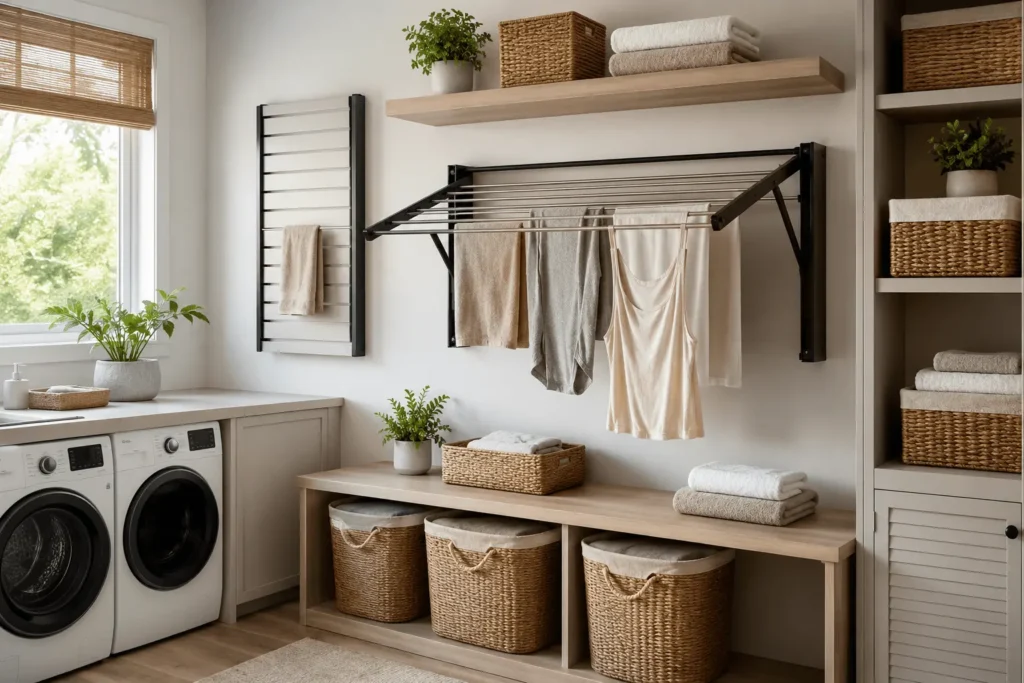
Types of Wall-Mounted Drying Racks
Wall-mounted drying racks come in several designs, each suited to different room sizes, drying needs, and budgets. Understanding the available options will help you choose the right solution for your home.
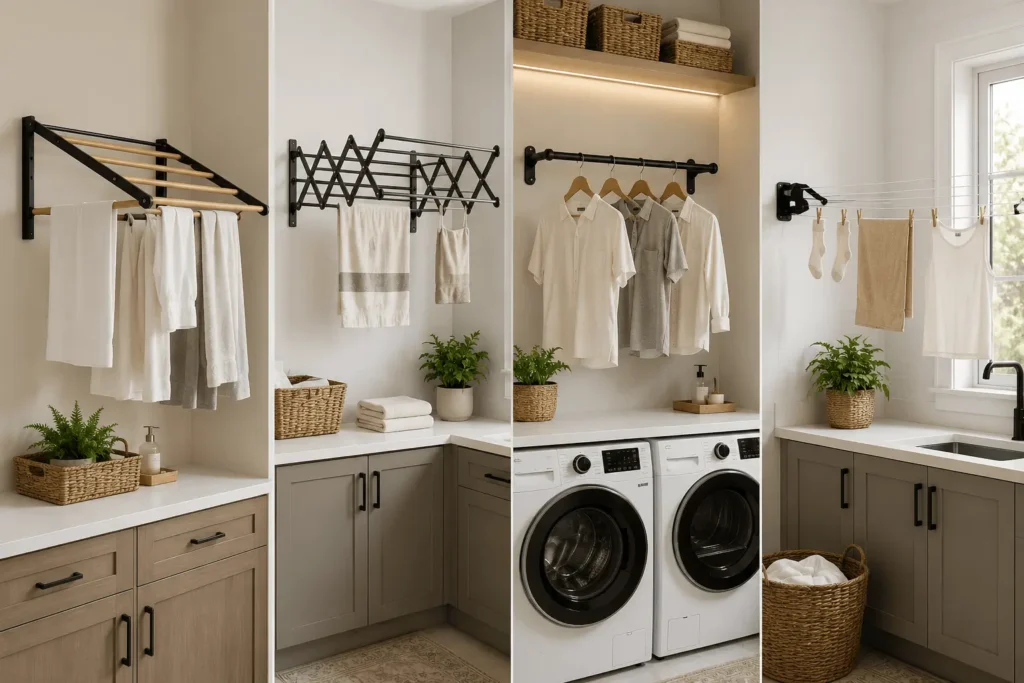
Fold-Down Drying Racks
Fold-down drying racks are among the most popular choices because they can be folded flat against the wall when not in use.
Benefits include:
- Saves valuable floor space
- Easy to operate
- Keeps the room looking tidy
- Suitable for small laundry rooms
- Available in various sizes
These racks are ideal for homeowners who only need occasional drying space.
Accordion-Style Drying Racks
Accordion racks expand outward to provide multiple drying bars and collapse neatly when not needed.
They are excellent for:
- Delicate garments
- Children’s clothing
- Hand-washed items
- Lightweight towels
Because they expand horizontally, they offer impressive drying capacity while occupying very little wall space.
Wall-Mounted Rod Systems
Some drying systems use one or more sturdy hanging rods instead of multiple bars.
They’re perfect for:
- Dress shirts
- Blouses
- Dresses
- Jackets
- Freshly ironed clothing
Using hangers on these rods helps reduce wrinkles and makes transferring clothes directly to the closet much easier.
Retractable Clotheslines
Retractable clotheslines are another space-saving solution.
When extended, they provide several feet of drying space. When not in use, the line retracts into a compact housing mounted on the wall.
This option works well in:
- Laundry rooms
- Utility rooms
- Garages
- Covered patios
Space-Saving Benefits
One of the primary reasons homeowners choose wall-mounted drying racks is their ability to maximize limited space.
Frees Up Floor Space
Unlike freestanding drying racks, wall-mounted versions leave the floor clear for:
- Laundry baskets
- Folding stations
- Rolling carts
- Easy movement
This is especially important in narrow or shared laundry rooms.
Reduces Clutter
Without a dedicated drying area, damp clothes often end up draped over furniture, doors, or countertops.
A wall-mounted drying rack:
- Keeps clothes organized
- Prevents clutter
- Creates a cleaner appearance
- Improves workflow
Makes Small Rooms Feel Larger
By keeping the floor open and utilizing wall space, the room feels more spacious and less crowded.
Combined with floating shelves and wall cabinets, a drying rack contributes to an efficient vertical storage system.
Best Installation Locations
Choosing the right location is just as important as selecting the right drying rack.
Above the Folding Station
Installing a drying rack above your folding counter allows clothes to dry while remaining close to where you’ll fold or iron them.
This creates a smooth workflow:
- Wash
- Hang to dry
- Fold
- Store
Beside the Washer and Dryer
Mounting the rack next to your appliances makes transferring wet clothes quick and convenient.
This location is ideal for:
- Delicate garments
- Athletic wear
- Hand-washed clothing
Above a Utility Sink
If your laundry room includes a utility sink, this is another excellent installation location.
Water dripping from freshly washed garments falls directly into the sink, helping keep floors dry and reducing cleanup.
Empty Side Walls
Unused wall space beside cabinets or doors often provides the perfect location for a fold-down drying rack.
Measure carefully to ensure the rack can fully extend without blocking walkways or appliance doors.
Best Materials and Designs
The material of your drying rack affects its durability, appearance, and maintenance requirements.
Stainless Steel
Stainless steel is one of the most durable options.
Advantages include:
- Rust-resistant
- Strong enough for heavy garments
- Easy to clean
- Modern appearance
It is especially suitable for humid laundry rooms.
Solid Wood
Wooden drying racks add warmth and complement farmhouse or traditional laundry room designs.
Benefits include:
- Attractive natural appearance
- Strong construction
- Timeless style
Ensure the wood has a moisture-resistant finish to prevent warping.
Aluminum
Aluminum racks are:
- Lightweight
- Rust-resistant
- Affordable
- Easy to install
They’re ideal for homeowners seeking a budget-friendly option.
Powder-Coated Steel
Powder-coated steel offers excellent durability while resisting scratches and corrosion.
It pairs well with industrial and contemporary interiors.
Foldable vs. Fixed Drying Racks
Both foldable and fixed drying racks have their advantages.
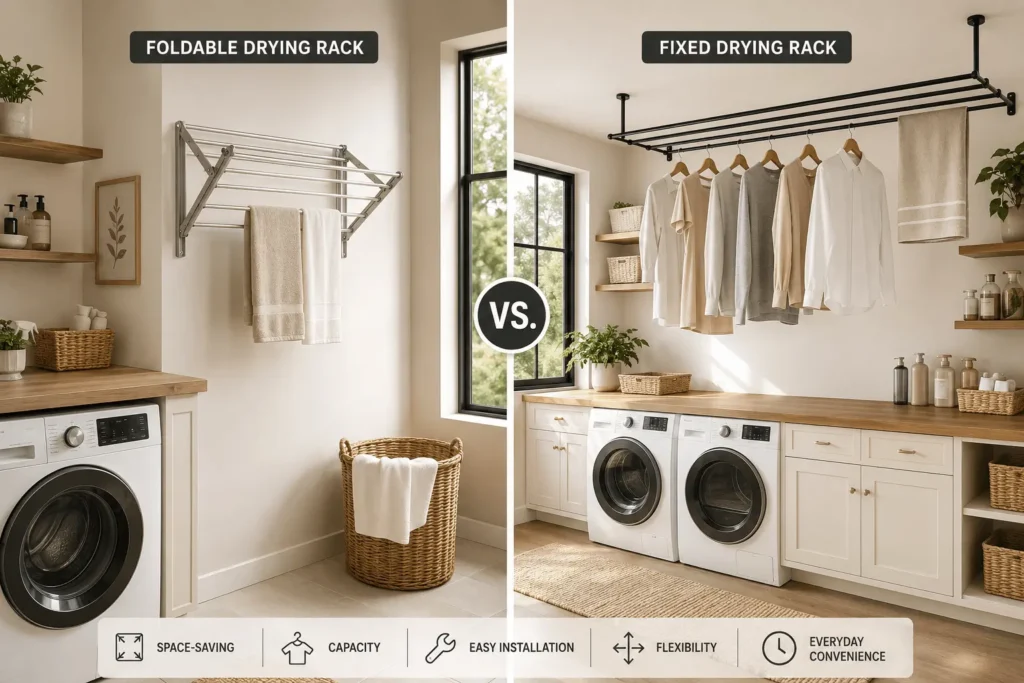
Foldable Drying Racks
Best for:
- Small laundry rooms
- Apartments
- Shared spaces
- Flexible use
Pros:
- Saves space
- Hidden when not in use
- Easy to operate
- Modern appearance
Fixed Drying Racks
Best for:
- Large families
- Spacious laundry rooms
- Frequent air-drying
Pros:
- Always ready to use
- Higher weight capacity
- Greater drying area
- Durable construction
Choose the option that best matches your household’s laundry habits.
Installation Tips
Proper installation ensures your drying rack remains safe and functional.
Before installing:
- Locate wall studs whenever possible.
- Use heavy-duty anchors if studs aren’t available.
- Follow the manufacturer’s weight limits.
- Leave enough clearance for clothes to hang freely.
- Ensure the rack does not interfere with cabinet doors or appliance lids.
A level installation improves both appearance and performance.
Maintenance and Cleaning
Wall-mounted drying racks require very little maintenance, but regular care helps extend their lifespan.
Clean Regularly
Dust and lint can accumulate over time.
Every few weeks:
- Wipe bars with a damp microfiber cloth.
- Remove detergent residue.
- Dry thoroughly after cleaning.
Inspect Hardware
Check periodically for:
- Loose screws
- Worn hinges
- Damaged brackets
- Rust spots
Tighten hardware as needed to maintain stability.
Avoid Overloading
Even heavy-duty drying racks have weight limits.
Avoid hanging:
- Excessively wet comforters
- Large rugs
- Heavy blankets
Distribute weight evenly across the rack to prevent damage.
Additional Uses for a Wall-Mounted Drying Rack
Beyond drying clothes, these racks can serve several other purposes.
Use them to:
- Air out jackets
- Dry reusable cleaning cloths
- Hang swimsuits after use
- Dry yoga mats
- Organize freshly ironed garments
- Prepare outfits for the next day
- Dry delicate shoes using hangers
This versatility increases the value of your investment.
Expert Tips
Professional organizers recommend the following:
- Install the rack near natural airflow whenever possible.
- Pair the drying rack with a nearby hanging rod.
- Leave space between garments for faster drying.
- Use matching hangers for a cleaner appearance.
- Keep clothespins stored nearby in a labeled container.
- Fold the rack away immediately after use to maintain an uncluttered room.
These habits improve efficiency while keeping your laundry room looking organized.
Key Takeaway
A wall-mounted drying rack is a practical, space-saving addition that enhances both the functionality and organization of any laundry room. By utilizing vertical wall space, it provides a dedicated area for air-drying delicate garments while keeping floors clear and reducing clutter. Whether you choose a fold-down rack, accordion design, or wall-mounted rod system, selecting the right style and installing it correctly will help protect your clothing, improve your laundry workflow, and maximize every inch of available space.
Farmhouse Laundry Room Organization Ideas
Farmhouse-inspired laundry rooms combine practical organization with timeless rustic charm. Natural materials, wooden shelving, wire baskets, and neutral color palettes create a warm, welcoming space that remains highly functional for everyday use.
A farmhouse-style laundry room combines warmth, simplicity, and functionality to create a space that feels welcoming rather than purely utilitarian. Inspired by traditional country homes, farmhouse design emphasizes natural materials, neutral colors, practical storage, and timeless décor. When paired with smart organization strategies, this style transforms the laundry room into one of the most attractive and efficient areas of the home.
The beauty of farmhouse organization lies in its balance between form and function. Every basket, shelf, cabinet, and decorative accessory should serve a purpose while contributing to the room’s cozy aesthetic. Whether you’re planning a complete renovation or making small updates, farmhouse organization ideas can help you create a laundry room that’s both beautiful and practical.
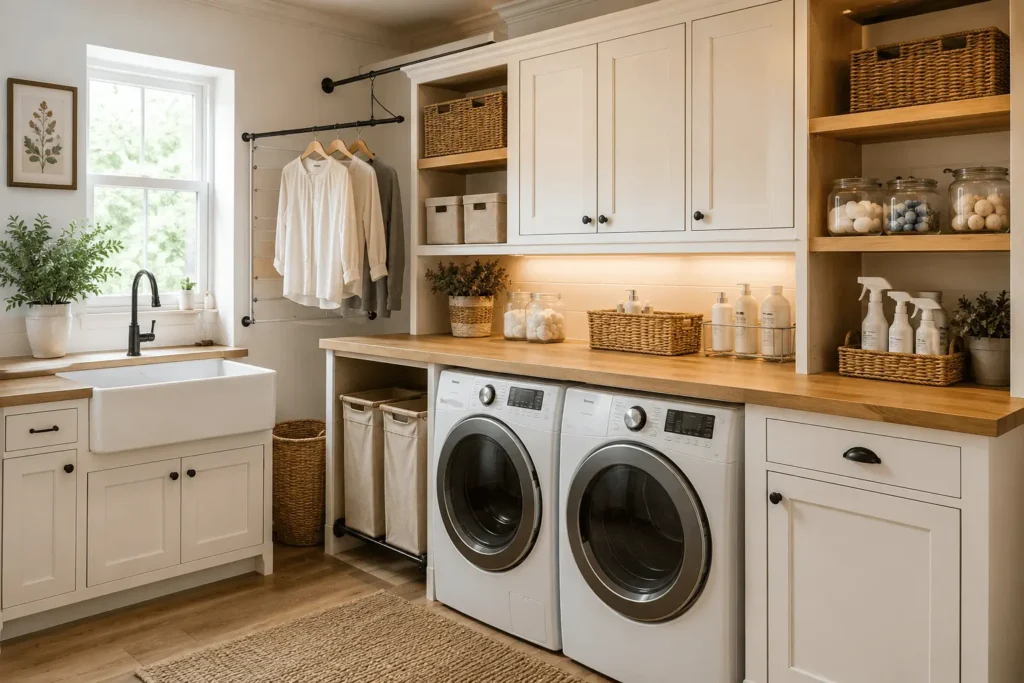
In this section, you’ll discover rustic storage solutions, wooden shelving ideas, vintage-inspired accessories, color palettes, and organization techniques that capture the charm of farmhouse design without sacrificing efficiency.
Rustic Storage Solutions
Rustic storage is the foundation of farmhouse organization. Instead of relying on plastic containers and modern finishes, farmhouse laundry rooms embrace natural textures, distressed finishes, and handcrafted details.
Wooden Storage Crates
Wooden crates provide versatile storage while adding authentic farmhouse character.
Use them to store:
- Folded towels
- Laundry baskets
- Cleaning cloths
- Spare detergent
- Toilet paper
- Seasonal décor
Stack crates vertically or mount them on the wall to create unique shelving.
Galvanized Metal Buckets
Galvanized containers add a vintage industrial touch and work well for organizing:
- Clothespins
- Dryer balls
- Cleaning brushes
- Small gardening gloves
- Pet towels
Adding simple labels makes these containers both decorative and functional.
Woven Baskets
Natural woven baskets made from wicker, rattan, or seagrass soften the room while providing practical storage.
Ideal uses include:
- Extra blankets
- Laundry supplies
- Cleaning products
- Children’s clothing
- Reusable shopping bags
Choose matching baskets to create a cohesive and organized look.
Vintage Wooden Boxes
Old wooden boxes can be repurposed into attractive storage bins.
They work well for:
- Ironing accessories
- Sewing supplies
- Fabric scraps
- Decorative items
Refinishing reclaimed wood adds character while supporting sustainable design.
Wooden Shelving
Wooden shelves are one of the signature features of farmhouse laundry rooms. They combine durability with natural beauty while providing valuable storage space.
Floating Wood Shelves
Floating shelves made from reclaimed or stained wood create a clean yet rustic appearance.
Use them for:
- Laundry detergent containers
- Decorative jars
- Folded towels
- Indoor plants
- Framed artwork
Choose thick wooden boards to emphasize the farmhouse aesthetic.
Open Shelving
Open shelving allows you to display attractive storage containers while keeping everyday essentials within easy reach.
To maintain a tidy appearance:
- Use matching baskets.
- Limit decorative accessories.
- Keep labels consistent.
- Group similar items together.
Well-organized shelves prevent the room from feeling cluttered.
Bracket Styles
The hardware supporting your shelves contributes to the overall design.
Popular farmhouse options include:
- Black iron brackets
- Forged steel supports
- Rustic wood corbels
- Industrial pipe brackets
These details reinforce the farmhouse theme while providing sturdy support.
Wire Baskets and Vintage Décor
Wire baskets are a farmhouse classic because they combine durability, airflow, and decorative appeal.
Organizing with Wire Baskets
Wire baskets work well for storing:
- Fresh towels
- Laundry pods
- Cleaning cloths
- Dryer sheets
- Folded linens
- Reusable grocery bags
Because they’re open, contents remain easy to identify.
Vintage Glass Jars
Glass jars provide attractive storage for smaller laundry items.
Store:
- Clothespins
- Laundry pods
- Dryer balls
- Scent boosters
- Sewing supplies
Clear jars keep products visible while contributing to the farmhouse aesthetic.
Antique-Inspired Accessories
Decorative elements can enhance the room without reducing functionality.
Examples include:
- Vintage clocks
- Wooden signs
- Enamel containers
- Rustic lanterns
- Old-style scales
- Metal wall hooks
Choose accessories that complement your storage system rather than creating unnecessary clutter.
Farmhouse Color Schemes
Color plays a major role in creating a welcoming farmhouse laundry room.
Neutral Foundations
Farmhouse interiors typically feature soft, calming colors such as:
- White
- Cream
- Beige
- Light gray
- Warm taupe
These shades reflect natural light and make even small laundry rooms feel larger.
Natural Wood Tones
Wood introduces warmth and contrast.
Popular finishes include:
- Light oak
- Weathered pine
- Walnut
- Reclaimed barn wood
Using the same wood finish throughout the room creates visual consistency.
Black Accents
Black hardware adds contrast while maintaining the farmhouse style.
Use black finishes on:
- Cabinet handles
- Shelf brackets
- Light fixtures
- Faucets
- Hanging rods
Small black accents help define the space without overpowering it.
Soft Accent Colors
If you’d like additional color, consider muted tones such as:
- Sage green
- Dusty blue
- Soft navy
- Olive
- Muted charcoal
These colors complement natural materials while preserving the relaxed farmhouse atmosphere.
Shiplap Walls
Few design features are more closely associated with farmhouse interiors than shiplap.
Benefits of Shiplap
Shiplap walls:
- Add texture
- Increase visual interest
- Brighten the room
- Pair well with wood shelving
- Create timeless appeal
Painted white shiplap is especially effective in smaller laundry rooms because it reflects light and enhances the sense of space.
Where to Install Shiplap
Popular locations include:
- Behind floating shelves
- Accent walls
- Behind the washer and dryer
- Around folding stations
Even a single shiplap wall can dramatically change the room’s appearance.
Functional Farmhouse Accessories
Accessories should enhance both style and organization.
Wooden Signs
Decorative signs with simple laundry-themed messages add personality without overwhelming the space.
Choose signs that match your color palette and keep the wording subtle for a timeless look.
Matching Storage Containers
Replace mismatched plastic bottles with coordinated containers for:
- Laundry detergent
- Fabric softener
- Dryer sheets
- Clothespins
Consistent containers create a cleaner, more organized appearance.
Greenery
Adding small plants introduces freshness and softens the room.
Low-maintenance choices include:
- Pothos
- Snake plants
- Artificial eucalyptus
- Small succulents
Place plants on shelves or countertops where they’ll receive adequate light if using live varieties.
DIY Farmhouse Organization Projects
You don’t need a large renovation budget to achieve the farmhouse look.
Build Wooden Floating Shelves
Reclaimed wood boards and sturdy brackets can be transformed into attractive storage shelves.
Create Custom Labels
Use printable labels or a label maker with farmhouse-style fonts to create matching labels for baskets and containers.
Repurpose Vintage Furniture
Old dressers, cabinets, or sideboards can become:
- Folding stations
- Storage cabinets
- Laundry organizers
A fresh coat of paint and new hardware can completely transform secondhand furniture.
Install Decorative Hooks
Rustic hooks provide practical storage for:
- Aprons
- Laundry bags
- Ironing boards
- Reusable tote bags
Expert Tips for Farmhouse Organization
Professional designers recommend:
- Prioritize function before decoration.
- Keep countertops mostly clear.
- Choose high-quality natural materials whenever possible.
- Limit decorative accessories to avoid visual clutter.
- Maintain consistent finishes throughout the room.
- Mix wood, metal, and woven textures for depth and balance.
A thoughtful mix of materials creates an inviting yet practical laundry room.
Common Mistakes
Avoid these common farmhouse design mistakes:
● Overdecorating every shelf.
● Mixing too many wood finishes.
● Using baskets without labels.
● Choosing décor that blocks access to frequently used supplies.
● Ignoring storage in favor of appearance.
● Using oversized furniture in small laundry rooms.
Remember, farmhouse style should enhance functionality—not reduce it.
Key Takeaway
A farmhouse laundry room blends timeless charm with practical organization by combining natural materials, rustic storage solutions, neutral color palettes, and functional decor. Wooden shelves, woven baskets, wire containers, and vintage-inspired accessories create a warm, welcoming atmosphere while keeping everyday essentials neatly organized. By focusing on both beauty and functionality, you can design a laundry room that’s enjoyable to use and easy to maintain.
Modern Laundry Room Design and Organization Ideas
Modern laundry room organization ideas are designed with one primary goal in mind: combining efficiency, simplicity, and style. Unlike traditional laundry rooms that often prioritize function over appearance, modern designs seamlessly integrate smart storage solutions, contemporary finishes, and clean architectural lines to create a space that’s both practical and visually appealing.
Today’s homeowners increasingly view the laundry room as an extension of their home’s overall design rather than simply a utility space. Whether your laundry room is a dedicated room, part of a mudroom, or tucked into a hallway closet, a modern design can make laundry tasks easier while enhancing your home’s value.
Modern organization focuses on reducing clutter, maximizing storage, incorporating technology, and using high-quality materials that are both durable and easy to maintain. The result is a bright, streamlined space where everything has its place and daily chores become more manageable.
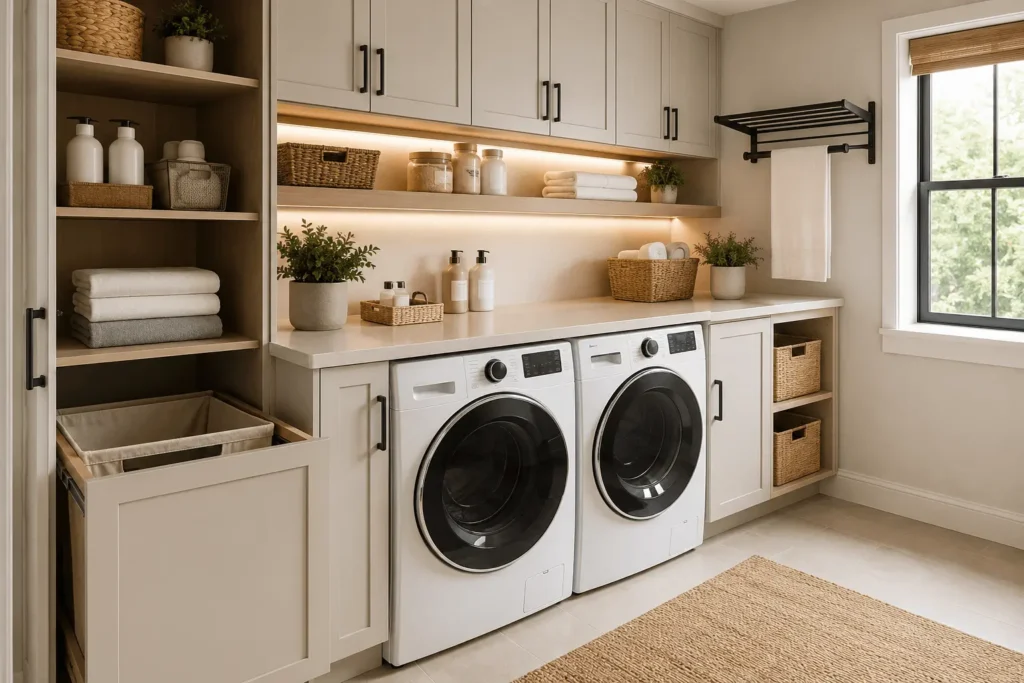
In this section, you’ll learn how to design a modern laundry room using minimalist organization principles, hidden storage features, smart appliances, and contemporary finishes that balance beauty with functionality.
Minimalist Organization
Minimalism isn’t about owning fewer things—it’s about organizing your space so that only essential items are visible and easily accessible. A minimalist laundry room feels open, uncluttered, and calming, making everyday tasks more enjoyable.
Keep Only Daily Essentials Accessible
Store only the products you use regularly on open shelves or countertops.
Examples include:
- Laundry detergent
- Fabric softener
- Dryer sheets
- Wool dryer balls
- Stain remover
Everything else should be stored inside cabinets or drawers to maintain a clean appearance.
Declutter Regularly
Modern organization starts with eliminating unnecessary items.
Remove:
- Empty containers
- Expired cleaning products
- Duplicate supplies
- Broken baskets
- Unused laundry gadgets
A clutter-free space is easier to clean and more pleasant to use.
Follow the “One In, One Out” Rule
Whenever you purchase a new organizer or laundry accessory, consider removing an older or unused item. This simple habit prevents overcrowding and helps maintain an organized laundry room over time.
Hidden Storage Features
One of the defining characteristics of modern design is concealed storage. Hidden storage keeps supplies out of sight while maintaining easy access.
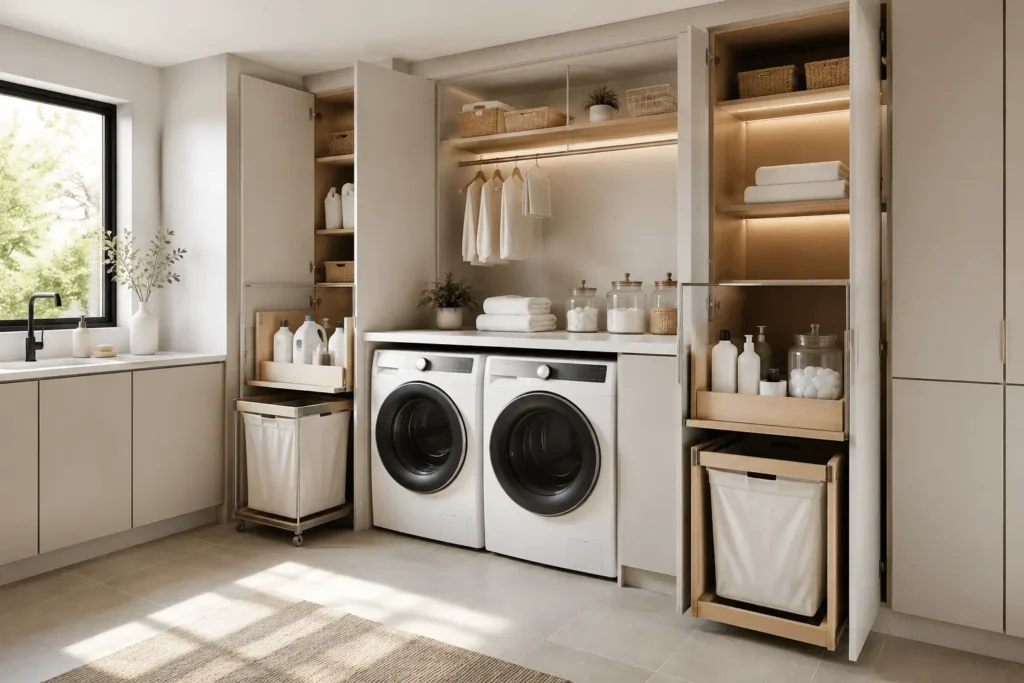
Floor-to-Ceiling Cabinets
Tall cabinets maximize vertical space and provide ample storage for:
- Bulk detergent
- Extra towels
- Ironing supplies
- Cleaning products
- Seasonal household items
Full-height cabinets also create a seamless, built-in appearance.
Pull-Out Pantry Cabinets
Narrow pull-out cabinets are perfect for storing:
- Spray bottles
- Laundry pods
- Fabric softeners
- Cleaning cloths
- Brushes
Since the entire cabinet slides out, every item remains visible and easy to access.
Hidden Hampers
Integrated pull-out hampers keep dirty clothes out of sight while maintaining a neat appearance.
Popular configurations include:
- Single hamper
- Double hamper for lights and darks
- Triple hamper for family sorting
Hidden hampers simplify laundry preparation and reduce visible clutter.
Appliance Garages
Some custom laundry rooms include enclosed spaces that conceal:
- Irons
- Steamers
- Sewing machines
- Folding tools
These cabinets keep equipment accessible without occupying countertop space.
Smart Appliances and Technology
Modern laundry rooms increasingly incorporate technology that saves time, energy, and effort.
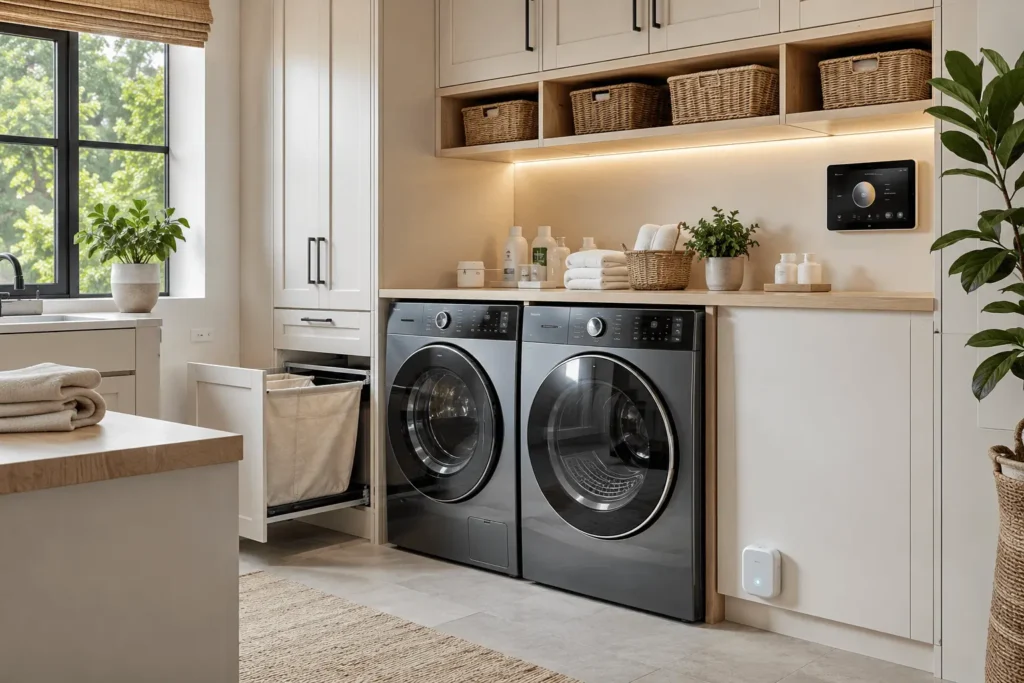
Smart Washers and Dryers
Many new appliances include features such as:
- Wi-Fi connectivity
- Smartphone notifications
- Remote cycle monitoring
- Automatic detergent dispensing
- Energy usage tracking
- Steam cleaning cycles
These features improve convenience while helping reduce water and electricity consumption. For more information about energy-efficient clothes washers, see the ENERGY STAR guide to clothes washers.
Smart Lighting
Motion-sensor lighting automatically illuminates the room when someone enters.
Benefits include:
- Hands-free operation
- Improved visibility
- Energy efficiency
- Enhanced safety
Under-cabinet LED lighting also brightens workspaces for folding and stain treatment.
Leak Detection Sensors
Installing water leak sensors near your washing machine can alert you to leaks before significant damage occurs.
Some systems even:
- Send smartphone notifications
- Shut off the water supply automatically
- Prevent costly water damage
This small investment can protect both your laundry room and the rest of your home.
Contemporary Materials and Finishes
Modern laundry rooms use materials that are attractive, durable, and easy to maintain.
Quartz Countertops
Quartz remains one of the most popular choices because it offers:
- Scratch resistance
- Stain resistance
- Low maintenance
- Long lifespan
- Elegant appearance
It’s ideal for folding stations and work surfaces.
Matte Cabinet Finishes
Matte cabinets create a sophisticated look while hiding fingerprints better than glossy finishes.
Popular colors include:
- White
- Charcoal
- Soft gray
- Navy blue
- Black
These finishes pair beautifully with minimalist hardware.
Large Format Tile Flooring
Modern tile flooring offers several advantages:
- Easy cleaning
- Moisture resistance
- Durability
- Contemporary appearance
Porcelain tile is especially popular due to its strength and low maintenance.
Handle-Free Cabinetry
Handle-free cabinets contribute to the sleek, streamlined look associated with modern interiors.
Push-to-Open Cabinets
These cabinets open with a gentle push, eliminating the need for visible hardware.
Benefits include:
- Cleaner appearance
- Easier cleaning
- Minimalist aesthetic
Integrated Finger Pulls
Built-in finger pulls maintain clean cabinet lines while providing easy access.
They’re especially effective in compact laundry rooms where protruding handles could obstruct movement.
Integrated Lighting
Lighting plays a critical role in both functionality and design.
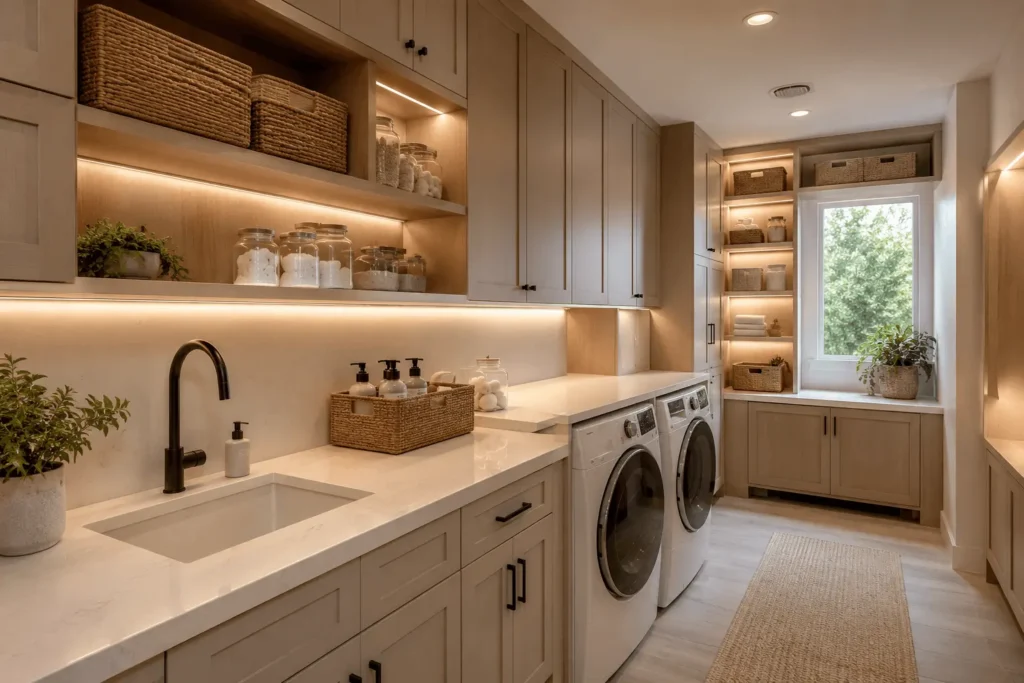
Layered Lighting
A well-designed laundry room typically includes multiple light sources.
Ambient Lighting
Provides overall room illumination using ceiling fixtures or recessed lighting.
Task Lighting
Installed beneath cabinets or shelves to illuminate:
- Folding stations
- Countertops
- Utility sinks
Accent Lighting
Highlights decorative shelving, artwork, or architectural features.
Layered lighting creates depth while improving visibility.
Modern Color Palettes
Modern laundry rooms typically feature clean, neutral color schemes.
White
White remains the most popular choice because it:
- Reflects natural light
- Makes rooms feel larger
- Creates a clean appearance
Gray
Soft gray provides warmth without overwhelming the space.
It pairs well with:
- Wood accents
- Black hardware
- Stainless steel appliances
Black Accents
Black hardware creates striking contrast while maintaining a sophisticated appearance.
Use black finishes for:
- Faucets
- Shelf brackets
- Cabinet handles
- Light fixtures
Natural Wood
Adding wood softens modern spaces and prevents them from feeling sterile.
Light oak and walnut remain particularly popular choices.
Space Planning Tips
Good organization begins with an efficient layout.
Keep Frequently Used Items Nearby
Store detergent, fabric softener, and stain removers close to the washing machine.
Place dryer sheets near the dryer.
Position folding supplies near the folding station.
Reducing unnecessary movement improves efficiency.
Create Functional Zones
Divide your laundry room into dedicated areas:
- Washing Zone
- Drying Zone
- Folding Zone
- Storage Zone
- Ironing Zone
Each zone should contain the supplies needed for that task.
Maintain Clear Walkways
Avoid overcrowding the room with furniture or decorative items.
Ensure appliance doors can fully open and leave adequate walking space around work areas.
Expert Tips
Professional designers recommend:
● Choose quality storage over excessive decoration.
● Hide clutter behind cabinet doors whenever possible.
● Invest in durable, moisture-resistant materials.
● Keep countertops mostly clear.
● Use matching storage containers for a cohesive look.
● Incorporate technology that genuinely improves convenience rather than adding unnecessary
complexity.
These principles create a laundry room that remains functional and stylish for years.
Common Modern Design Mistakes to Avoid
Avoid these common pitfalls:
- Prioritizing appearance over functionality.
- Using glossy surfaces that show fingerprints easily.
- Choosing insufficient storage.
- Installing inadequate lighting.
- Ignoring ventilation requirements.
- Overdecorating minimalist spaces.
- Selecting trendy finishes that may quickly become outdated.
A successful modern laundry room balances timeless design with practical organization.
Key Takeaway
Modern laundry room design combines clean lines, hidden storage, smart technology, and durable materials to create a space that’s both beautiful and highly functional. By embracing minimalist organization, integrating concealed storage solutions, and selecting quality finishes, you can build a laundry room that simplifies daily chores while complementing the overall style of your home. Thoughtful planning and efficient layouts ensure that every element serves a purpose, resulting in a clutter-free, organized, and enjoyable workspace.
Laundry Room Decor That Supports Organization
Decorative elements can enhance both the appearance and functionality of your laundry room. Coordinated storage containers, attractive labels, functional wall décor, and matching accessories help maintain organization while creating a pleasant and inviting space.
A beautifully decorated laundry room can make everyday chores feel less like work and more like a pleasant part of your daily routine. However, successful laundry room décor is about much more than adding artwork or decorative baskets. The best designs combine style with functionality, ensuring that every decorative element also serves a practical purpose.
Unlike living rooms or bedrooms, laundry rooms are high-traffic utility spaces where organization should always take priority. Decorative items should help reduce clutter, improve storage, and create an inviting atmosphere rather than occupy valuable workspace.
Whether you prefer farmhouse charm, modern minimalism, Scandinavian simplicity, or a transitional design, choosing functional décor can transform your laundry room into an organized, efficient, and visually appealing space.
In this section, you’ll learn how to decorate your laundry room while maintaining maximum organization through practical storage, coordinated accessories, and thoughtful design choices.
Functional Decorative Storage
One of the easiest ways to combine organization with décor is by choosing storage solutions that are both attractive and useful.
Decorative Storage Baskets
Storage baskets are a staple in well-organized laundry rooms because they conceal clutter while adding warmth and texture.
Use baskets to store:
- Extra towels
- Dryer sheets
- Laundry pods
- Cleaning cloths
- Spare detergent
- Reusable shopping bags
- Pet supplies
Popular basket materials include:
- Wicker
- Seagrass
- Rattan
- Cotton rope
- Wire with fabric liners
For the best appearance, choose baskets in matching sizes and colors.
Glass Storage Jars
Clear glass jars provide elegant storage for frequently used laundry supplies.
Ideal items include:
- Clothespins
- Dryer balls
- Scent beads
- Laundry pods (stored safely out of children’s reach)
- Small sewing supplies
Glass containers allow you to quickly see inventory levels while contributing to a clean, organized aesthetic.
Decorative Trays
A tray can instantly organize multiple small items into one cohesive display.
Arrange products such as:
- Hand soap
- Stain remover
- Laundry brush
- Decorative plant
- Scent diffuser
Using a tray makes cleaning countertops easier because everything can be moved at once.
Decorative Labels
Labels are both practical and decorative. A consistent labeling system improves organization while creating a polished, custom-designed appearance.
Benefits of Decorative Labels
Well-designed labels help:
- Identify products quickly
- Encourage family members to return items to the correct location
- Prevent duplicate purchases
- Create visual consistency
They also reduce the likelihood of confusing similar-looking containers.
Popular Label Styles
Choose a label style that complements your décor.
Options include:
- Waterproof vinyl labels
- Clear acrylic labels
- Chalkboard labels
- Wooden tags
- Metal labels
- Printable adhesive labels
Whichever style you choose, use the same font and color scheme throughout the room for a cohesive look.
Label More Than Containers
Many homeowners label storage jars but overlook shelves and baskets.
Consider labeling:
- Towels
- Delicates
- Cleaning Supplies
- Dryer Accessories
- Extra Detergent
- Ironing Supplies
- Pet Laundry
This simple habit makes maintaining organization much easier for every member of the household.
Wall Art and Functional Accessories
Decorating your laundry room doesn’t require filling every wall with artwork. Instead, choose pieces that complement the space without creating unnecessary clutter.
Simple Wall Art
Laundry-themed artwork adds personality while maintaining a clean appearance.
Popular options include:
- Minimalist framed prints
- Botanical illustrations
- Typography art
- Vintage laundry advertisements
- Neutral landscape artwork
Limit artwork to one or two focal pieces to avoid overwhelming the room.
Decorative Clocks
A wall clock serves both decorative and practical purposes.
Choose styles that complement your design theme:
- Modern metal clocks
- Rustic wooden clocks
- Vintage-inspired designs
- Minimalist black-and-white clocks
Attractive Wall Hooks
Wall hooks are among the most functional decorative accessories available.
Use them for:
- Aprons
- Laundry bags
- Reusable tote bags
- Ironing board covers
- Cleaning brushes
Decorative metal or wooden hooks can enhance the room’s design while increasing storage capacity.
Coordinating Colors and Containers
Consistency is one of the hallmarks of a professionally designed laundry room.
Choose a Limited Color Palette
Using too many colors can make a small room feel cluttered.
Instead, select two or three complementary colors.
Popular combinations include:
- White and natural wood
- Gray and black
- Navy and white
- Beige and sage green
- White and soft blue
Maintaining a consistent palette creates a calm, organized atmosphere.
Match Storage Containers
Using matching containers immediately improves visual organization.
Coordinate:
- Laundry baskets
- Storage bins
- Glass jars
- Labels
- Baskets
- Decorative boxes
Even inexpensive matching containers create a more custom appearance.
Coordinate Hardware
Cabinet handles, shelf brackets, light fixtures, and faucets should share similar finishes.
Popular hardware finishes include:
- Matte black
- Brushed nickel
- Brass
- Oil-rubbed bronze
Consistent hardware ties the entire room together.
Choosing Decorative Yet Practical Furniture
Every piece of furniture should contribute to both organization and aesthetics.
Storage Benches
A storage bench provides:
- Seating
- Hidden storage
- Shoe organization
- Basket storage
This is especially useful in laundry rooms connected to mudrooms.
Decorative Cabinets
Cabinets with glass doors can display attractive storage containers while protecting supplies from dust.
Use them for:
- Folded towels
- Glass jars
- Decorative baskets
- Laundry accessories
Open Shelving
Open shelving works best when carefully styled.
Display only attractive, organized items such as:
- Matching baskets
- Folded white towels
- Small plants
- Decorative jars
Avoid overcrowding shelves with unnecessary decorations.
Adding Greenery Without Creating Clutter
Plants bring life and freshness to the laundry room while improving its overall atmosphere.
Low-Maintenance Plants
Good choices include:
- Snake Plant
- ZZ Plant
- Pothos
- Spider Plant
- Peace Lily (keep away from pets if applicable)
- Artificial eucalyptus for low-light spaces
These plants require minimal care while adding natural color.
Placement Tips
Position plants:
- On floating shelves
- Near windows
- On countertops
- Above cabinets
Avoid blocking work areas or creating obstacles around appliances.
Seasonal Styling Without Sacrificing Organization
Many homeowners enjoy updating their décor throughout the year, but seasonal decorations should remain simple.
Keep Decorations Minimal
Consider adding:
- Seasonal wreaths
- Small decorative signs
- Neutral-colored candles (unlit during laundry tasks)
- Decorative hand towels
Limit seasonal items to one or two accents to maintain a clutter-free environment.
Store Seasonal Décor Efficiently
Use labeled bins for off-season decorations and store them on high shelves or in less frequently accessed cabinets.
This prevents decorative items from taking over valuable storage space.
Expert Styling Tips
Professional interior designers recommend:
- Decorate with purpose rather than filling every empty space.
- Keep countertops mostly clear.
- Use odd-numbered groupings when styling shelves.
- Mix textures such as wood, metal, glass, and woven baskets.
- Maintain consistent spacing between decorative items.
- Regularly remove décor that no longer serves a purpose.
A thoughtfully decorated laundry room should feel organized, not overcrowded.
Common Decorating Mistakes to Avoid
Avoid these common mistakes:
- Placing decorations on every shelf.
- Using too many colors or patterns.
- Choosing oversized artwork for a small room.
- Allowing decorative items to reduce storage capacity.
- Ignoring practical needs in favor of appearance.
- Leaving countertops covered with decorative accessories.
- Mixing multiple design styles without a clear plan.
Remember, simplicity often creates the most elegant and organized spaces.
Key Takeaway
Laundry room décor should enhance organization rather than compete with it. By selecting functional decorative storage, coordinating containers and labels, incorporating practical furniture, and maintaining a consistent color palette, you can create a laundry room that’s both beautiful and highly efficient. Every decorative element should contribute to the room’s functionality while reflecting your personal style, resulting in a space that’s welcoming, organized, and easy to maintain.
Laundry Room Maintenance for Long-Term Organization
Maintaining an organized laundry room requires consistent habits rather than occasional deep cleaning. Regular tidying, scheduled decluttering, and simple maintenance routines help preserve your organization system and prevent clutter from returning over time.
Creating an organized laundry room is only the first step. The real challenge is maintaining that organization over time. Even the most beautifully designed laundry room can quickly become cluttered if items are left out, supplies aren’t restocked properly, or regular cleaning is neglected.
Fortunately, keeping your laundry room organized doesn’t require hours of work every week. By establishing a few simple daily, weekly, monthly, and seasonal habits, you can maintain a clean, efficient, and functional space all year long. A consistent maintenance routine prevents clutter from accumulating, protects your storage systems, and extends the life of your appliances and organization products.
In this section, you’ll learn practical maintenance strategies that make it easy to preserve an organized laundry room without feeling overwhelmed.
Daily Maintenance Habits
Daily habits take only a few minutes but have the biggest impact on preventing clutter.
Return Every Item to Its Designated Place
One of the easiest ways to maintain organization is following the “put it back immediately” rule.
After each laundry load:
- Return detergent to its shelf.
- Place dryer sheets back in their container.
- Store laundry baskets in their designated location.
- Hang reusable laundry bags on hooks.
- Return cleaning supplies to their cabinet.
These small actions prevent clutter from building up over time.
Wipe Down Surfaces
Laundry detergent, fabric softener, and dust can accumulate quickly.
At the end of your laundry routine:
- Wipe countertops with a microfiber cloth.
- Clean the tops of the washer and dryer.
- Remove detergent drips.
- Dry any water around the utility sink.
A quick wipe-down keeps surfaces looking fresh and prevents sticky residue from forming.
Empty the Lint Filter
Cleaning the dryer lint filter after every load is one of the most important maintenance habits.
Benefits include:
- Improved drying performance
- Lower energy consumption
- Reduced fire risk
- Longer appliance lifespan
Dispose of lint in a small waste bin kept near the dryer.
Check for Small Items
Before leaving the laundry room, quickly check for:
- Loose socks
- Hangers
- Clothespins
- Measuring cups
- Dryer balls
Returning these items immediately prevents unnecessary clutter.
Weekly Cleaning Checklist
A weekly routine keeps your laundry room clean without requiring a major deep-cleaning session.
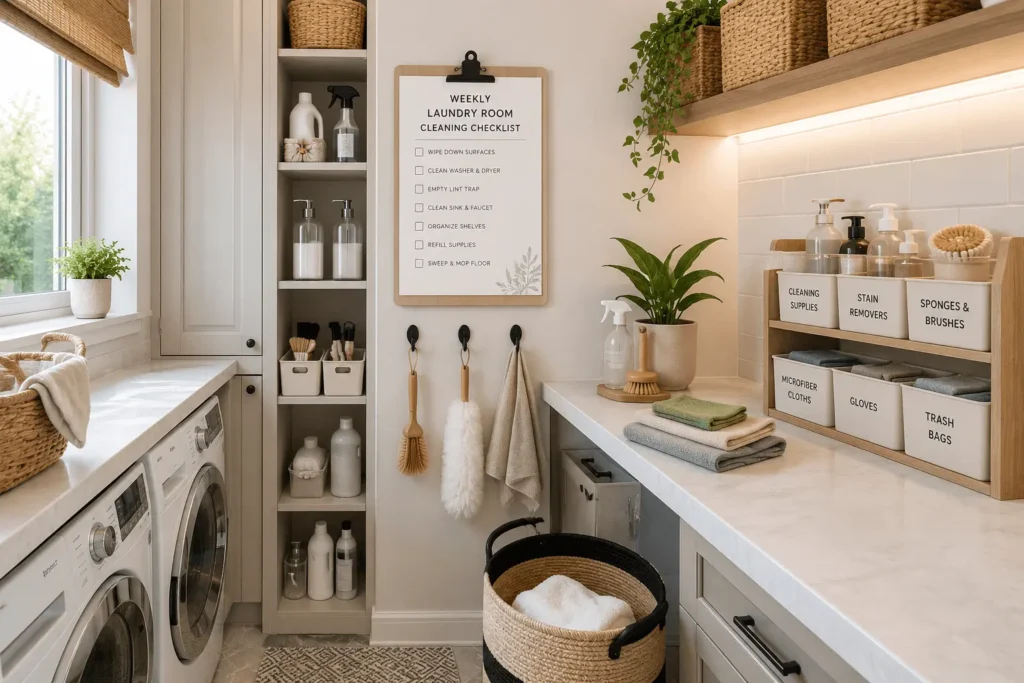
Vacuum or Sweep the Floor
Laundry rooms collect:
- Dust
- Pet hair
- Lint
- Dirt
- Detergent residue
Vacuuming or sweeping once a week prevents debris from spreading throughout your home.
Mop Hard Floors
If your laundry room has tile, vinyl, or laminate flooring, mop it weekly using a gentle floor cleaner.
Pay special attention to:
- Around appliances
- Under laundry baskets
- Utility sink area
- Doorways
Clean floors improve both appearance and hygiene.
Dust Shelves and Cabinets
Dust can accumulate surprisingly quickly on open shelving.
Use a microfiber cloth to clean:
- Floating shelves
- Cabinet tops
- Decorative accessories
- Light fixtures
- Window sills
Keeping shelves clean helps maintain a polished appearance.
Clean Appliance Exteriors
Wipe the outside of your:
- Washing machine
- Dryer
- Utility sink
- Cabinet doors
- Countertops
Removing fingerprints and detergent residue keeps the room looking well maintained.
Monthly Decluttering Routine
Even with good daily habits, unnecessary items can gradually accumulate.
A monthly review helps restore order before clutter becomes overwhelming.
Review Your Supplies
Check your inventory and remove:
- Empty containers
- Expired cleaning products
- Broken clothespins
- Damaged baskets
- Unused organizers
This prevents cabinets from becoming overcrowded.
Reorganize Shelves
Take everything off one shelf at a time.
Then:
- Wipe the shelf clean.
- Return frequently used items to eye level.
- Group similar products together.
- Rotate older supplies to the front.
This keeps your organization system efficient.
Check Storage Containers
Inspect containers for:
- Cracks
- Loose lids
- Moisture damage
- Missing labels
Replace damaged containers before they create bigger problems.
Update Labels
Labels may fade or peel over time.
Replace damaged labels so every family member can continue using the organization system correctly.
Seasonal Organization Refresh
Every three to four months, schedule a more comprehensive organization session.
Deep Clean Cabinets
Remove everything from cabinets and:
- Vacuum crumbs and dust.
- Wipe shelves.
- Sanitize surfaces.
- Dry thoroughly before replacing products.
Rotate Seasonal Supplies
Store seasonal products separately.
Examples include:
Winter
- Heavy blankets
- Wool wash
- Snow gear cleaners
Summer
- Swimwear detergent
- Beach towels
- Outdoor fabric cleaners
Keeping only current-season products accessible reduces clutter.
Inspect Appliances
Check your washer and dryer for:
- Leaks
- Loose hoses
- Excess vibration
- Unusual noises
Early detection helps prevent expensive repairs.
Review Your Organization System
Ask yourself:
- Is everything still easy to find?
- Are storage bins the right size?
- Do any shelves need adjusting?
- Are new family needs requiring changes?
An organization system should evolve with your household.
Preventing Future Clutter
Maintaining organization is often easier than reorganizing later.
Buy Only What You Need
Avoid purchasing excessive quantities of:
- Detergent
- Fabric softener
- Dryer sheets
- Cleaning sprays
Buying in moderation prevents overcrowded cabinets.
Limit Duplicate Products
Many households accumulate multiple products serving the same purpose.
Instead, choose one preferred:
- Laundry detergent
- Stain remover
- Fabric softener
Using fewer products simplifies storage.
Keep Countertops Clear
Countertops should remain dedicated to:
- Folding clothes
- Sorting laundry
- Temporary work
Avoid using them as permanent storage.
Product Inventory Management
Running out of detergent unexpectedly can disrupt your laundry routine.
Create a Restocking System
Keep a simple checklist of essential supplies.
Common items include:
- Laundry detergent
- Fabric softener
- Dryer sheets
- Stain remover
- Oxygen bleach
- Wool dryer balls
- Mesh laundry bags
Replace items before they’re completely empty.
Store Refills Separately
Keep refill containers in a designated cabinet or storage shelf rather than mixing them with daily-use products.
This reduces visual clutter while ensuring backup supplies remain available.
Did You Know?
An organized laundry room works best when everyone follows the same system.
Teach Family Members the System
Explain:
- Where supplies belong.
- How labels work.
- Which baskets serve each purpose.
- Where clean laundry should be placed.
Consistency makes maintenance much easier.
Assign Simple Responsibilities
Depending on age, family members can help by:
- Returning supplies to shelves.
- Emptying lint filters.
- Folding towels.
- Organizing laundry baskets.
- Wiping countertops.
Shared responsibility keeps the workload manageable.
Expert Tips for Long-Term Organization
Professional organizers recommend these habits:
- Spend five minutes tidying the room after every laundry session.
- Declutter before purchasing new organizers.
- Replace damaged baskets immediately.
- Keep labels updated.
- Store only products you actually use.
- Review your storage system every season.
- Maintain open floor space for easier cleaning.
These simple practices prevent organization systems from breaking down over time.
Common Mistakes
Avoid these common errors:
● Allowing empty bottles to accumulate.
● Ignoring detergent spills.
● Overfilling shelves.
● Skipping regular decluttering sessions.
● Buying organizers without a clear purpose.
● Leaving laundry baskets full for extended periods.
● Forgetting appliance maintenance.
Small maintenance issues can quickly become larger organization problems if ignored.
Laundry Room Maintenance Checklist
For quick reference, follow this simple routine:
Daily
- Return items to storage.
- Wipe countertops.
- Empty dryer lint filter.
- Put away clean laundry.
Weekly
- Sweep or vacuum floors.
- Mop hard surfaces.
- Dust shelves.
- Clean appliance exteriors.
Monthly
- Declutter supplies.
- Clean storage bins.
- Reorganize shelves.
- Replace damaged labels.
Seasonally
- Deep clean cabinets.
- Rotate seasonal supplies.
- Inspect appliances.
- Evaluate your storage system.
Following this schedule keeps your laundry room organized with minimal effort.
Key Takeaway
Maintaining an organized laundry room doesn’t require constant effort—it requires consistency. By developing simple daily habits, following a weekly cleaning routine, decluttering monthly, and refreshing your organization system seasonally, you can keep your laundry room clean, efficient, and functional for years to come. Small maintenance tasks performed regularly prevent clutter from returning, protect your appliances, and ensure your storage solutions continue to work effectively. A well-maintained laundry room not only saves time but also creates a more enjoyable and stress-free laundry experience.
Common Laundry Room Organization Mistakes
Avoiding common organization mistakes can save you time, money, and frustration while helping you maintain a functional laundry room for years to come. From poor planning to improper storage practices, even small errors can reduce efficiency and create unnecessary clutter.
Even with the best intentions, it’s easy to make mistakes when organizing a laundry room. Many homeowners invest in stylish storage bins, install new shelving, or purchase expensive organizers, only to discover that their laundry room still feels cluttered or inefficient. The reason is simple: successful organization isn’t about buying more products—it’s about creating a system that matches your space, lifestyle, and daily routines.
In this section, we’ll explore the most common laundry room organization mistakes and provide practical solutions to help you create a space that’s organized, safe, and easy to maintain.
Buying Storage Before Decluttering
One of the biggest mistakes homeowners make is purchasing storage products before removing unnecessary items.
Why This Is a Problem
Buying organizers too early often leads to:
- Wasted money
- Oversized storage solutions
- Poor space utilization
- Organizing items you don’t actually need
No storage system can compensate for unnecessary clutter.
Declutter First
Before buying shelves, baskets, or cabinets:
- Remove expired cleaning products.
- Recycle empty detergent bottles.
- Donate unused laundry accessories.
- Throw away broken storage containers.
- Eliminate duplicate products.
Only after decluttering should you measure your available space and purchase organizers.
Measure Before You Buy
Always measure:
- Shelf depth
- Cabinet height
- Countertop clearance
- Floor space
- Appliance dimensions
Accurate measurements help prevent buying storage products that don’t fit.
Ignoring Vertical Space
Many laundry rooms have unused wall space that could provide valuable storage.
Missed Storage Opportunities
Walls can accommodate:
- Floating shelves
- Wall cabinets
- Pegboards
- Hanging rods
- Fold-down drying racks
- Wall hooks
Ignoring these areas often results in overcrowded countertops and limited cabinet space.
Think Upward, Not Outward
Instead of adding bulky floor furniture, maximize vertical storage.
For example:
- Install shelves above the washer and dryer.
- Use ceiling-height cabinets.
- Mount baskets on the wall.
- Hang ironing boards vertically.
This keeps the floor clear while increasing storage capacity.
Overloading Shelves
An overfilled shelf quickly becomes disorganized and difficult to use.
Signs of Overloaded Shelving
You may have too much on your shelves if:
- Products are difficult to remove.
- Containers fall over.
- Items become hidden behind others.
- Shelves appear crowded.
Overloaded shelves reduce accessibility and create visual clutter.
Leave Open Space
Professional organizers recommend leaving approximately 20–30% of shelf space empty.
Benefits include:
- Easier cleaning
- Better visibility
- Room for new supplies
- Less visual clutter
Remember, empty space is part of good organization—not wasted space.
Mixing Cleaning Products Without Labels
Transferring products into decorative containers can improve appearance, but failing to label them properly creates safety risks.
Why Labels Matter
Clear labels help:
- Prevent accidental misuse.
- Reduce confusion.
- Improve safety.
- Speed up daily routines.
Every container should clearly identify its contents.
Use Waterproof Labels
Laundry rooms experience humidity and occasional spills.
Choose labels that resist:
- Water
- Detergent
- Cleaning chemicals
- Daily handling
Replace faded or damaged labels immediately.
Neglecting Maintenance
Organization isn’t a one-time project—it’s an ongoing habit.
Small Problems Grow Quickly
Without regular maintenance:
- Empty bottles accumulate.
- Countertops become cluttered.
- Shelves collect dust.
- Supplies become disorganized.
- Cabinets become overcrowded.
Just a few minutes of weekly maintenance prevents major reorganizing later.
Create a Cleaning Schedule
Follow a simple routine:
Daily
- Put products away.
- Empty the lint filter.
- Wipe counters.
Weekly
- Sweep floors.
- Dust shelves.
- Clean appliance surfaces.
Monthly
- Declutter.
- Review supplies.
- Reorganize storage.
Consistency is the secret to long-term organization.
Choosing the Wrong Storage Solutions
Not every organizer works for every laundry room.
Oversized Bins
Large containers may:
- Waste valuable space.
- Hide smaller items.
- Become too heavy to lift.
Instead, select storage that matches the size of your shelves and the items being stored.
Too Many Open Shelves
While open shelving looks attractive, too much open storage can create visual clutter if not carefully maintained.
Balance open shelving with closed cabinets for a cleaner appearance.
Ignoring Household Needs
Choose storage based on your family’s habits.
For example:
A family of six will likely need:
- Larger hampers
- More detergent storage
- Additional folding space
A single-person household may require much less storage.
Poor Space Planning
An organized laundry room should support an efficient workflow.
Create Logical Work Zones
Arrange your room into separate areas:
Washing Zone
- Washer
- Detergent
- Stain remover
Drying Zone
- Dryer
- Dryer sheets
- Drying rack
Folding Zone
- Countertop
- Laundry baskets
- Hanging rod
Storage Zone
- Extra supplies
- Cleaning products
- Seasonal items
A logical layout minimizes unnecessary movement.
Leave Walking Space
Avoid placing storage furniture where it blocks:
- Appliance doors
- Walkways
- Cabinet access
Comfortable movement makes laundry tasks much easier.
Safety Tip
Safety should be a priority in every laundry room organization project. Store detergents and cleaning products in secure locations, avoid overloading shelves, and keep walkways clear to help prevent slips, falls, and other household accidents.
Store Chemicals Correctly
Never:
- Leave chemicals open.
- Mix cleaning products.
- Store bleach beside ammonia-based cleaners.
- Place hazardous products within children’s reach.
Use lockable cabinets whenever possible.
Secure Heavy Shelves
Floating shelves should be properly anchored to wall studs or installed using heavy-duty wall anchors.
Poorly installed shelves may collapse under heavy detergent bottles.
Improve Ventilation
Proper airflow reduces:
- Mold
- Mildew
- Moisture damage
- Unpleasant odors
Install an exhaust fan if natural ventilation is limited.
Letting Countertops Become Catch-All Spaces
Countertops are intended for folding and sorting—not long-term storage.
Keep Only Essentials Visible
Limit countertop items to:
- A detergent dispenser
- Decorative tray
- Hand soap
- Small plant
Everything else should be stored in cabinets or drawers.
A clear countertop makes the room appear larger and more organized.
Buying Trendy Instead of Practical Products
Social media often showcases beautiful laundry rooms filled with decorative accessories.
While inspiration is helpful, prioritize functionality over appearance.
Ask yourself:
- Will I actually use this?
- Does it improve organization?
- Is it easy to clean?
- Does it fit my space?
Choose timeless storage solutions rather than short-lived trends.
Expert Tips
Professional organizers recommend these best practices:
● Declutter before purchasing organizers.
● Measure every storage area.
● Label all containers.
● Use vertical space whenever possible.
● Choose quality over quantity.
● Keep daily-use products within easy reach.
● Review your organization system every few months.
● Avoid overcrowding shelves.
These simple principles create a laundry room that’s easier to maintain over time.
Quick Mistake-to-Solution Guide
| Common Mistake | Better Solution |
| Buying organizers first | Declutter before shopping |
| Ignoring walls | Install shelves and hooks |
| Overfilled shelves | Leave open space for flexibility |
| Unlabeled containers | Label everything clearly |
| Cluttered countertops | Store supplies in cabinets |
| Poor workflow | Create functional storage zones |
| No maintenance routine | Follow daily, weekly, and monthly checklists |
| Choosing décor over function | Select decorative items that also provide storage |
Key Takeaway
Avoiding common laundry room organization mistakes is just as important as choosing the right storage solutions. Decluttering before buying organizers, maximizing vertical space, labeling containers, maintaining a regular cleaning routine, and planning your layout carefully will help you build a laundry room that’s efficient, safe, and easy to maintain. By focusing on functionality first and aesthetics second, you’ll create an organized space that continues to work well for your household long after the initial makeover is complete.
Best Laundry Room Storage Products Worth Buying
The right organization products simplify storage, improve accessibility, and maximize available space in any laundry room. Choosing high-quality storage products can dramatically improve the functionality and organization of your laundry room. Instead of buying every trendy organizer on the market, focus on products that solve specific storage problems and match your available space.
Whether you’re organizing a small apartment laundry closet or designing a spacious utility room, selecting practical, durable, and versatile organization products will help you maximize efficiency while keeping your laundry room attractive and easy to maintain.
This comprehensive checklist covers essential storage items, optional upgrades, budget-friendly solutions, and premium investments to help you build an organized laundry room without wasting money on unnecessary products.
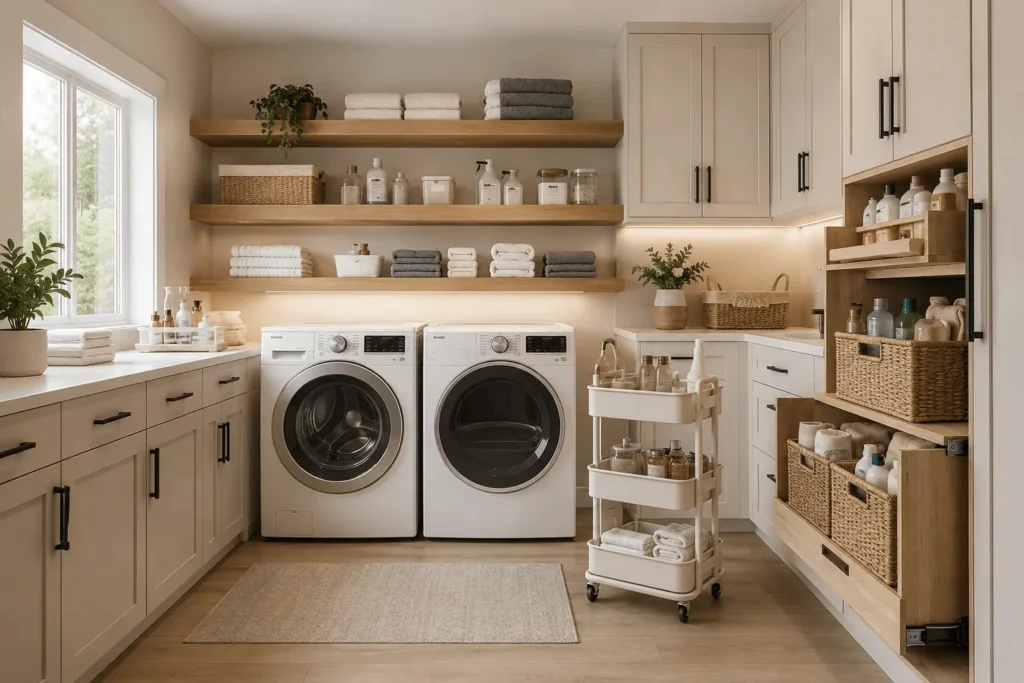
Essential Storage Items
Every well-organized laundry room should include a few core storage solutions that improve efficiency and reduce clutter.
Laundry Storage Baskets
Storage baskets keep similar items grouped together while adding visual organization.
Best uses include:
- Folded towels
- Dryer sheets
- Cleaning cloths
- Extra detergent
- Laundry accessories
- Spare linens
Look for baskets that are:
- Durable
- Easy to clean
- Stackable when possible
- Available in matching styles
Natural woven baskets work well for farmhouse décor, while plastic or fabric bins suit modern spaces.
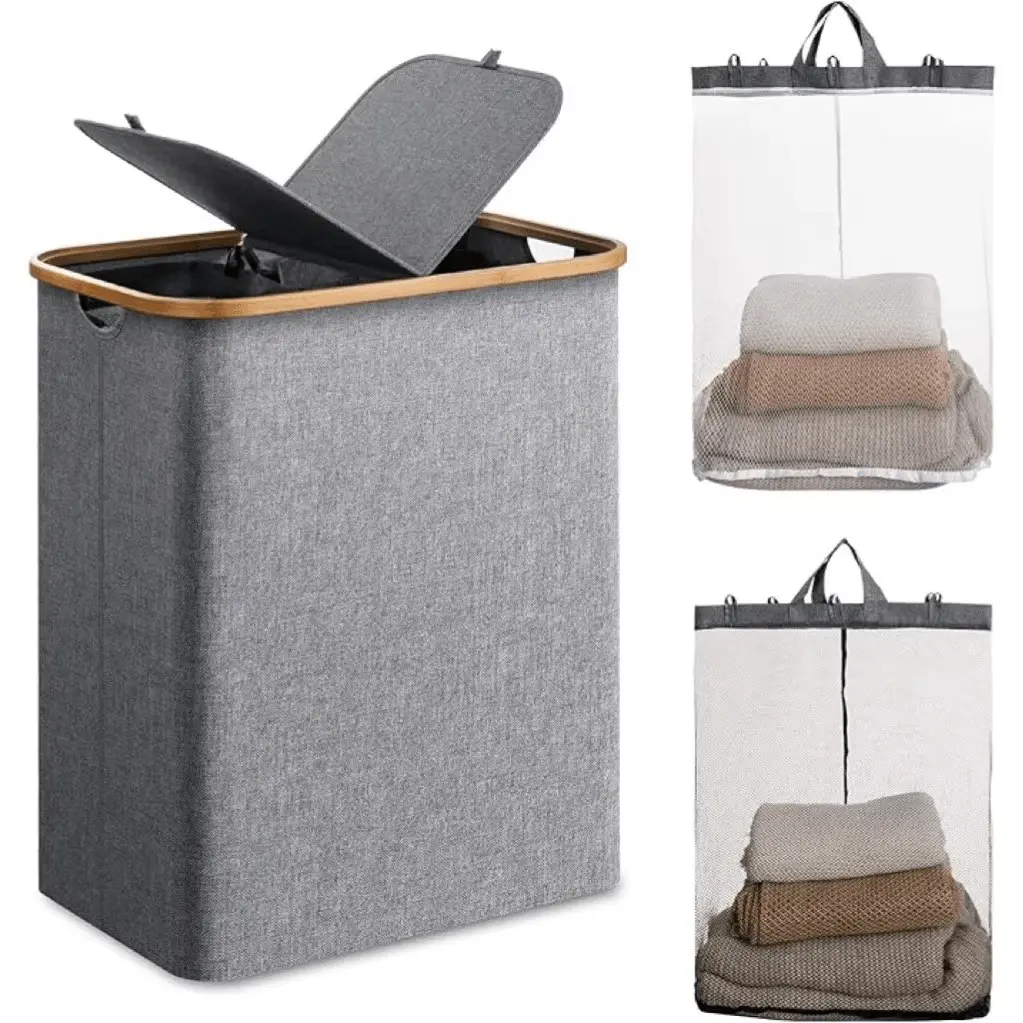
Foldable Laundry Basket
Durable Oxford cloth laundry basket with 2 removable inner bags, extra-large capacity, and a modern foldable design for convenient laundry organization.
Best For:
● Small laundry rooms
● Space-saving storage
● Sorting different types of laundry
Key Features:
● Foldable, space-saving design
● 2 removable inner bags
● Extra-large capacity
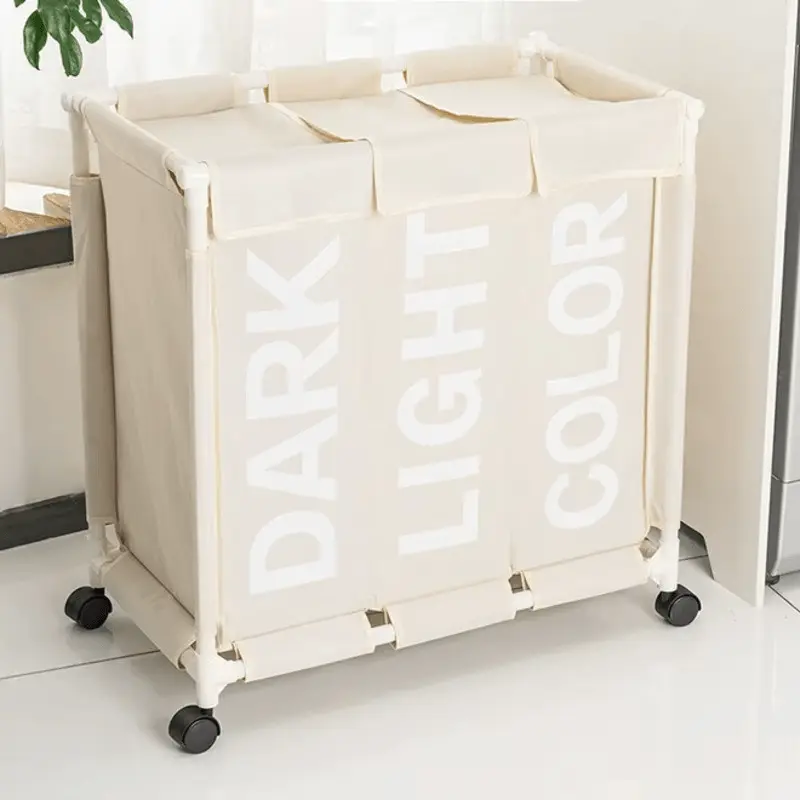
Rolling Laundry Basket
Keep laundry organized and easy to move with this 3-grid rolling laundry basket organizer. Its three compartments help separate clothes, while the waterproof laundry bags, cover, handles, and 360° wheels make laundry day more convenient.
Best For:
● Laundry room organization
● Dorms and apartments
● Bedrooms and bathrooms
● Small-space laundry storage
● Sorting clothes by color or fabric
Key Features:
● 3-grid design for easy laundry sorting
● Large capacity for dirty clothes
● 360° smooth-rolling wheels, Waterproof laundry bags
● Foldable and space-saving design
● Durable, lightweight Oxford fabric
● Protective cover keeps laundry dust-free
● Convenient handles for easy transport
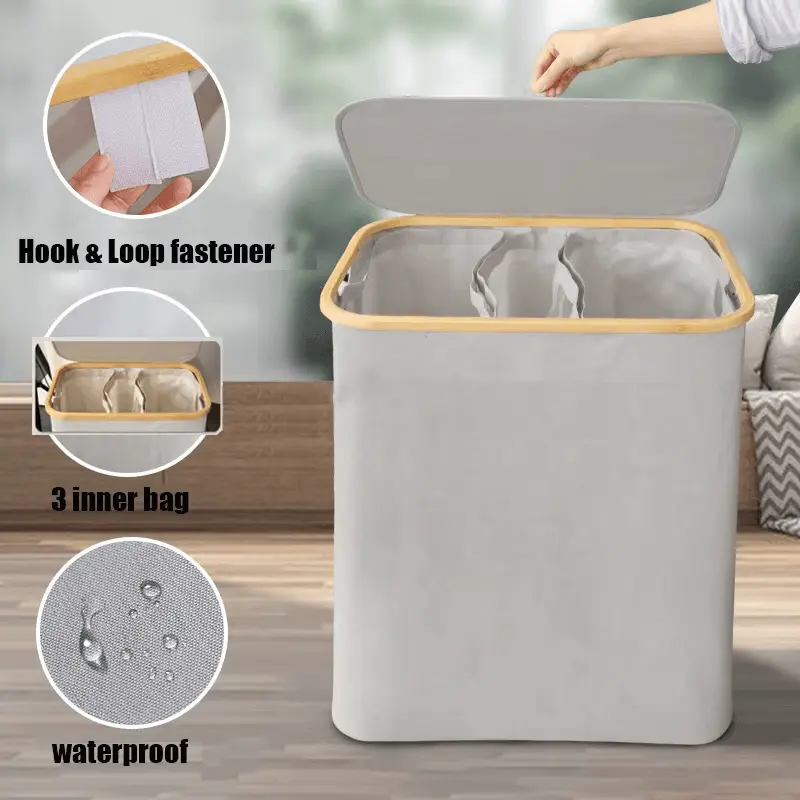
Extra-Large Collapsible Laundry Basket
Store large loads of laundry, clothes, or toys in this 160L extra-large collapsible laundry basket. It features a lid, removable washable inner bag, sturdy bamboo handles, and a space-saving foldable design.
Best For:
● Large families
● Laundry rooms
● Bedrooms and children’s rooms
● Space-saving storage
Key Features:
● 160L extra-large capacity
● Collapsible, space-saving design
● Removable machine-washable inner bag
● Lid helps keep contents covered
● Sturdy bamboo side handles
● Freestanding design with fiberglass support rods
Pull-Out Laundry Hampers
Hidden hampers help maintain a clean appearance while simplifying laundry sorting.
Choose:
- Single hampers for individuals
- Double hampers for separating lights and darks
- Triple hampers for larger families
Pull-out systems keep dirty laundry out of sight until wash day.
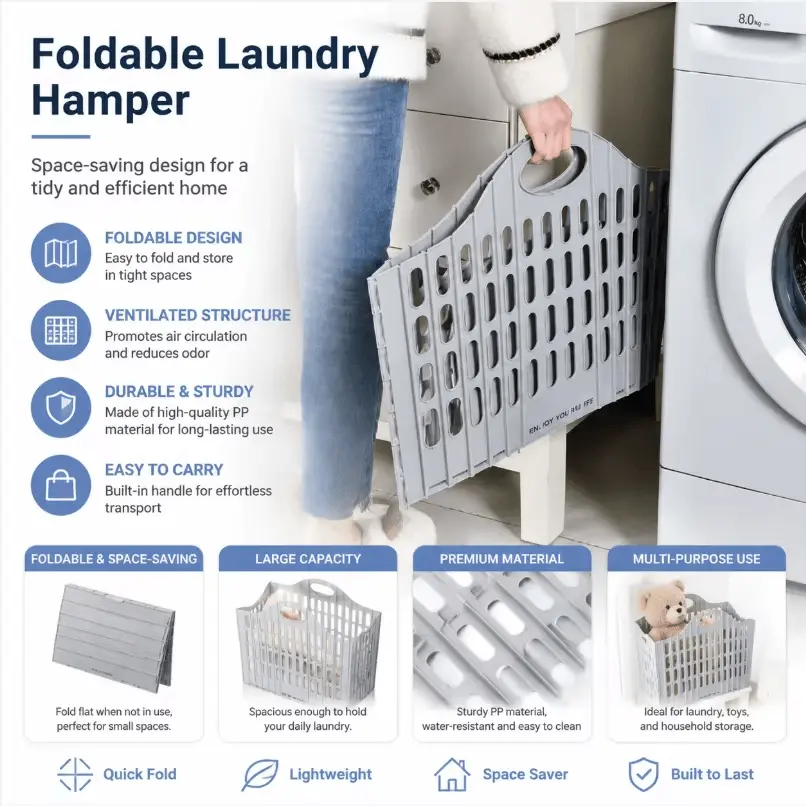
Foldable Plastic Laundry Hamper
Space-saving foldable plastic laundry hamper made from durable PP material with a ventilated hollow design and built-in handle. Ideal for storing dirty clothes, toys, blankets, shoes, and household items in laundry rooms, bedrooms, bathrooms, dorms, and compact spaces.
Best For:
● Small laundry rooms
● Dorms and apartments
● Bedrooms and bathrooms
● Closets and multipurpose household storage
Key Features:
● Foldable, space-saving design for easy storage
● Ventilated hollow structure helps improve airflow
● Durable, water-resistant PP plastic construction
● Built-in handle for easy carrying and transport
● Large capacity for clothes and household items
● Multipurpose storage for toys, blankets, shoes, and more
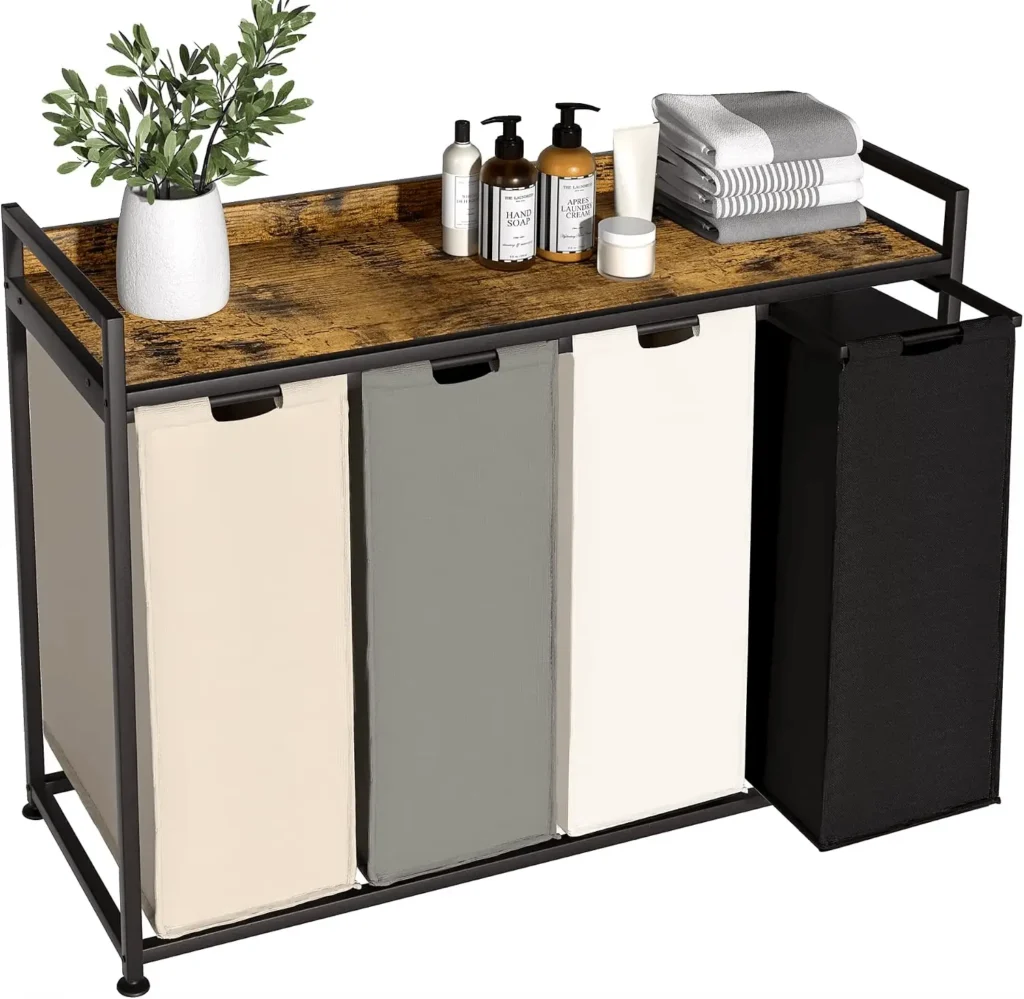
4-Section Rolling Laundry Sorter
Organize laundry with this 4-section laundry hamper with shelf, designed with four 60L removable sorting bags for separating clothes by color or type. The sturdy metal and MDF frame includes a top shelf for storing towels, detergent, and laundry essentials. Pull-out bags and smooth-rolling wheels make transporting clothes between rooms easy, while the rustic brown design adds a practical touch to your laundry room, bathroom, or bedroom.
Best For:
● Laundry room organization and clothes sorting
● Separating whites, darks, colors, or different laundry loads
● Storing towels, detergent, and laundry essentials
● Bathrooms, bedrooms, dorms, and shared laundry spaces
● Families needing a high-capacity multi-section laundry sorter
Key Features:
● Four separate 60L sections for convenient laundry sorting
● Removable pull-out bags for easy carrying and emptying
● Top storage shelf for towels, detergent, and toiletries
● Smooth-rolling wheels for easy movement between rooms
● Durable metal and MDF frame for added stability
● Thickened waterproof non-woven fabric laundry bags
● Rustic brown design complements various home interiors
● Versatile reusable design for laundry, bathroom, or bedroom organization
● Easy assembly with labeled parts and straightforward instructions
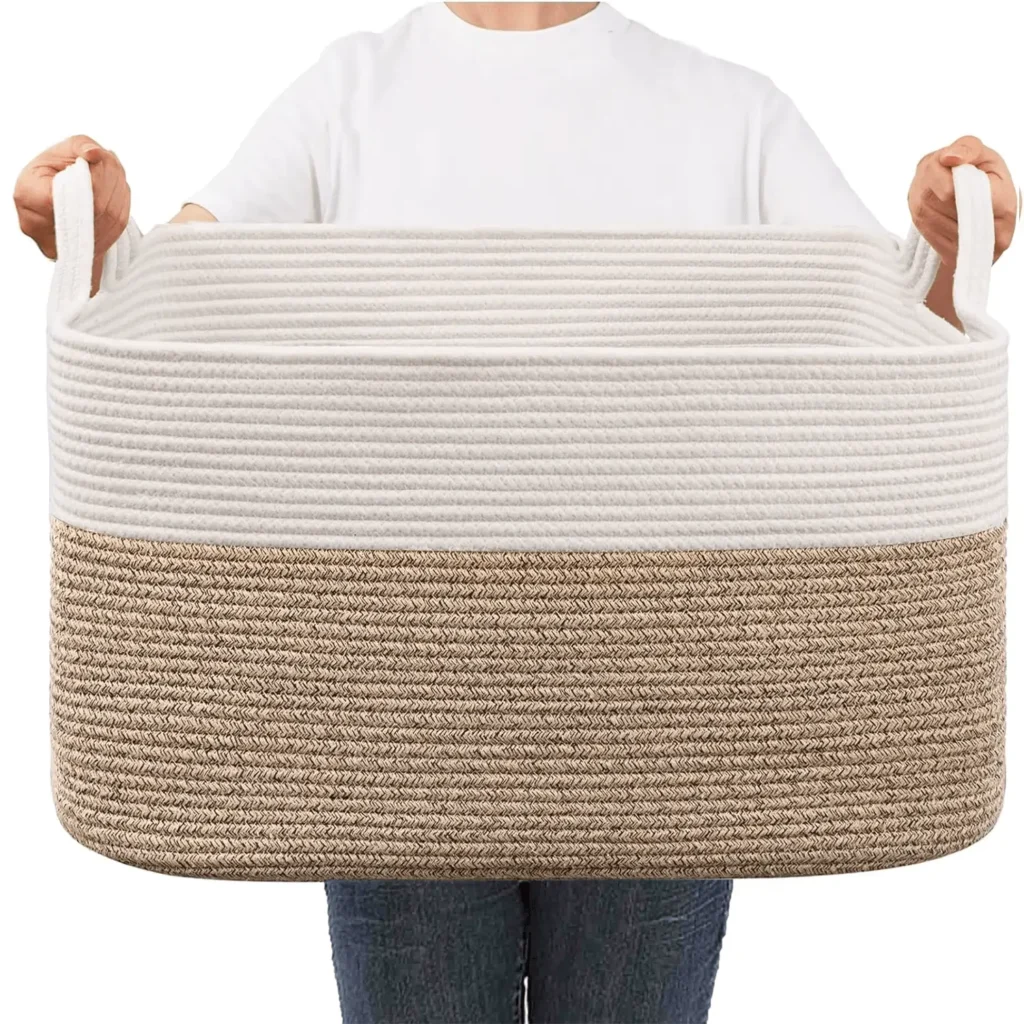
Woven Storage Basket
A soft yet sturdy woven storage basket designed to keep laundry, clothing, toys, blankets, and household essentials neatly organized. Its versatile rectangular cube shape fits easily on shelves and works beautifully in bedrooms, laundry rooms, living rooms, and entryways.
Best For:
● Laundry rooms
● Entryways, shelves, toys, clothing, blankets
● Bedrooms and living rooms
● Closets and general household storage
Key Features:
● Soft-to-touch woven polyester construction
● Sturdy design for everyday organization
● Reusable and multifunctional storage solution
● Cube-style shape fits neatly on shelves
● Suitable for laundry, clothing, toys, and household items
● Elegant design blends with various home interiors
● Ideal for bedrooms, laundry rooms, living rooms, and entryways
● Made without high-concern chemicals
Stackable Storage Bins
Clear stackable bins maximize cabinet and shelf space.
Ideal for storing:
- Laundry pods
- Fabric softener
- Stain removers
- Spare cleaning supplies
- Paper products
Transparent bins make it easy to monitor inventory without opening each container.

45L Collapsible Storage Bin
Organize your home, laundry room, garage, or car trunk with the SucceBuy 45L collapsible plastic storage basket. Its roomy capacity, sturdy PP construction, ergonomic handles, and foldable design make it a practical solution for storing clothes, toys, groceries, and everyday household items.
Best For:
● Laundry room and clothing organization
● Garage and household storage
● Car trunk and grocery organization
● Toys, camping gear, and outdoor essentials
● Space-saving storage in small homes
Key Features:
● 45L large-capacity storage
● Space-saving collapsible design
● Durable PP plastic construction
● Ergonomic carry handles
● Folds flat when not in use
● Stackable and easy to transport
● Ideal for clothes, toys, groceries, garage, and car trunk storage
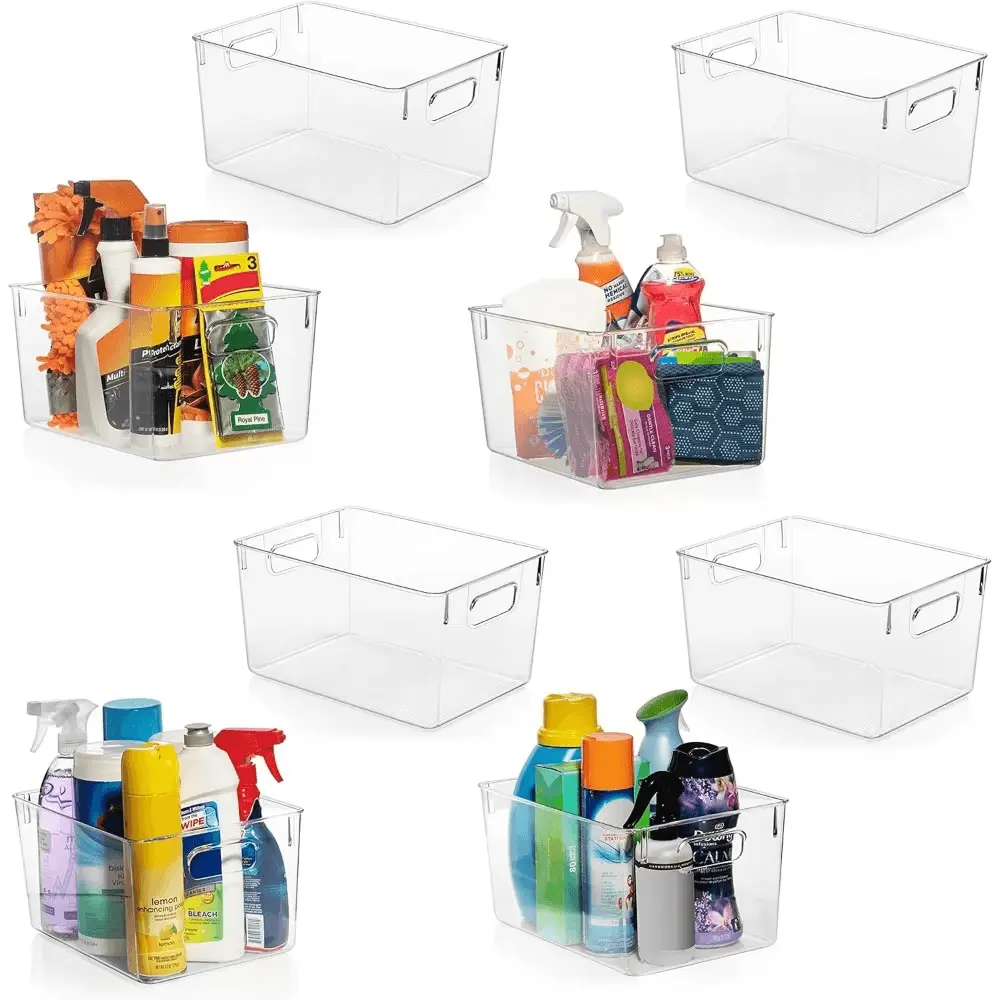
Clear Plastic Storage Bins
Organize your home effortlessly with this 8-pack of clear plastic storage bins. Featuring built-in handles, stackable design, and durable BPA-free plastic, they’re ideal for laundry rooms, pantries, kitchens, closets, cabinets, garages, and freezers.
Best For:
● Laundry room organization and bathroom essentials
● Kitchen cabinets, refrigerator & freezer
● Office supplies and Pantry storage
● Garage storage and closet organization
Key Features:
● 8-pack large-capacity storage bins
● Clear design for easy visibility
● Built-in side handles for portability
● Stackable and space-saving
● BPA-free, food-safe plastic
● Durable, shatter-resistant construction
● Suitable for pantry, laundry, kitchen, and closet
● Easy to clean with mild soap and water
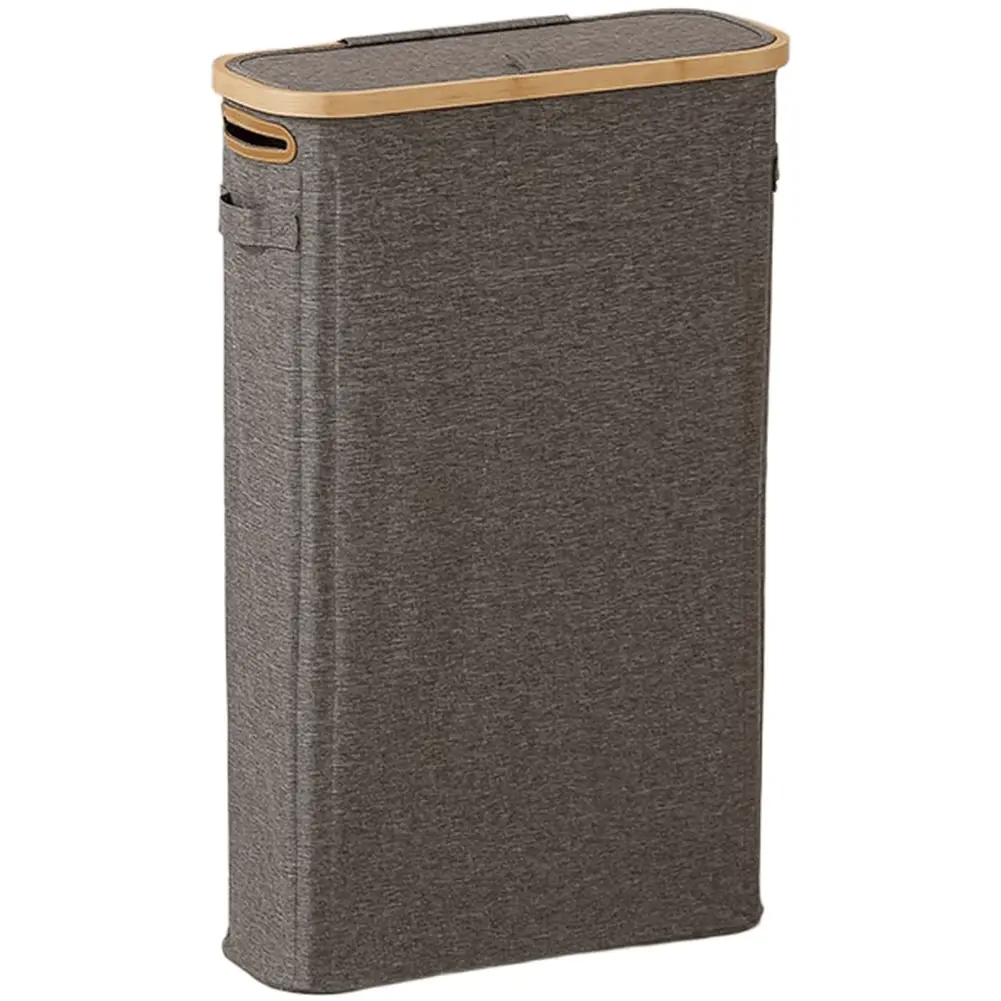
Foldable Lidded Storage Basket
Keep your home organized with this foldable storage basket featuring a built-in tissue dispenser lid, dustproof cover, and spacious interior. Ideal for storing clothes, blankets, toys, towels, and other household essentials while saving space.
Best For:
● Laundry room organization
● Closet storage
● Bedroom organization
● Living room storage
● Nursery storage
● Blanket and towel storage
Key Features:
● Foldable space-saving design
● Large storage capacity
● Built-in tissue dispenser lid
● Dustproof protective cover
● Durable polyester construction
● Lightweight and easy to move
● Suitable for clothes, toys, towels, and linens
Floating Shelves
Floating shelves provide valuable vertical storage while keeping frequently used supplies within reach.
Perfect for displaying:
- Decorative jars
- Matching detergent containers
- Folded towels
- Indoor plants
- Labeled baskets
Choose moisture-resistant materials for long-term durability.
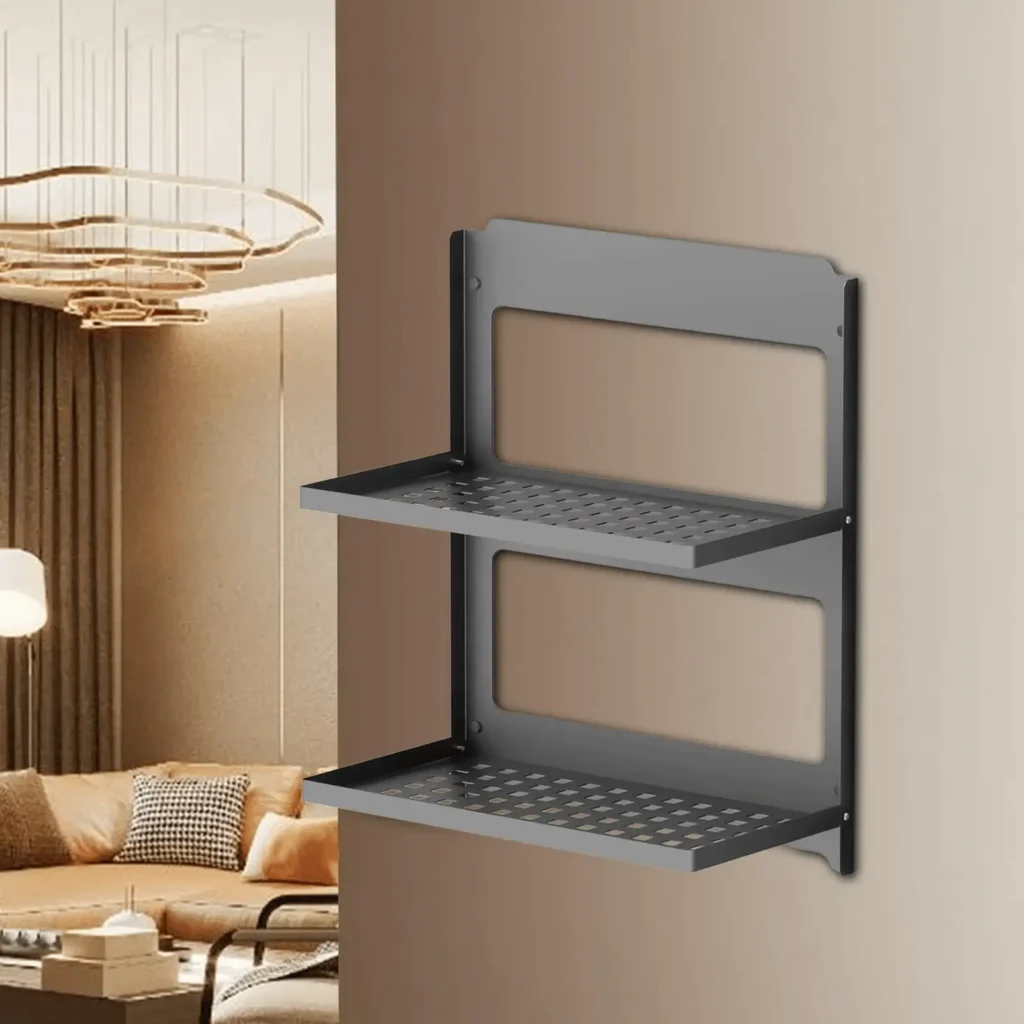
Floating Wall Shelves
Organize your space with these floating wall shelves, featuring a practical double-layer design that makes better use of vertical wall space. The foldable structure offers flexibility when the shelves are not in use, while sturdy iron construction provides dependable support. A versatile storage solution for laundry rooms, bathrooms, garages, kitchens, and other areas where space-saving organization matters.
Best For:
● Laundry rooms and bathrooms
● Garages and kitchens
● Offices and small-space organization
Key Features:
● Double-layer design maximizes vertical wall space
● Foldable shelves for flexible storage
● Sturdy iron construction for reliable support
● Wall-mounted design saves floor space
● Stackable for expanded storage capacity
● Suitable for laundry, bathroom, kitchen, and garage organization

Rustic Floating Shelf
Add practical storage without taking up valuable floor space with this rustic wood floating wall shelf. Its compact design and sturdy construction make it a versatile choice for organizing laundry supplies, bathroom essentials, kitchen items, books, photos, and decorative accessories.
Best For:
● Laundry room organization
● Bathroom storage
● Kitchen wall storage
● Living room décor
● Small-space organization
● Displaying books and decorative items
Key Features:
● Solid wood construction for sturdy everyday storage
● Compact 15.7 × 5.9-inch space-saving design
● Wall-mounted style keeps floors clear and organized
● Minimalist rustic look complements various interiors
● Suitable for laundry rooms, bathrooms, kitchens, and living spaces
● Includes 2 mounting brackets for installation
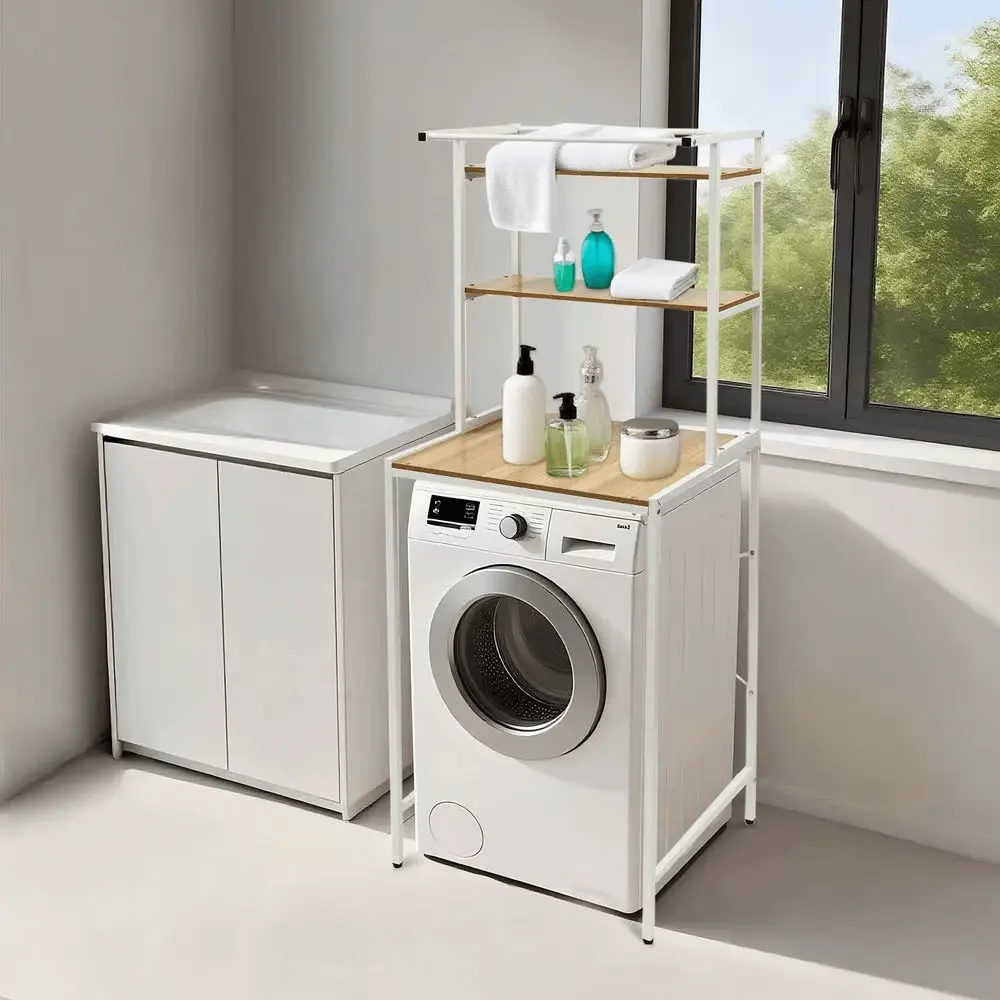
Washer and Dryer Shelf
Maximize vertical space with this 3-tier washer and dryer storage shelf, designed to fit over your laundry appliances. The freestanding design provides convenient storage for detergents, fabric softeners, cleaning supplies, towels, and other laundry essentials while helping keep your laundry room neat and organized.
Best For:
● Laundry rooms
● Small spaces
● Over-the-washer storage
● Detergent and cleaning supply organization
● Maximizing vertical storage
Key Features:
● 3-tier vertical storage design
● Fits over most washers and dryers
● Freestanding and space-saving
● Ideal for laundry essentials
● Helps reduce countertop and floor clutter
● Easy access to frequently used supplies
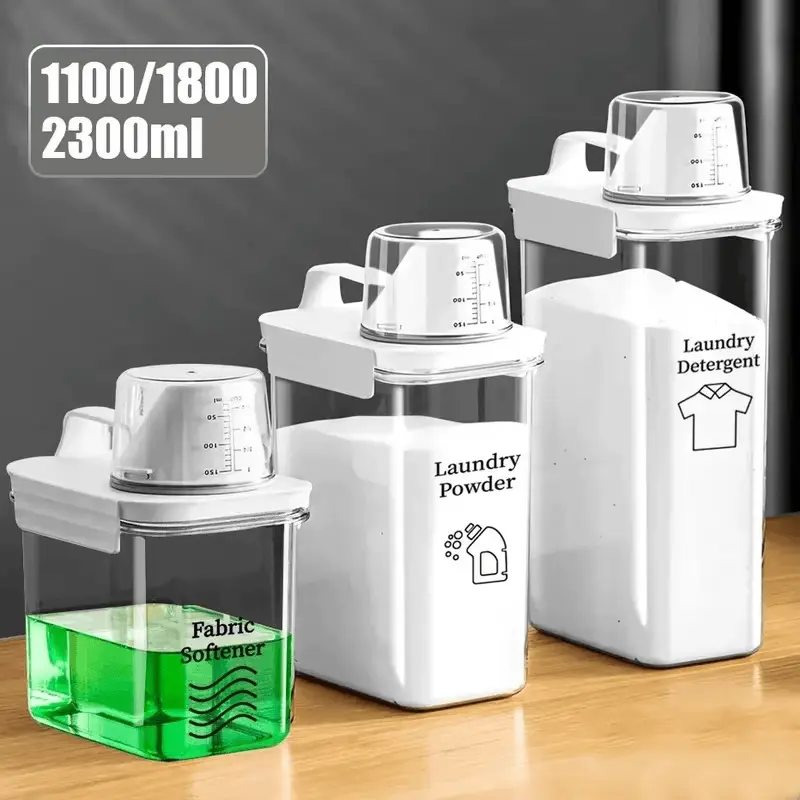
Laundry Detergent Dispenser Container
Store laundry detergent, powder, fabric softener, or bleach in this refillable clear PET dispenser with a measuring scale. Available in multiple sizes for neat, organized laundry storage.
Best For:
● Laundry detergent storage
● Powder detergent
● Fabric softener
● Bleach storage
● Pantry storage
● Laundry room organization
Key Features:
● Clear PET plastic for easy content visibility
● Built-in measuring scale
● Refillable and reusable design
● BPA-free food-grade material
● Available in 1100ml, 1800ml, and 2300ml
● Suitable for laundry and pantry storage
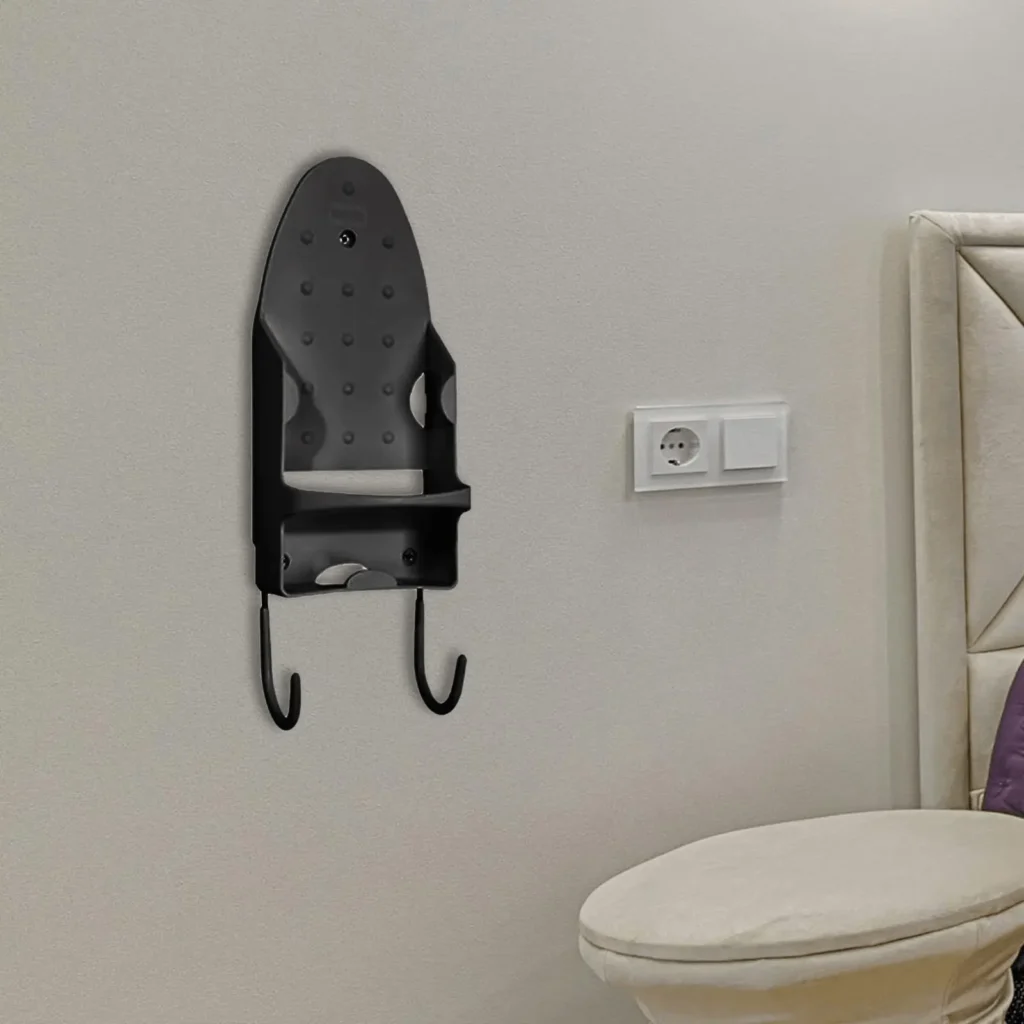
Wall-Mounted Ironing Board Holder
Organize your laundry room with this wall-mounted ironing board holder. Made from durable heat-resistant PBT and PP, it securely stores your iron and ironing board while saving valuable floor space. Easy to install on walls, doors, or inside utility cabinets.
Best For:
● Small laundry rooms
● Utility rooms
● Apartment living
● Closet organization
● Bathroom storage
● Home ironing stations
Key Features:
● Universal fit for most irons
● Wall-mounted space-saving design
● Heat-resistant PBT & PP construction
● Built-in hook for ironing board storage
● Quick and easy installation
● Keeps ironing essentials organized
● Suitable for walls, doors, or closets
● Ideal for laundry and utility rooms
Cabinet Organizers
Cabinet organizers improve accessibility by preventing products from becoming buried in deep cabinets.
Popular options include:
- Pull-out shelves
- Lazy Susans
- Shelf risers
- Adjustable dividers
These accessories maximize every inch of available cabinet space.
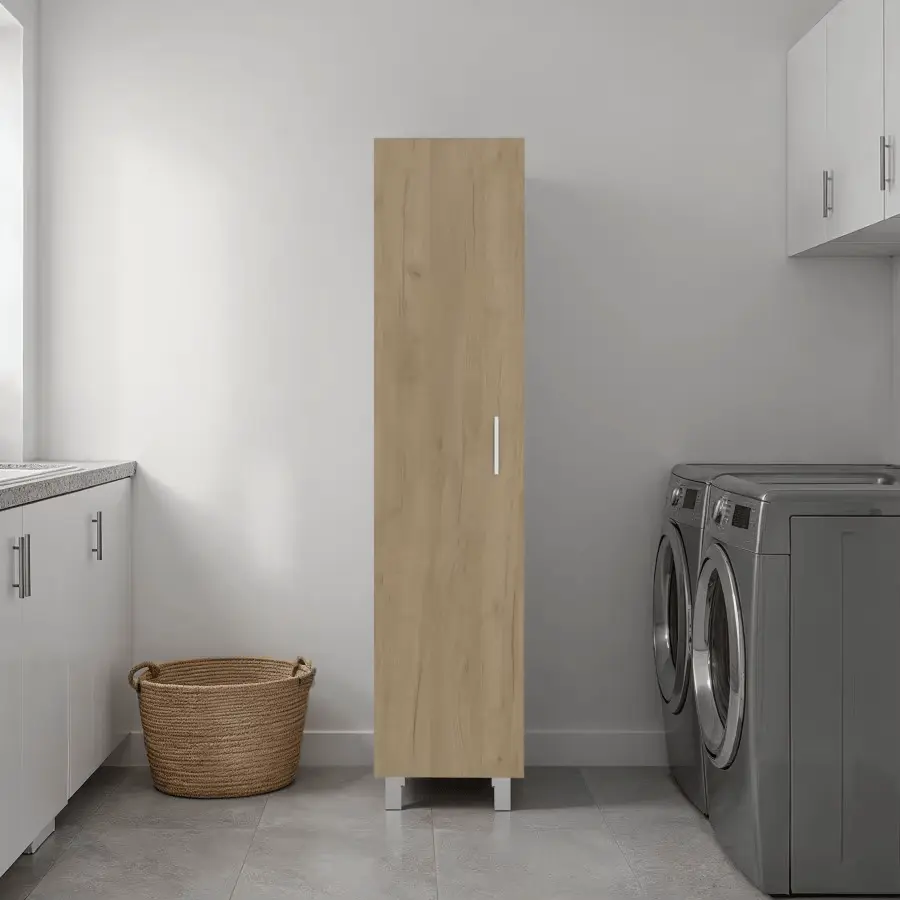
Slim Storage Cabinet
Maximize narrow spaces with the Vernon Slim Storage Cabinet, featuring four-tier shelving and convenient broom hangers. The natural oak finish complements modern and traditional interiors while providing practical storage for cleaning supplies, laundry essentials, and household items.
Best For:
● Small laundry rooms
● Utility spaces
● kitchens, and dining rooms
Key Features:
● Slim space-saving design
● 4-tier storage shelves
● Built-in broom hangers
● Natural oak finish
● Ideal for cleaning and household supplies
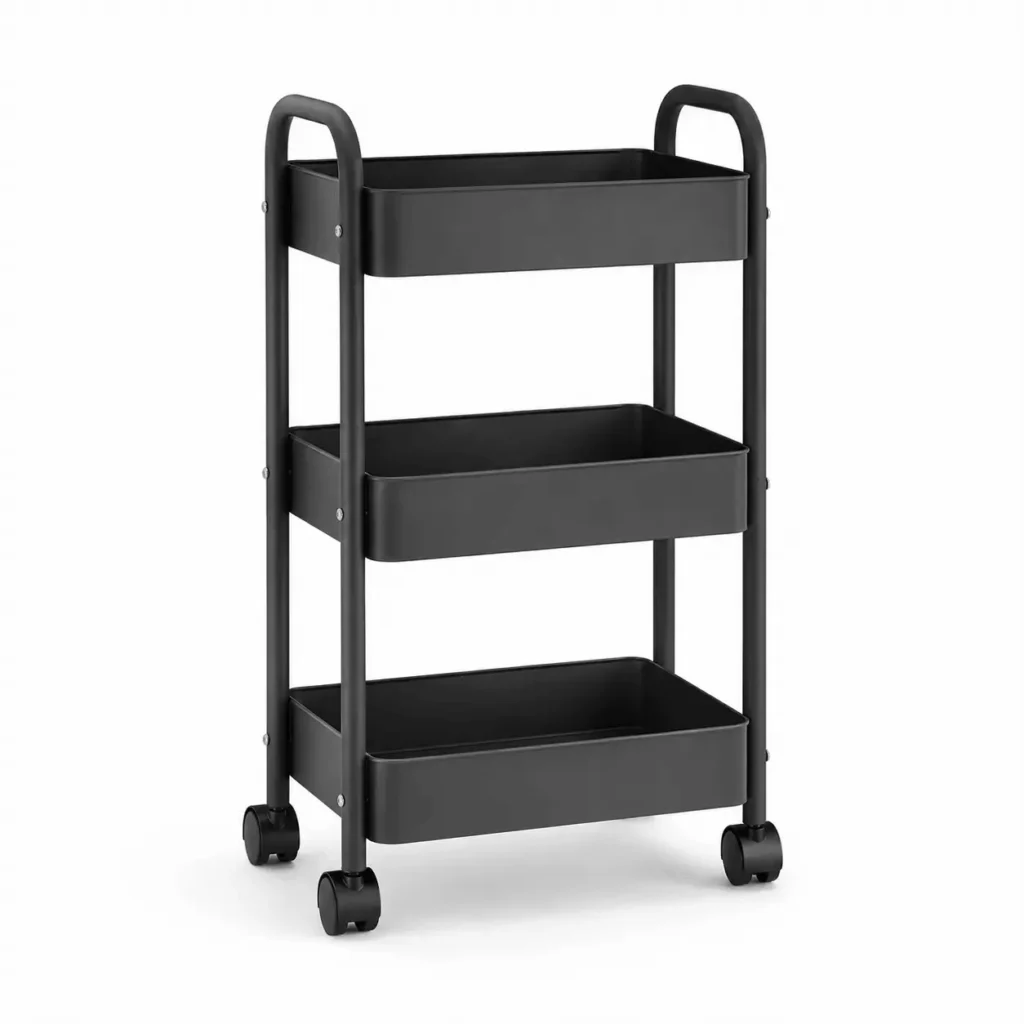
3-Tier Slim Rolling Storage Cart
Maximize storage in small spaces with this 3-tier slim rolling storage cart. Made from durable carbon steel, it features three spacious baskets, smooth-rolling wheels, hanging hooks and a compact design ideal for kitchens, bathrooms, laundry rooms, bedrooms and offices.
Best For:
● Laundry room organization
● Bathroom storage
● Kitchen pantry organization
● Bedroom essentials
● Office supplies
● Apartments and dorm rooms
● Small space storage
Key Features:
● Durable carbon steel construction
● Slim space-saving design
● 3 spacious storage baskets
● Smooth 360° rolling wheels
● Raised basket edges prevent items from falling
● Includes 2 hanging hooks
● Easy to move and assemble
● Ideal for multiple rooms
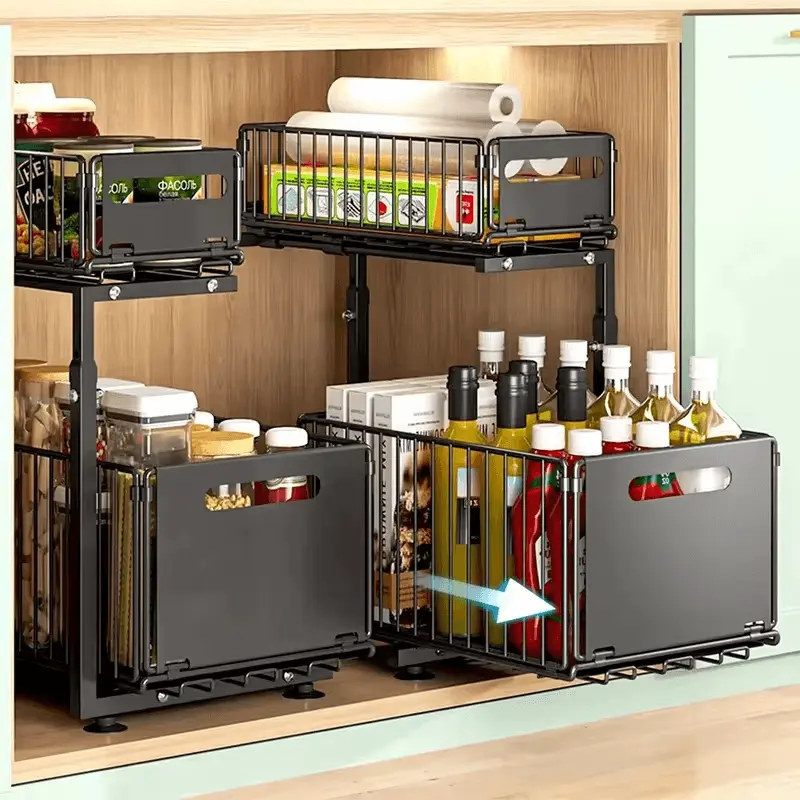
2-Tier Pull-Out Cabinet Organizer
Maximize cabinet space with this 2-tier adjustable pull-out cabinet organizer, designed to make items easier to access and keep neatly arranged. The two independently sliding shelves provide convenient pull-out storage, while the adjustable height design accommodates bottles, jars, cleaning supplies, and other household essentials. Made from sturdy carbon steel with a full-extension ball-bearing sliding system, this space-saving organizer is ideal for under-sink cabinets, kitchen cupboards, pantries, bathrooms, laundry rooms, and more.
Best For:
● Laundry room cabinets and bathroom storage
● Under-sink storage and kitchen cabinets
● Cleaning supplies, and pantry organization
● Spice jars, bottles, and household essentials
Key Features:
● 2-tier pull-out design with independently sliding shelves
● Adjustable height with multiple settings for different storage needs
● Spacious storage for bottles, jars, cleaning supplies, and household essentials
● Sturdy carbon steel construction for reliable everyday use
● Full-extension ball-bearing slides for smooth and convenient access
● Space-saving design helps maximize unused cabinet space
● Ideal for under-sink cabinets, kitchens, pantries, bathrooms, laundry rooms, and offices
Label Maker
A quality label maker is one of the most affordable organization tools available.
Use it to label:
- Baskets
- Storage bins
- Glass jars
- Shelves
- Drawers
- Cabinets
Consistent labeling helps maintain organization long after the initial setup.

Wireless Thermal Label Printer
The NiiMbot B21 Pro Wireless Thermal Label Printer delivers fast, ink-free Bluetooth printing for labels, barcodes, product tags, names, notes, and stickers. Its compact design, rechargeable battery, and support for 20–50mm labels make it perfect for home, office, retail, and warehouse organization.
Best For:
● Home organization, storage bin labels
● Office labeling
● Barcode printing
● Product price tags, shipping labels
● Name labels
● Small business inventory, DIY craft projects
● School and classroom use
Key Features:
● Wireless Bluetooth connectivity
● Inkless thermal printing
● Supports 20–50mm labels
● Sharp 203/300 DPI resolution
● Fast label printing speed
● Rechargeable 1200mAh battery
● Compact and portable design
● Ideal for barcodes and stickers
● Compatible with smartphones
● Clear, durable label output

Waterproof Laundry Room Labels
Organize your laundry room and bathroom with this set of 144 waterproof removable PVC labels. Perfect for detergent dispensers, spray bottles, storage containers, and cleaning supplies, these durable labels provide a neat, professional look while making everyday organization quick and easy.
Best For:
● Laundry detergent dispensers
● Spray bottles
● Bathroom organizers
● Cleaning supply containers
● Storage jars and bottles
● Home organization
Key Features:
● 144 waterproof PVC labels
● Removable without sticky residue
● Durable and moisture resistant
● Ideal for bottles, jars, and dispensers
● Clean white minimalist design
● Easy to apply and reposition
● Perfect for laundry and bathroom organization
Optional Organization Upgrades
Once your basic organization system is in place, these upgrades can improve convenience even further.
Wall-Mounted Drying Rack
A fold-down drying rack provides dedicated space for:
- Sweaters
- Delicate fabrics
- Athletic wear
- Hand-washed garments
It saves floor space while protecting clothing from heat damage.
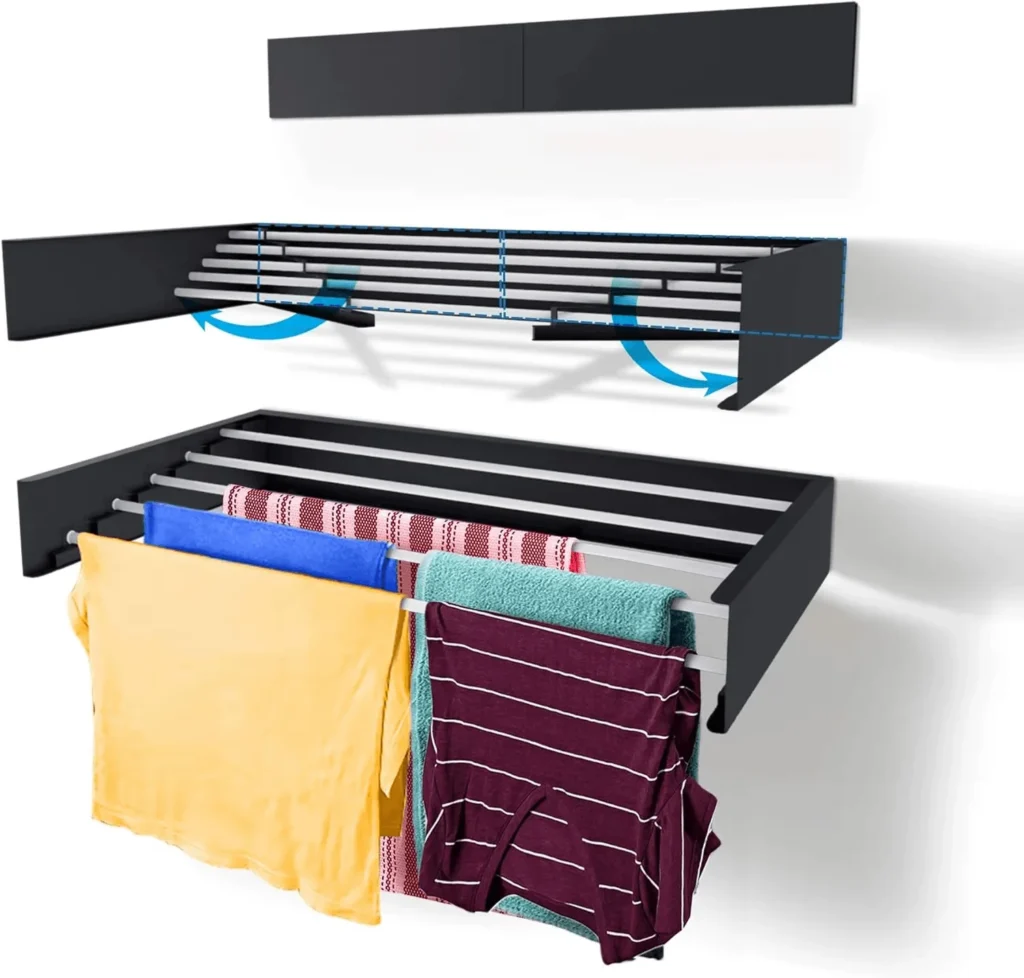
Foldable Wall-Mounted Clothes Drying Rack
Maximize your laundry room space with this 80cm wall-mounted laundry drying rack, featuring a sturdy metal construction and five heavy-duty drying rods. Its foldable design provides a convenient way to air-dry clothes, towels, shoes, and other garments without taking up valuable floor space. With a strong load-bearing capacity of up to 60 lbs and a durable multi-layer surface treatment designed to help resist scratches and rust, this space-saving drying rack is a practical addition to laundry rooms, bathrooms, balconies, and other compact areas.
Best For:
● Small laundry rooms and bathrooms
● Balconies, and apartments
● And homes that need a convenient wall-mounted clothes drying solution.
Key Features:
● Foldable wall-mounted design saves space.
● 5 heavy-duty rods for ample drying space.
● Strong 1.2mm metal construction.
● Supports up to 60 lbs.
● Rust- and scratch-resistant surface.
● Suitable for clothes, towels, shoes, and more.
● Ideal for laundry rooms, bathrooms, balconies, and terraces.
● Easy wall installation with included hardware.

Retractable Clothesline for Space-Saving Laundry Drying
A durable retractable clothesline with double stainless steel lines that extend up to 13.8 feet and support up to 44 lbs per line. Its compact, space-saving design retracts neatly after use, making it ideal for laundry rooms, balconies, patios, bedrooms, and other small spaces.
Best For:
● Small laundry rooms and apartments
● Indoor and outdoor clothes drying
● Towels, underwear, delicates, and baby clothes
● Balconies, patios, bedrooms, and hotels
Key Features:
● Durable ABS, aluminum, and 304 stainless steel construction
● Double retractable clotheslines for extra drying space
● Extends up to 13.8 ft for flexible use
● Supports up to 44 lbs per line
● Retracts neatly to save space when not in use
● Ideal for laundry rooms, balconies, patios, and bedrooms
● Easy to install with included mounting accessories
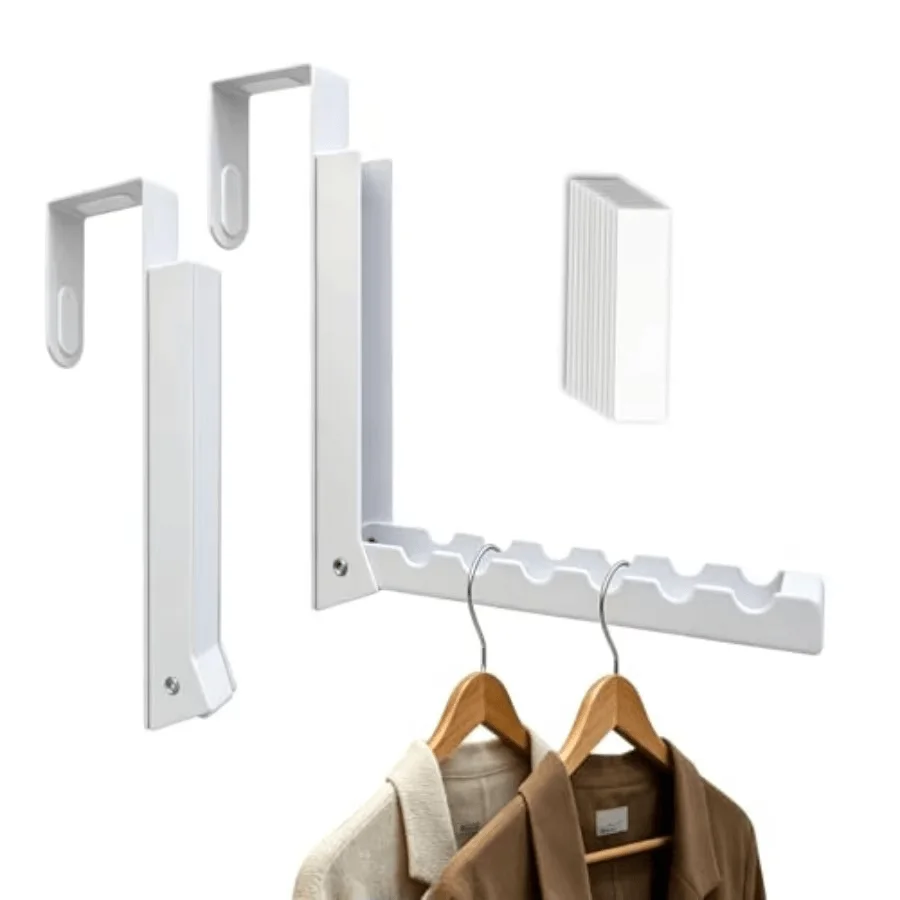
Over-the-Door Drying Rack
A practical space-saving solution for laundry rooms, bathrooms, and bedrooms. These foldable over-the-door hooks provide convenient hanging space for clothes, towels, robes, coats, and bags without taking up valuable floor space.
Best For:
● Small laundry rooms
● Bathrooms and bedrooms
● Hanging clothes and towels
● Robes, coats, and bags
● Space-saving home organization
Key Features:
● 2-pack foldable over-the-door hooks
● Space-saving design with no floor space required
● Ideal for clothes, towels, robes, coats, and bags
● Easy access to frequently used items
● Great for laundry room and bathroom organization
Rolling Utility Cart
A narrow rolling cart fits beside appliances and stores:
- Detergent
- Fabric softener
- Cleaning sprays
- Dryer sheets
Because it’s mobile, it can easily move wherever additional storage is needed.
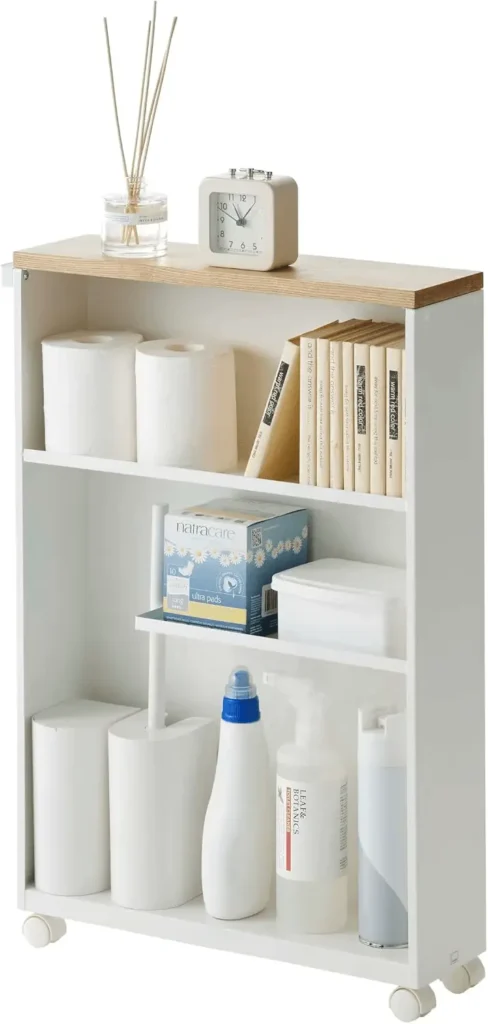
Slim Rolling Storage Cart
Maximize unused narrow spaces with this slim rolling storage cart. Its compact steel frame, wood top, open shelves, wheels, and pull handle make it a practical organizer for bathrooms, laundry rooms, kitchens, and other tight spaces.
Best For:
● Laundry rooms, cleaning supplies
● Bathroom and toiletries storage
● Kitchen and narrow gaps
● Household organization
Key Features:
● Ultra-slim, space-saving design
● Durable steel frame with wood top
● Smooth-rolling swivel wheels
● Convenient pull handle
● Multiple open storage shelves
● Protective guardrails help keep items secure
● Ideal for narrow gaps and tight spaces
● Suitable for bathroom, laundry, and kitchen storage
Folding Station Countertop
Installing a countertop above front-loading appliances instantly creates a folding station while improving the room’s appearance.
Benefits include:
- Additional workspace
- Easier laundry sorting
- Cleaner design
- Increased home value
Hanging Rod
A hanging rod allows clothes to air dry or remain wrinkle-free after ironing.
Install one:
- Above the folding station
- Beside the dryer
- Near the utility sink
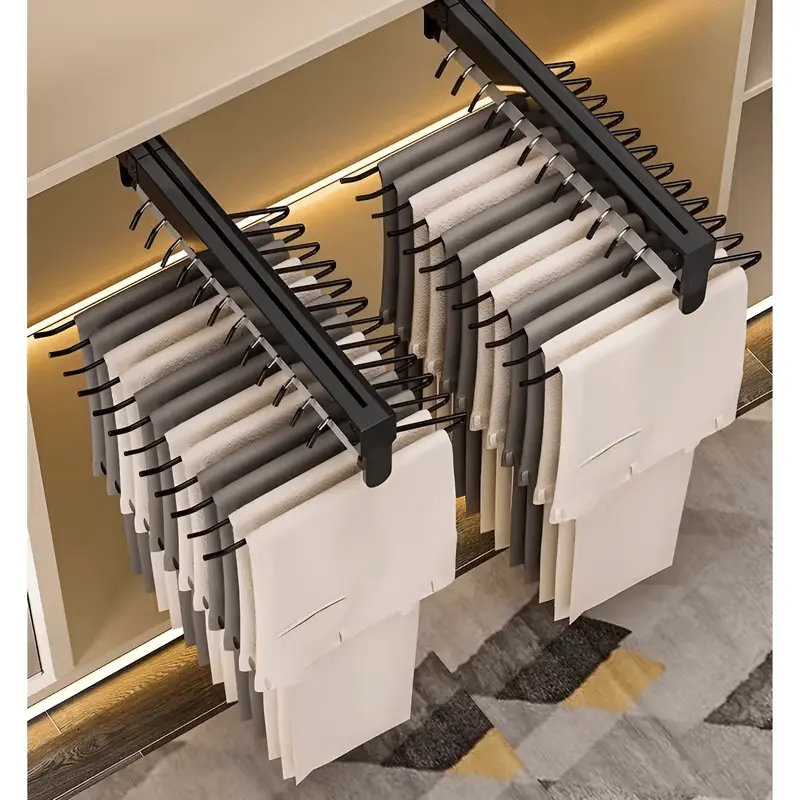
Retractable Wardrobe Hanger Rail
Upgrade your closet with this pull-out retractable wardrobe hanger rail. The telescopic design provides quick access to clothes while maximizing wardrobe space. Ideal for hanging shirts, trousers, jackets, dresses, and everyday garments in an organized way.
Best For:
● Small wardrobes and closets
● Hanging shirts, trousers, and jackets
● Walk-in wardrobes
● Bedroom storage organization
● Space-saving closet upgrades
Key Features:
● Pull-out retractable design
● Smooth telescopic sliding rail
● Space-saving wardrobe organizer
● Keeps clothes wrinkle-free
● Easy access to hanging garments
● Suitable for shirts, trousers, dresses, and coats
● Durable and sturdy construction
● Easy to install inside wardrobes
Drawer Organizers
Drawer dividers prevent small accessories from becoming disorganized.
Store:
- Sewing supplies
- Stain remover pens
- Measuring scoops
- Clothespins
- Spare buttons
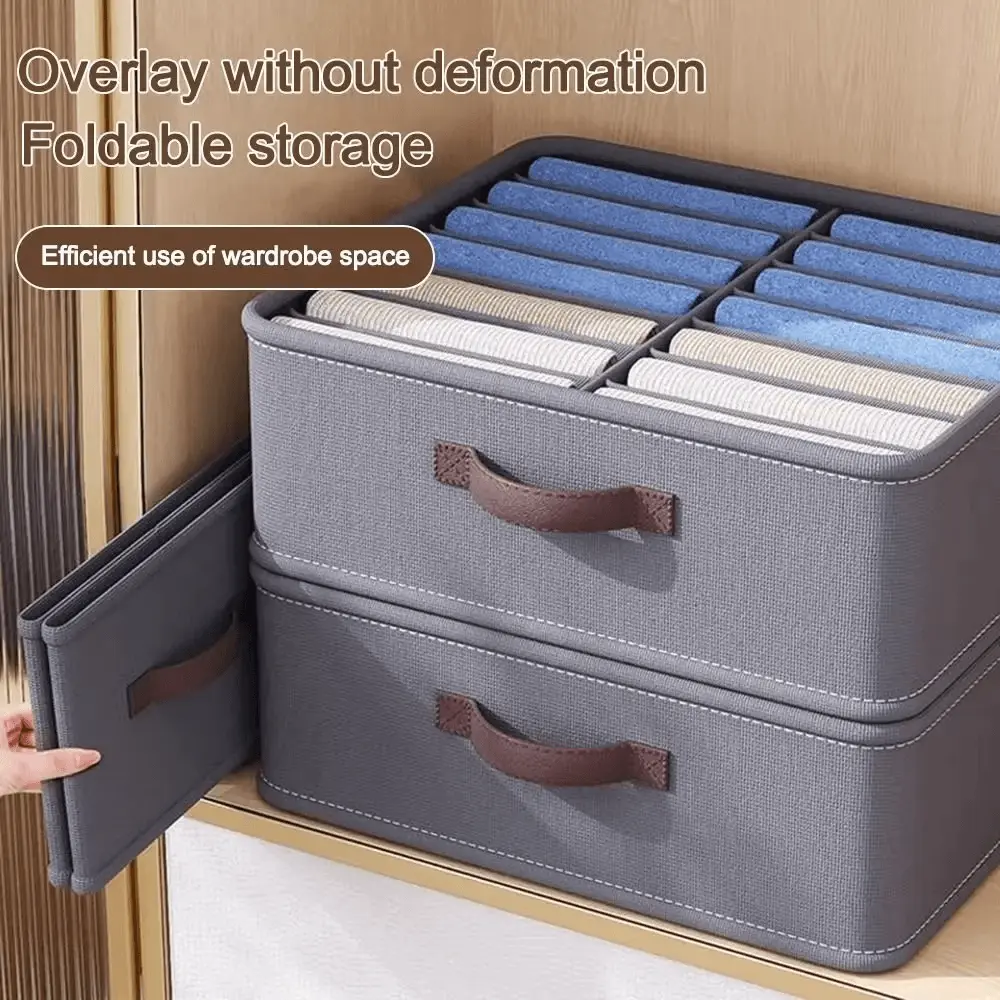
Multi-Grid Clothes Storage Organizer
Organize shirts, pants, jeans, leggings and other clothing with this foldable wardrobe storage organizer. Available in 14, 16 and 24-grid designs, it features a thickened structure for durability and space-saving drawer or wardrobe organization. Easy to fold and store when not in use.
Best For:
● Wardrobe organization
● Drawer storage
● Shirts and T-shirts
● Pants and jeans
● Leggings and shorts
● Closet space optimization
Key Features:
● 14, 16 & 24-grid storage options
● Foldable for easy storage
● Thickened durable construction
● Keeps clothes neatly separated
● Ideal for wardrobes and drawers
● Easy to assemble and maintain
● Space-saving closet organizer
Budget Shopping Checklist
You don’t need a large renovation budget to create an organized laundry room.
Affordable products include:
- Plastic storage bins
- Adhesive wall hooks
- Wire shelving
- Stackable baskets
- Clear jars
- Tension rods
- Over-the-door organizers
- Shelf liners
- Basic label maker
- Foldable laundry baskets
These inexpensive upgrades often provide the greatest improvement per dollar spent.
Premium Organization Investments
If you’re remodeling or designing a dream laundry room, these premium upgrades provide exceptional convenience.
Custom Cabinetry
Custom cabinets maximize every inch of available space while creating a seamless appearance.
Advantages include:
- Personalized storage
- Hidden hampers
- Pull-out shelves
- Built-in organization
Quartz Countertops
Quartz remains one of the most durable countertop materials.
Benefits include:
- Scratch resistance
- Moisture resistance
- Low maintenance
- Elegant appearance
Smart Storage Systems
Modern storage systems may include:
- Soft-close drawers
- Motorized shelves
- Pull-out organizers
- Built-in lighting
- Hidden charging stations
These features improve both organization and convenience.
Smart Appliances
Connected washers and dryers offer:
- Remote monitoring
- Automatic detergent dispensing
- Maintenance reminders
- Energy tracking
- Smartphone notifications
Smart technology simplifies laundry management while improving efficiency.
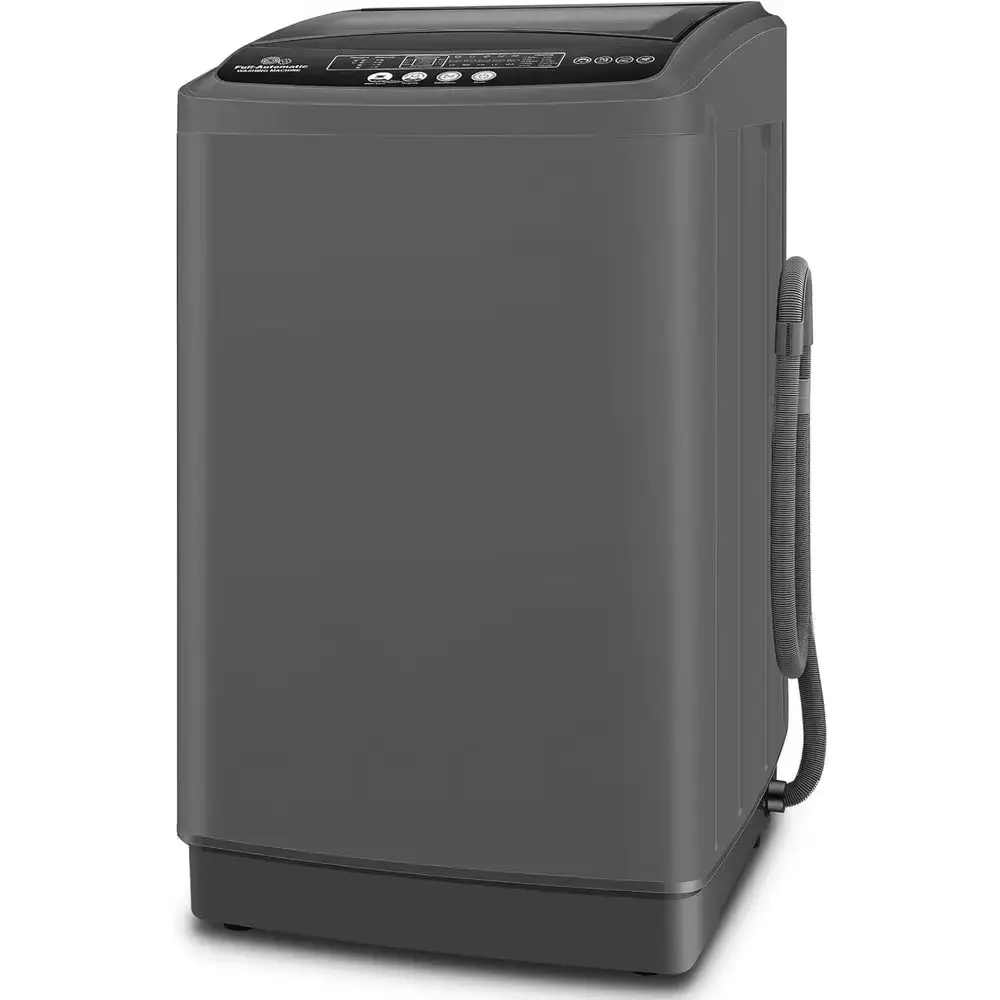
20 lb Portable Washer Dryer
A 20 lb portable washer dryer combo with a 2.8 cu. ft. tub, 10 wash programs, 8 water levels, LED display, and built-in drain pump. Its compact top-load design is ideal for apartments, RVs, dorms, and small laundry rooms.
Best For:
● Small apartments and homes
● RVs and campers
● Dorm rooms
● Compact laundry rooms
● Space-saving laundry setups
Key Features:
● 20 lb / 2.8 cu. ft. capacity for larger laundry loads
● 10 wash programs & 8 water levels for flexible washing
● Built-in drain pump for convenient wastewater removal
● LED touch controls with remaining-time display
● 95% water extraction through efficient spin drying
● Tempered glass slow-close lid for added convenience
● Stainless steel inner drum with lint filter
● Child lock, delay start & tub-clean function
● Compact portable design with side handles
● Grey finish suits modern laundry spaces

2-in-1 Portable Steam Iron & Garment Steamer
A compact 2-in-1 portable steam iron and garment steamer with 1200W power, ceramic soleplate, vertical steam, and six-level adjustment. Its 160ml water tank, LCD display, foldable design, and lightweight 0.75kg body make it convenient for everyday clothing care and travel.
Best For:
● Small laundry rooms
● Travel and business trips
● Quick wrinkle removal
● Vertical steaming of hanging clothes
● Wet and dry ironing
● Delicate and everyday fabrics
Key Features:
● 1200W fast heating
● 2-in-1 steam & dry ironing
● Vertical steam function
● Ceramic non-stick soleplate
● 6-level adjustment
● LCD display
● 160ml water tank
● Lightweight 0.75kg design
● Foldable & travel-friendly
● Self-cleaning function
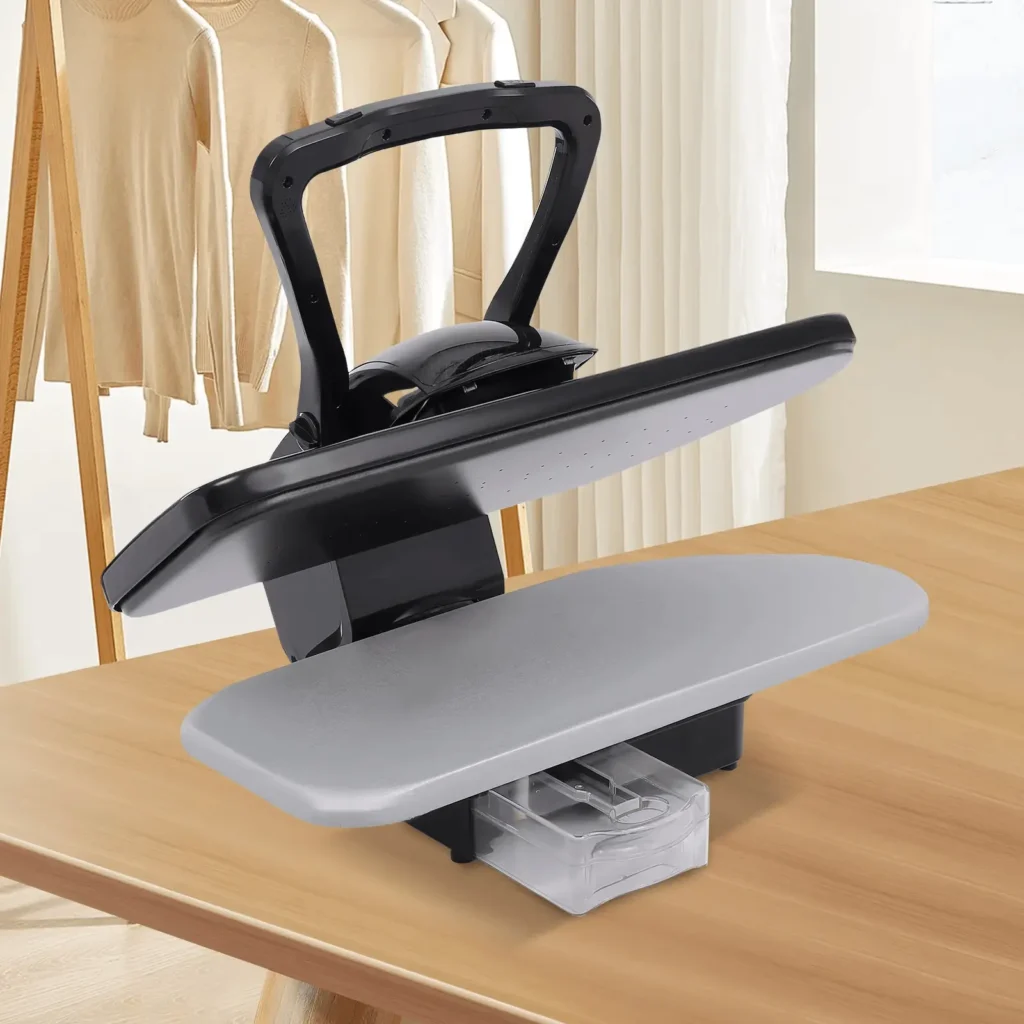
1600W Professional Steam Iron Press
This 1600W steam iron press delivers professional fabric care with 120g/min steam flow, a diamond-pattern heating plate, 5 fabric modes, and a 1L water tank. Overheat protection and 15-second auto standby provide added safety for convenient home ironing.
Best For:
● Home laundry and garment care
● Pressing shirts, trousers, dresses, and linens
● Wrinkle removal from multiple fabric types
● Users wanting professional-style ironing results
● High-volume household ironing
Key Features:
● 1600W power with 120g/min steam flow
● Diamond-pattern heating plate for even heat distribution
● 5 fabric modes: Nylon, Silk, Wool, Cotton & Linen
● 1L removable water tank for extended steaming
● 42 steam outlets for thorough steam coverage
● 90–200°C temperature range
● 8kg self-locking force for effective pressing
● 6-minute heating time
● Overheat protection for safer operation
● 15-second automatic standby safety feature
● Touchscreen controls with temperature and water-level alerts
● Large 26-inch ironing area
● Designed for professional-quality fabric care at home
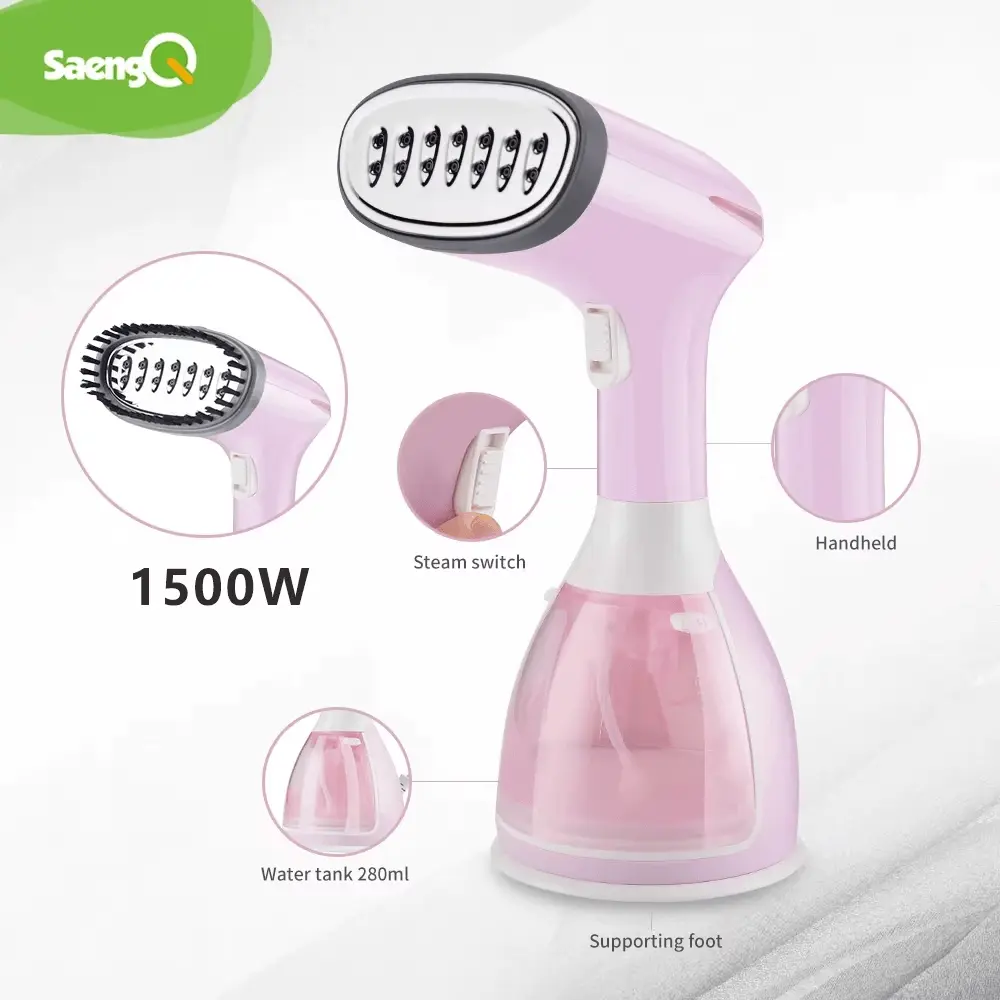
1500W Handheld Garment Steamer
SaengQ 1500W Handheld Garment Steamer with a 280ml water tank delivers fast, convenient steaming for removing wrinkles from clothes and fabrics. Its portable design is ideal for everyday garment care at home or while traveling.
Best For:
● Clothes & fabric wrinkle removal
● Everyday garment care
● Vertical steaming
● Home and travel use
Key Features:
● 1500W high-power steam performance
● 280ml water tank for convenient steaming
● Fast heat-up for quick garment care
● Handheld and portable design
● Suitable for vertical clothes steaming
● Helps smooth wrinkles and refresh fabrics

Smart WiFi HEPA Air Purifier
Smart 3-in-1 HEPA air purifier with WiFi APP control, real-time PM2.5 display, and ultra-quiet operation. Designed for rooms up to 15m², it helps reduce pollen, pet hair, formaldehyde, and airborne particles.
Best For:
● Bedrooms & nurseries
● Indoor and outdoor
● Small living rooms
● Home offices
● Pet-friendly homes
● Allergy-sensitive spaces
Key Features:
● 3-in-1 filtration for improved indoor air quality
● Real-time PM2.5 monitoring with LCD display
● WiFi & APP control for convenient remote operation
● Ultra-quiet operation below 28dB
● 3 adjustable fan speed settings
● Covers spaces up to 15m²
● Compact 191 × 191 × 249mm design
● USB DC 5V & solar power options

30-Pint Smart WiFi Dehumidifier
Keep indoor spaces comfortable with this 30-pint smart WiFi dehumidifier, designed for areas up to 2,000 sq. ft. It features app and voice control, ultra-quiet operation, 3 modes, a 1.6L water tank, and continuous drainage for convenient moisture control.
Best For:
● Bedrooms and living rooms
● Laundry drying
● Small basements
● Damp indoor spaces
● Smart home moisture control
Key Features:
● 30-pint daily moisture removal
● Covers up to 2,000 sq. ft
● WiFi app & voice control
● Laundry, Auto & Custom modes
● Ultra-quiet operation
● 1.6L removable water tank
● 4.9-ft continuous drain hose
● Auto-stop when tank is full
● Auto defrost & child lock
Must-Have Products for Small Laundry Rooms
Compact laundry spaces require storage products designed specifically for limited square footage.
Recommended items include:
- Slim rolling carts
- Fold-down drying racks
- Floating shelves
- Wall-mounted cabinets
- Magnetic organizers
- Over-the-door storage
- Stackable containers
- Multi-purpose benches
- Retractable ironing boards
Each product helps maximize available space without increasing clutter.
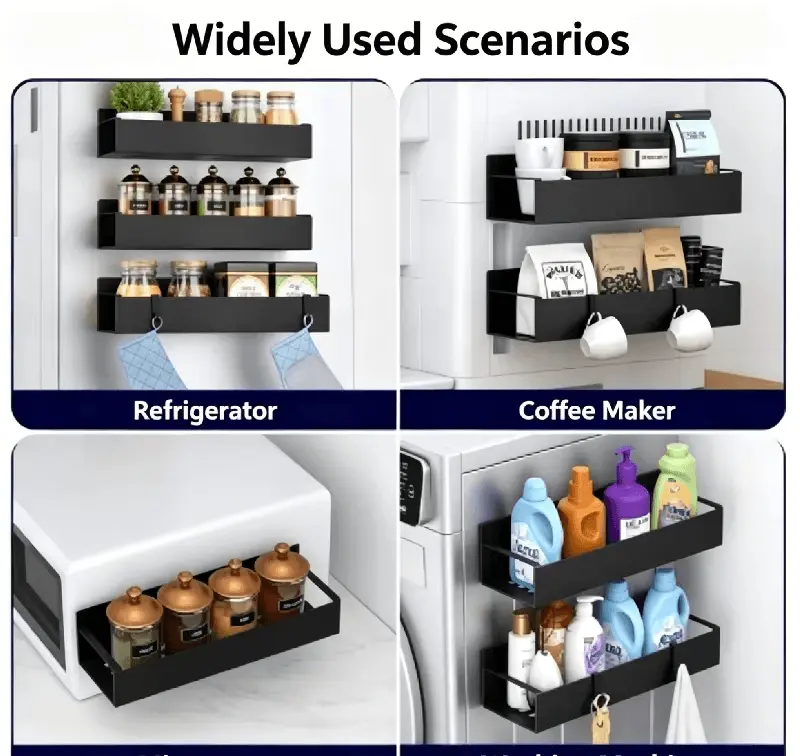
Magnetic Storage Shelf for Laundry Room & Kitchen
Maximize unused appliance-side space with this magnetic storage shelf. Made from durable carbon steel, it attaches to compatible iron surfaces without drilling or adhesive, making it ideal for washing machines, refrigerators, microwaves, and coffee machines. The slotted base provides ventilation and drainage while keeping laundry and household supplies organized.
Best For:
● Laundry detergent and cleaning supplies
● Washing machine side storage
● Small laundry room organization
● Refrigerator and kitchen storage
● Bathroom toiletries and essentials
● Coffee and tea accessories
Key Features:
● Strong magnetic no-drill mounting
● Durable carbon steel construction
● Slotted drainage base for ventilation
● Rust-resistant and easy to clean
● Multi-purpose appliance-side storage
● Space-saving design for small rooms
● Smooth rounded edges for safe use
● Removable, reusable, and repositionable
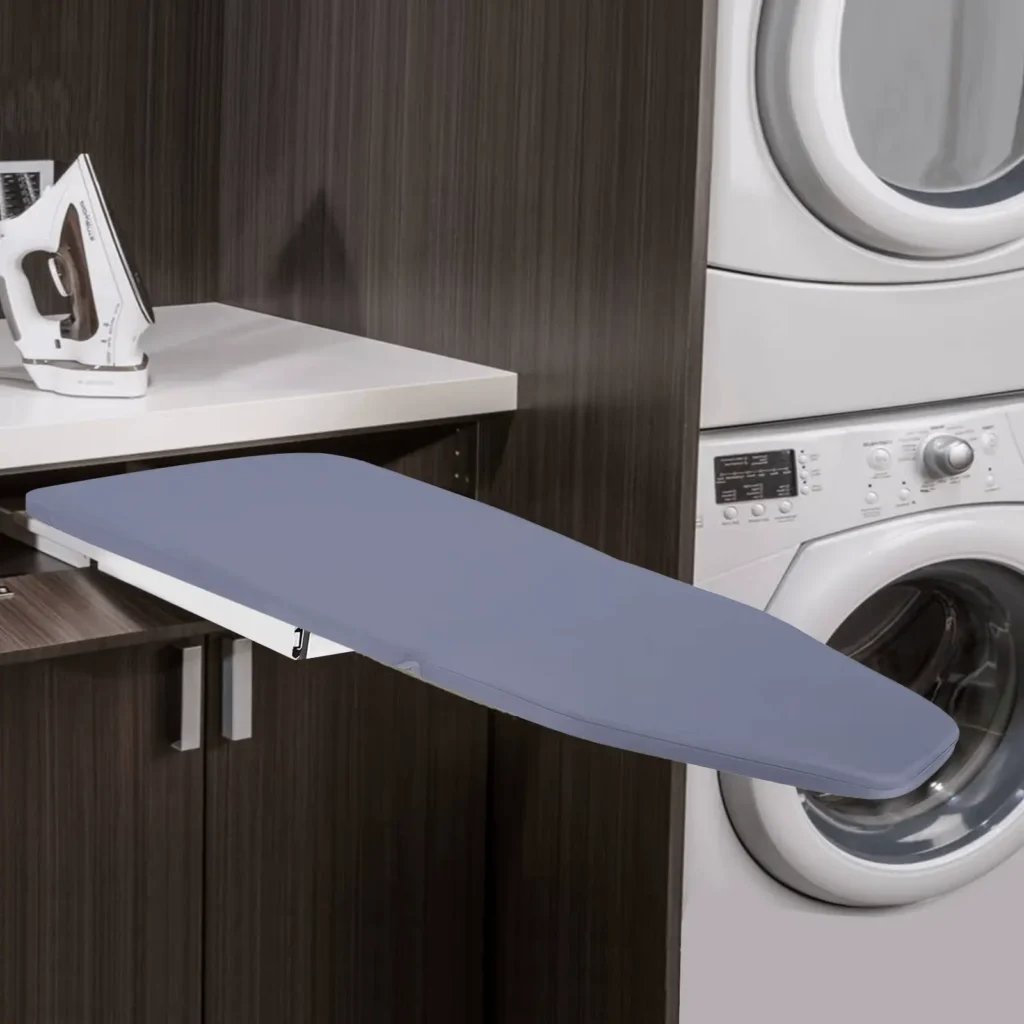
80cm Retractable Cabinet Ironing Board
Save space with this 80cm retractable ironing board, featuring a convenient pull-push design that slides into a cabinet for easy storage. Made with aluminum alloy, stainless steel, MDF, and cotton, it offers durable construction and stable support for everyday ironing. Its modern grey finish works well in compact laundry rooms, utility areas, and organized home spaces.
Best For:
● Small laundry rooms
● Cabinet-integrated ironing stations
● Space-saving home organization
● Apartments and compact homes
● Everyday clothes ironing
Key Features:
● 80cm compact ironing board
● Pull-push stow-away cabinet design
● Space-saving retractable construction
● Durable aluminum alloy and stainless steel materials
● Stable steel tube support stand
● Cotton ironing surface
● Modern neutral grey finish
● 7.31 kg lightweight construction
Eco-Friendly Organization Solutions
Many organization products are now available in environmentally friendly materials.
Consider choosing:
- Bamboo drawer organizers
- Recycled plastic bins
- Glass storage jars
- Organic cotton baskets
- FSC-certified wood shelving
- Reusable refill containers
These sustainable choices reduce environmental impact while creating a beautiful laundry room.
Buying Tips
Before purchasing any organization product, ask yourself these questions:
Does It Fit My Space?
Always measure:
- Cabinet width
- Shelf depth
- Wall height
- Appliance clearance
Never rely solely on product photos.
Will I Actually Use It?
Choose products that solve a real organizational problem rather than simply adding decoration.
Is It Easy to Clean?
Laundry rooms experience dust, lint, detergent spills, and humidity.
Select materials that resist:
- Moisture
- Stains
- Rust
- Mold
Can It Grow With My Needs?
Adjustable shelves, modular storage systems, and stackable bins offer greater flexibility as your household changes.
Product Comparison Guide
| Product | Best For | Budget Level |
| Floating Shelves | Vertical storage | $ |
| Plastic Storage Bins | Everyday organization | $ |
| Woven Baskets | Decorative storage | $$ |
| Rolling Utility Cart | Small spaces | $$ |
| Pull-Out Hamper | Hidden laundry storage | $$$ |
| Quartz Countertop | Folding station | $$$$ |
| Custom Cabinets | Whole-room organization | $$$$ |
| Smart Washer & Dryer | Premium convenience | $$$$ |
Budget Guide
● $ = budget-friendly
● $$ = mid-range
● $$$ = premium
● $$$$= Luxury
Actual prices may vary depending on the product, brand, size, and materials.
Expert Shopping Advice
Professional organizers recommend:
- Buy organizers after decluttering.
- Invest in durable products rather than replacing cheap ones frequently.
- Choose neutral colors for timeless appeal.
- Match containers for a cohesive appearance.
- Prioritize functionality over trends.
- Read product dimensions carefully before purchasing.
- Leave room for future storage needs.
Quality products often provide better long-term value than inexpensive alternatives.
Complete Laundry Room Organization Shopping Checklist
Before finishing your organization project, confirm you have:
✅ Laundry baskets
✅ Storage bins
✅ Shelf organizers
✅ Drawer dividers
✅ Labels
✅ Floating shelves
✅ Cabinet organizers
✅ Pull-out hamper
✅ Wall hooks
✅ Drying rack
✅ Folding station
✅ Rolling utility cart
✅ Hanging rod
✅ Glass storage jars
✅ Cleaning supply organizers
✅ Waste bin
✅ Anti-fatigue floor mat
✅ LED task lighting
This checklist ensures you’ve covered the essentials while avoiding unnecessary purchases.
Key Takeaway
The best laundry room organization products are the ones that support your daily routine and fit your available space. Start with essential storage solutions like baskets, bins, shelves, and labels, then add optional upgrades such as drying racks, rolling carts, and folding stations as your budget allows. Focus on durable, functional, and easy-to-maintain products rather than trendy accessories. By purchasing thoughtfully and organizing strategically, you’ll create a laundry room that’s efficient, attractive, and built to stay organized for years.
Step-by-Step Laundry Room Organization Action Plan
After learning about storage solutions, shelving options, folding stations, organization products, and maintenance strategies, it’s time to put everything into action. A well-organized laundry room doesn’t happen overnight through random purchases or quick fixes. Instead, it results from a thoughtful, step-by-step process that focuses on decluttering, planning, organizing, and maintaining.
Whether you’re working with a compact laundry closet or a spacious utility room, following a structured action plan helps you avoid costly mistakes, stay within your budget, and create a laundry room that works for your household’s unique needs.
This practical guide provides a complete roadmap—from your initial assessment to long-term maintenance—so you can confidently transform your laundry room into a clean, organized, and efficient space.
How to Organize a Laundry Room in 7 Steps
- Declutter unnecessary items.
- Deep clean the entire room.
- Measure your available space.
- Install shelves and storage solutions.
- Organize supplies into labeled bins.
- Create washing, drying, and folding zones.
- Maintain a weekly organization routine.
Weekend Laundry Room Makeover Timeline
You don’t need weeks to organize your laundry room. With proper planning, most homeowners can complete a successful makeover over a single weekend.
Saturday Morning: Declutter Everything
Begin by removing every item from the room.
Sort everything into four categories:
- Keep
- Donate
- Recycle
- Discard
Dispose of:
- Empty detergent bottles
- Expired cleaning products
- Broken baskets
- Unused organizers
- Duplicate supplies
Once the room is empty, you’ll have a clear picture of your available space.
Saturday Afternoon: Deep Clean the Space
Before installing new storage solutions, thoroughly clean every surface.
Tasks include:
- Vacuum or sweep the floor.
- Mop hard surfaces.
- Wipe cabinets and shelves.
- Clean behind appliances.
- Wash walls if necessary.
- Sanitize countertops.
- Clean the washer and dryer exterior.
- Empty and clean the lint trap.
Starting with a clean room helps maintain organization for longer.
Saturday Evening: Plan Your Layout
Now that the room is clean, evaluate your available space.
Measure:
- Walls
- Cabinets
- Shelves
- Countertops
- Appliances
Sketch a simple layout showing:
- Washing zone
- Drying zone
- Folding area
- Storage locations
Planning before installation prevents costly mistakes.
Sunday Morning: Install Storage Solutions
Install your chosen organization systems.
Examples include:
- Floating shelves
- Wall hooks
- Hanging rods
- Drying rack
- Cabinet organizers
- Rolling carts
Always install heavier storage systems securely into wall studs whenever possible.
Sunday Afternoon: Organize Everything
Return only the items you’ve chosen to keep.
Organize by category.
Examples:
Shelf 1
- Laundry detergent
- Fabric softener
- Dryer sheets
Shelf 2
- Cleaning supplies
- Disinfectants
- Rubber gloves
Shelf 3
- Extra towels
- Spare linens
- Seasonal products
Label every container and basket for easy identification.
Budget-Friendly Organization Plan
You don’t need an expensive renovation to achieve excellent organization.
Under $50
Focus on basic improvements.
Purchase:
- Storage bins
- Labels
- Wall hooks
- Drawer dividers
These affordable upgrades can dramatically improve organization.
$50–$200
Expand your storage with:
- Floating shelves
- Rolling utility cart
- Decorative baskets
- Hanging rod
- Clear storage containers
This budget provides significant functional improvements.
$200–$500
Add premium organizational features such as:
- Fold-down drying rack
- Cabinet organizers
- Folding countertop
- Better lighting
- Large shelving systems
These upgrades improve both efficiency and appearance.
$500+
Consider larger renovations including:
- Custom cabinetry
- Quartz countertops
- Built-in hampers
- Smart appliances
- Complete room redesign
These investments add long-term value to your home.
Long-Term Improvement Strategy
Organization should evolve as your household changes.
First Month
Focus on developing daily habits.
Practice:
- Returning supplies after use.
- Keeping countertops clear.
- Emptying the lint filter.
- Following your labeling system.
Consistency matters more than perfection.
Three Months
Evaluate what’s working.
Ask yourself:
- Are shelves overcrowded?
- Do baskets need resizing?
- Is the folding station convenient?
- Are labels still accurate?
Small adjustments improve long-term success.
Six Months
Complete a seasonal refresh.
Tasks include:
- Deep clean cabinets.
- Rotate seasonal supplies.
- Replace damaged containers.
- Reevaluate storage needs.
Regular updates keep your organization system effective.
Every Year
Conduct a complete review.
Consider:
- Repainting walls
- Replacing worn organizers
- Updating labels
- Adding new storage if needed
A yearly review ensures your laundry room continues meeting your family’s needs.
Room-by-Room Organization Process
Organize one area at a time rather than trying to tackle everything simultaneously.
Cabinets
Store:
- Bulk detergent
- Spare cleaning supplies
- Seasonal products
Use stackable bins and shelf risers to maximize space.
Countertops
Keep only essential items visible.
Examples:
- Decorative detergent dispenser
- Small tray
- Hand soap
- Plant
Avoid storing unnecessary items on work surfaces.
Shelves
Group similar items together.
For example:
Laundry Products
Cleaning Supplies
Ironing Equipment
Pet Laundry Supplies
Guest Towels
Clear categories improve efficiency.
Drawers
Use drawer dividers for:
- Sewing kits
- Measuring scoops
- Stain remover pens
- Clothespins
- Spare labels
Small accessories remain organized and easy to locate.
Floor Space
Keep floors as clear as possible.
Only store:
- Laundry basket
- Rolling cart
- Waste bin
Open floor space makes the room appear larger while simplifying cleaning.
Shopping and Installation Schedule
Purchasing everything at once isn’t always necessary.
A phased approach works well.
Phase One
Purchase:
- Labels
- Baskets
- Storage bins
Phase Two
Install:
- Shelving
- Hooks
- Drying rack
Phase Three
Upgrade:
- Cabinets
- Countertops
- Lighting
Breaking projects into phases makes organization more affordable.
Maintenance Timeline
Follow this simple schedule.
Daily
✔ Return products to storage
✔ Empty lint filter
✔ Wipe counters
Weekly
✔ Vacuum floor
✔ Dust shelves
✔ Clean appliances
Monthly
✔ Declutter
✔ Inspect labels
✔ Organize cabinets
Seasonally
✔ Deep clean
✔ Rotate supplies
✔ Review organization system
Yearly
✔ Replace damaged organizers
✔ Upgrade storage
✔ Repaint if necessary
Expert Success Tips
Professional organizers recommend the following habits for lasting success:
Start Small
Don’t attempt to organize the entire room in one hour.
Focus on one shelf, one cabinet, or one storage category at a time.
Buy Slowly
Purchase organizers only after identifying actual storage needs.
Avoid buying products simply because they’re attractive.
Prioritize Accessibility
Frequently used products should remain:
- Easy to reach
- Clearly labeled
- Close to appliances
Less frequently used items belong on higher shelves.
Think Vertically
Whenever possible, use:
- Wall space
- Floating shelves
- Tall cabinets
- Hanging storage
Vertical storage dramatically increases capacity.
Maintain the System
The best organization systems succeed because they’re maintained consistently.
Spend just five minutes after each laundry session returning everything to its proper place.
Final Laundry Room Organization Checklist
Before considering your project complete, confirm you’ve accomplished each step.
Planning
✅ Decluttered unnecessary items
✅ Cleaned the entire room
✅ Measured available space
✅ Planned storage zones
Storage
✅ Installed shelving
✅ Added storage bins
✅ Organized cabinets
✅ Installed hooks
✅ Added drying rack
Functionality
✅ Created folding station
✅ Organized detergent
✅ Labeled containers
✅ Improved lighting
Safety
✅ Stored chemicals securely
✅ Installed heavy shelves correctly
✅ Improved ventilation
✅ Child-proofed hazardous products
Maintenance
✅ Created daily routine
✅ Scheduled monthly decluttering
✅ Planned seasonal refreshes
✅ Organized product inventory
Key Takeaway
A successful laundry room organization project begins with careful planning, thoughtful storage solutions, and consistent maintenance. By following a step-by-step approach—decluttering first, cleaning thoroughly, installing practical storage, organizing supplies by category, and maintaining simple daily habits—you can create a laundry room that remains functional, efficient, and visually appealing for years to come. Remember that organization is an ongoing process rather than a one-time task. Small improvements made consistently will deliver lasting results and make every laundry day easier and more enjoyable.
Summary
An organized laundry room improves efficiency, reduces daily stress, and creates a cleaner, more functional home. By applying the storage ideas, organization techniques, and maintenance strategies covered in this guide, you can build a laundry space that remains practical and organized for years to come.
An organized laundry room is much more than an attractive space—it’s a practical investment that saves time, reduces stress, improves safety, and increases household efficiency. Throughout this guide, we’ve explored every aspect of laundry room organization, from understanding why organization matters to selecting the right storage products, maximizing vertical space, creating functional folding stations, organizing cleaning supplies safely, and maintaining your system for long-term success.
Whether your style is modern, farmhouse, minimalist, or somewhere in between, the key to lasting organization is creating a system that fits your space, supports your daily routine, and is easy to maintain. By combining smart storage solutions with regular upkeep and thoughtful design, you can transform even the smallest laundry room into a highly functional, clutter-free workspace that makes everyday chores simpler and more enjoyable.
Most importantly, remember that successful organization isn’t about buying more products—it’s about using your available space wisely, keeping only what you need, and building habits that prevent clutter from returning. With the strategies and action plan outlined in this guide, you’re well-equipped to create a laundry room that stays organized, looks beautiful, and works efficiently for years to come.
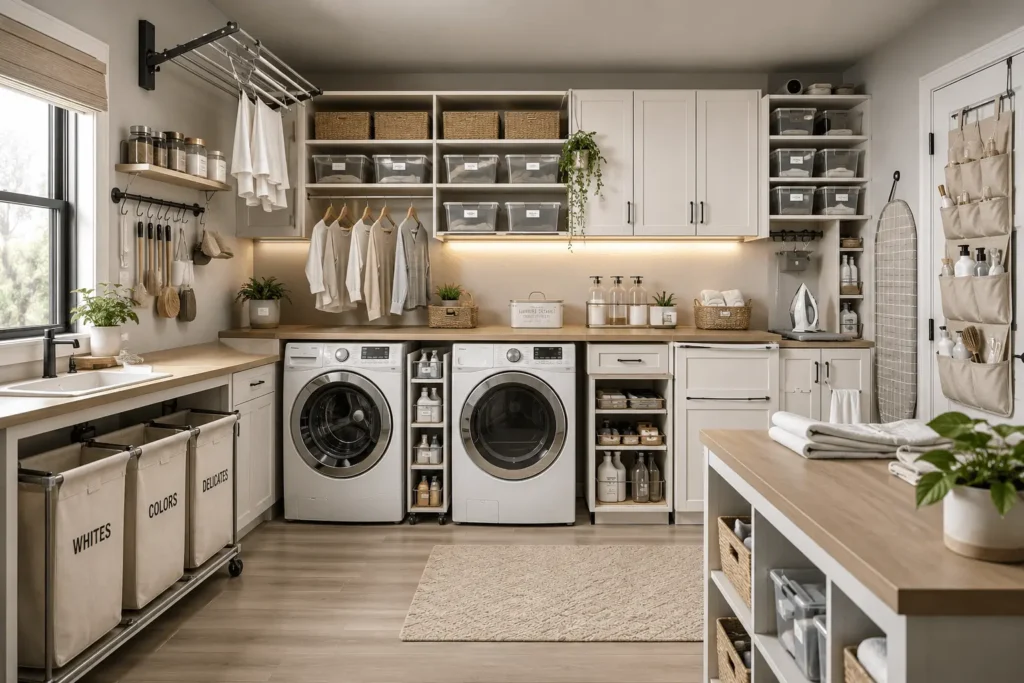
People Also Ask
Final Thoughts
A well-organized laundry room is more than just an attractive space—it’s a practical investment that simplifies daily routines, protects your belongings, and creates a more enjoyable home environment. By applying the strategies in this guide, including thoughtful planning, smart storage solutions, efficient workflows, and consistent maintenance habits, you can transform any laundry room into a functional, clutter-free space that works for your family’s unique needs.
Whether you’re making a few budget-friendly improvements or completing a full renovation, remember that lasting organization is built on simple, sustainable habits. Start with one improvement at a time, maintain your system regularly, and enjoy the long-term benefits of a laundry room that’s clean, efficient, and designed to make every laundry day easier.
Frequently Asked Questions (FAQs)
The following frequently asked questions address common concerns about laundry room organization, storage solutions, maintenance, safety, and space-saving ideas. These quick answers provide additional guidance to help you organize your laundry room more effectively and confidently.